Support CleanTechnica's work through a Substack subscription or on Stripe.
The world’s largest EV battery producer in the world, by far, is China’s CATL. Second is China’s BYD. The USA wants to block automakers from using Chinese batteries, but these Chinese companies are basically saying — yeah, good luck with that, hahaha.
In fact, the general conclusion is that the US auto market is going to suffer and lag others due to these protectionist efforts. Well, if we’re being honest, that’s currently the case, but there are other factors involved as well that make us a global laggard.
Robin Zeng, founder of CATL and China’s 4th richest person, contends that the US market is doomed without his company. Around a third of the world’s new EVs had CATL batteries last year. That’s all the more impressive when you consider that BYD, the world’s leading EV seller, produces its own batteries.
Zeng doesn’t see the US EV market as doomed forever, though. Eventually, US policies will change, and “after that, it’ll have to be booming, because it is the trend. It is the future.”
If technology keeps marching forward, as it will, once barriers are removed to a big market, it’s inevitable that much advanced technology is going to bust through the gates and become popular quickly, right? Though, in this case, cheaper CATL batteries may not be as blocked as hyped.
“There are signs automakers are already turning to CATL in the United States. Ford recently dropped South Korea’s SK Group as a joint-venture partner for battery projects, focusing on a plan to build CATL-designed lithium-iron-phosphate (LFP) batteries at a new plant in Michigan. To make it happen, Ford is paying CATL intellectual property royalties, which is something the US allows as it builds legal and political hurdles to prevent the Chinese battery giant from setting foot into the market,” Autoblog writes.
“While LFP technology was invented in the US, the Chinese perfected it and figured out how to make it work in cars. […] General Motors is also using CATL-sourced LFP batteries in the 2027 Chevrolet Bolt, but unlike Ford, it imports them from China under a temporary arrangement that is designed to maintain a low purchase price for its entry-level EV before it shifts to domestic LFP cell production. GM is importing the China-made batteries legally, but it does so while paying a 60% tariff. The fact that GM does this while its two billion-dollar US battery plants are idle highlights its inability to produce cheaper batteries.”
Great points. Also clearly very damning. Naturally, a large part of this is the massive scale of the Chinese EV market has enabled these supplies, supply chains, or ecosystems (whatever you want to call them) to develop, mature, and bring costs down. China has accounted for about half of the world’s EV sales in recent years, or even more than half at times. As a result, the EV battery market is huge and costs have come down accordingly thanks to natural learning curves. We don’t have the benefit of that in our tiny US EV market.
“It probably would’ve taken us a decade to catch up and have LFP technology on our own,” Lisa Drake, a Ford executive working on the Michigan battery plant, conceded. Yikes.
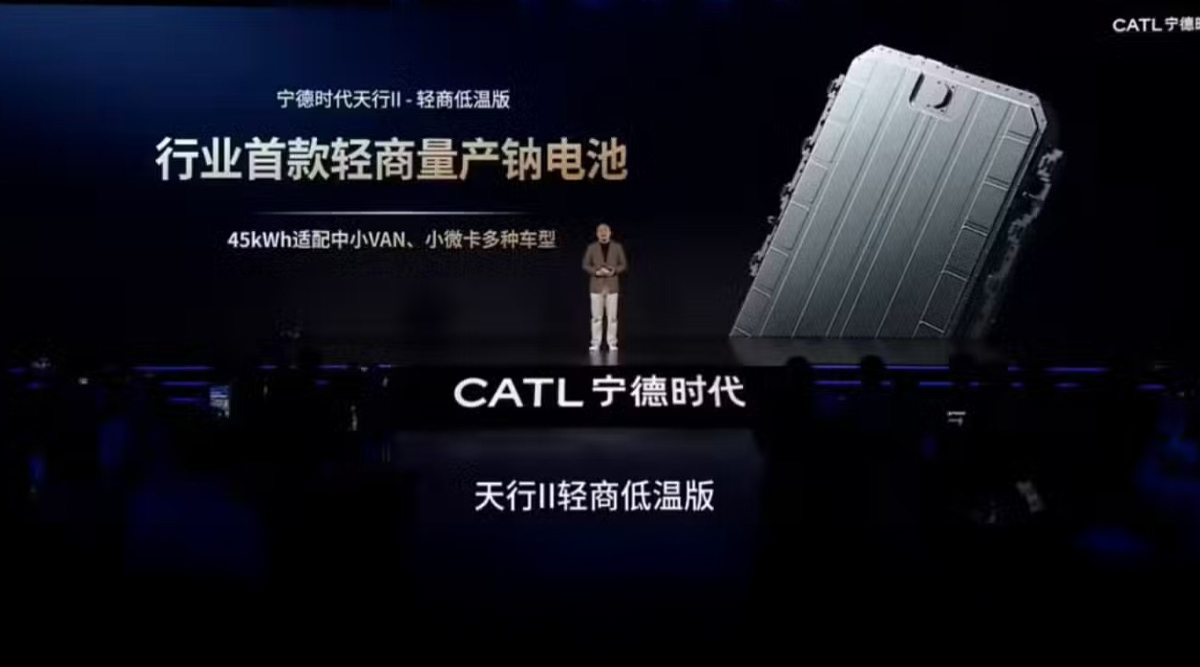
Also, CATL is actually now focused on sodium-ion batteries. LFP is old news.
So, does anyone actually disagree with Zeng?
Sign up for CleanTechnica's Weekly Substack for Zach and Scott's in-depth analyses and high level summaries, sign up for our daily newsletter, and follow us on Google News!
Have a tip for CleanTechnica? Want to advertise? Want to suggest a guest for our CleanTech Talk podcast? Contact us here.
Sign up for our daily newsletter for 15 new cleantech stories a day. Or sign up for our weekly one on top stories of the week if daily is too frequent.
CleanTechnica uses affiliate links. See our policy here.
CleanTechnica's Comment Policy
Facts Only
CATL is the world’s largest EV battery producer, supplying about a third of new EVs globally in 2023.
BYD is the second-largest battery producer and the world’s leading EV seller.
The U.S. is implementing policies to block automakers from using Chinese batteries.
Robin Zeng, CATL’s founder and China’s fourth-richest person, states the U.S. EV market will struggle without CATL’s technology.
Ford has dropped SK Group as a battery partner and is licensing CATL’s LFP battery technology for a Michigan plant.
Ford is paying CATL intellectual property royalties to use its LFP battery design.
General Motors is using CATL-sourced LFP batteries for the 2027 Chevrolet Bolt, importing them from China under a 60% tariff.
GM’s two U.S. battery plants are currently idle, highlighting domestic production challenges.
China accounts for roughly half of global EV sales, enabling cost reductions and supply chain maturation.
A Ford executive admitted it would take the U.S. about a decade to independently develop LFP battery technology.
CATL is now focusing on sodium-ion batteries, moving beyond LFP technology.
Executive Summary
The global EV battery market is dominated by Chinese firms, with CATL and BYD leading production. The U.S. is attempting to reduce reliance on Chinese batteries through protectionist policies, but automakers like Ford and GM are still turning to CATL for cost-effective solutions. Ford is licensing CATL’s LFP battery technology for a Michigan plant, while GM imports CATL batteries for its Chevrolet Bolt despite high tariffs. CATL’s founder, Robin Zeng, argues that U.S. EV adoption will lag without Chinese battery technology, though he believes policy shifts will eventually drive growth. The scale of China’s EV market has enabled rapid cost reductions and technological advancements, leaving the U.S. at a competitive disadvantage. Ford executives admit it would take a decade to independently develop LFP technology, highlighting the depth of the gap. Meanwhile, CATL is already advancing to sodium-ion batteries, further widening the technological lead.
The situation underscores tensions between U.S. industrial policy and market realities, with automakers navigating legal and economic hurdles to access Chinese battery technology. While U.S. policies aim to bolster domestic production, the immediate reliance on Chinese innovation suggests a complex transition period ahead.
Full Take
The narrative presents a compelling case for China’s dominance in EV battery technology, framing U.S. protectionist policies as counterproductive. The strongest version of this argument is that market forces and technological leadership will outweigh political barriers, as evidenced by automakers like Ford and GM circumventing restrictions to access cheaper, more advanced batteries. The piece effectively highlights the scale of China’s EV ecosystem as a key driver of innovation, contrasting it with the U.S.’s slower, more fragmented progress.
However, the analysis leans heavily on CATL’s perspective without deeply interrogating alternative pathways for U.S. battery development. The framing of U.S. policies as doomed to fail risks oversimplifying the complexities of industrial strategy, where short-term pain might be necessary for long-term resilience. The emotional undertone—suggesting the U.S. is "doomed" without China—could be seen as a form of fear appeal, though it’s grounded in concrete examples like Ford’s licensing deal and GM’s tariff-laden imports.
Root causes include the U.S.’s historical underinvestment in battery supply chains and the challenges of scaling domestic production without China’s established infrastructure. The paradigm at play is one of technological nationalism versus globalized innovation, where the U.S. is attempting to decouple from a dominant supplier while still relying on its expertise.
Implications for human agency are mixed: while U.S. workers and industries may benefit from domestic production, consumers could face higher costs and slower EV adoption. The second-order consequence is a potential bifurcation of global EV markets, with China maintaining its lead while other regions play catch-up.
Bridge questions: What would a successful U.S. battery independence strategy look like, and what trade-offs would it require? How might China’s shift to sodium-ion batteries further disrupt global competition? Could U.S. policies adapt to foster collaboration rather than outright exclusion?
Counterstrike scan: A coordinated influence campaign might amplify the "U.S. is doomed" narrative to discourage domestic investment or pressure policymakers into reversing protectionist measures. However, the article’s reliance on verifiable examples (Ford’s licensing, GM’s tariffs) and its acknowledgment of potential policy shifts suggest it’s not a straightforward manipulation effort. The tone is critical but not overtly propagandistic.
Patterns detected: ARC-0024 Ambiguity (implied inevitability of U.S. failure without deeper exploration of alternatives), ARC-0043 Motte-and-Bailey (broad claim of U.S. lagging followed by specific examples that may not fully support the sweeping conclusion).