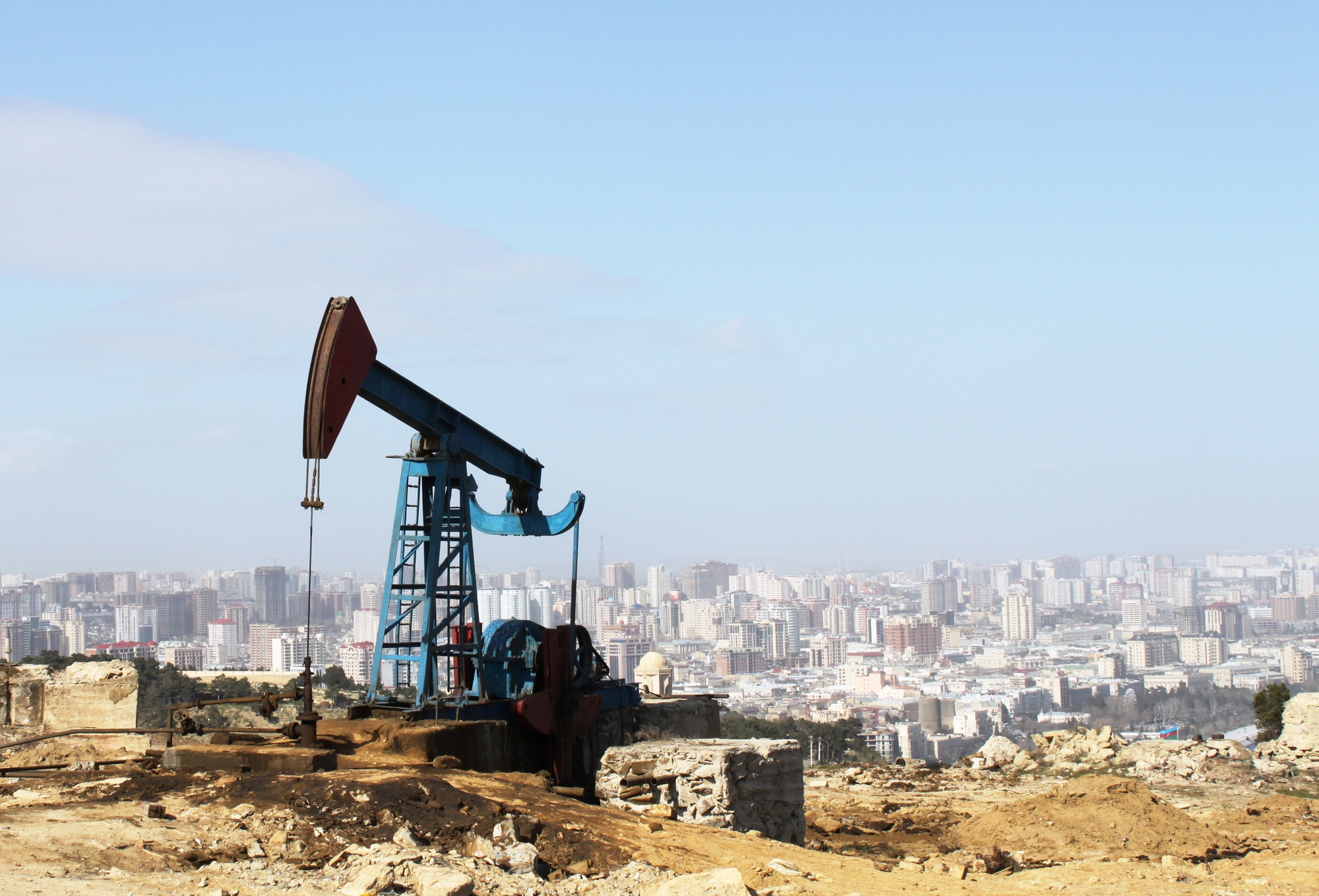
Beneath the ground lies a material that has quietly shaped the architecture of the modern world. Petroleum is rarely discussed within architectural discourse, yet the extraction, circulation, and consumption of oil have profoundly reorganized the spatial logic of territories. Pipelines, refineries, drilling platforms, ports, highways, and petrochemical complexes form a vast infrastructural landscape that sustains contemporary life, composing a dispersed architecture of energy.
Throughout the twentieth and twenty-first centuries, oil became the material foundation of industrial society. It fueled transportation, powered factories, and supported the growth of cities whose spatial organisation depended on continuous energy flows. Yet the infrastructures that enable these flows rarely become objects of architectural inquiry. Attention remains largely directed toward form, typology, or urban density, while the material systems that sustain these environments tend to remain displaced within the discipline.
To examine the politics of oil is therefore to shift the architectural gaze downward, toward the geological and infrastructural conditions that structure the built environment; to reconsider architecture's relationship with the ground. What lies beneath the surface becomes an object of extraction, control, and geopolitical competition, but also of projection and desire. Architecture, in turn, becomes entangled with these processes, mediating the spaces where energy is produced, transported, and consumed.
The Architecture of Extraction
Oil begins as a geological phenomenon, but the moment it is discovered, it becomes a territorial one. Drilling wells, pumping stations, storage tanks, and refineries reorganize landscapes into zones of extraction and production. The ground becomes a resource field whose value is measured through the infrastructures that penetrate it.
In this sense, oil is a variable of landscape construction. The infrastructures that enable its extraction act as instruments of measurement and division, translating geological depth into economic value. As Timothy Mitchell wrote, the modern political order is inseparable from the material systems that sustain it. Oil requires distributed networks, making control over territory both more diffuse and more strategic. Architecture, in this context, operates less as enclosure and more as an apparatus that organises access, flow, and extraction across landscapes.
Few places illustrate this transformation more clearly than the early oil landscapes of Baku, also described as the "black city" at the turn of the twentieth century. Thousands of derricks once covered the coastline of the Caspian Sea, creating a dense industrial terrain where extraction structures defined the spatial order of the city. The ground was fragmented into plots of concession and control, operated by a mix of local and foreign capital, where industrial production and speculative investment overlapped. Workers' housing, transportation systems, and industrial facilities emerged around these wells, forming an urban fabric dictated less by planning than by the geography of oil.
What is more distinctive about Baku is the absence of clear separation between living and working spaces. This produced a city organised through gradients of exposure (labor, pollution, risk) that can be read as an early prototype of extractive urbanism, where the logic of the resource precedes and overrides that of the plan.
Similar dynamics can be observed in the oil fields of Texas and in the vast industrial complexes of the Persian Gulf. The discovery of major fields, such as Spindletop, triggered rapid cycles of expansion, speculation, and decline, giving rise to transient settlements whose existence was tied directly to production. Roads, pipelines, and logistical networks extend across deserts, forests, and offshore waters, linking remote geological deposits to global markets. Corporate actors consolidated control over these networks, transforming oil into a vertically integrated system that extended from the wellhead to global markets. The territory itself became infrastructural.
These landscapes challenge conventional architectural categories. Oil infrastructures rarely resemble buildings in the traditional sense, but they organize space, establish hierarchies, and structure human activity. And in doing so, they demonstrate that architecture is inseparable from the material economies and territorial operations that sustain it.
The Petro-Urban Condition
The petro-urban condition describes a mode of urbanisation shaped by the continuous circulation of oil. More than a resource, petroleum operates as a structuring medium that reorganises territory, mobility, and settlement patterns across scales. Unlike earlier energy regimes, which were often localised and visible, oil establishes dispersed and interconnected systems whose spatial effects are both extensive and difficult to perceive.
If extraction defines the beginning of petroleum's spatial journey, its circulation defines the geography of modern cities. The global petroleum economy is sustained through vast logistical systems that connect distant territories of extraction to sites of consumption. Historians have described this as the "energy metabolism" of modern cities; a set of material exchanges that sustain urban life while remaining largely out of sight.
The expansion of the Houston Ship Channel transformed the city into a major hub of petroleum refining and petrochemical production. Over the course of the twentieth century, the channel evolved into one of the largest petrochemical corridors in the world, concentrating refineries, storage facilities, and industrial plants along its edges. As a result, Houston developed as a distributed system of infrastructures, where production, storage, and circulation overlap with residential and public spaces, producing an urban form structured around logistics and distribution. The city operates as an interface between territory and network. In these cases, oil not only powers the city (energetically and economically) but also defines its logic.
The petro-urban condition also extends beyond the Western world. Abadan in Iran, Ras Tanura in Saudi Arabia, and numerous industrial hubs along the Gulf of Mexico grew from relatively small settlements into major urban centres due to their role within the global petroleum economy. These cities demonstrate how energy infrastructures shape patterns of migration, labor, and economic development. Requiring an urban pattern that depends on the relationship between extraction and distribution, proximity to ports, adjacency to refineries, the separation of industrial and residential zones, and a strong dependence on imported labour, urban form, in these cases, is a direct consequence of energy logistics.
Yet the oil's influence extends beyond infrastructure and urban planning as it permeates the material culture of architecture itself. Many products that define contemporary construction (plastics, synthetic insulation, sealants, adhesives, and asphalt) are derived from petrochemical processes. Even when oil remains physically distant from architectural sites, it is embedded within the materials that compose them, shaping not only how buildings perform, but how they are conceived and constructed.
In this sense, petroleum operates not only as an energy source but as a material logic. Its transformation into synthetic compounds allowed architecture to detach itself from traditional constraints associated with weight, durability, and local availability. Materials became lighter, more flexible, and more easily standardized. Construction shifted from proximity-based systems to global chains of production and distribution, marking a transition from material scarcity to abundance.
During the second half of the twentieth century, petrochemical industries redefined building technologies. Plastics enabled new forms of prefabrication and mass production, while synthetic insulation systems supported the widespread adoption of sealed, climate-controlled environments. Petrochemical membranes and coatings extended the technical performance of façades, allowing buildings to resist water, air, and heat with increasing precision. Asphalt reshaped the ground plane itself, producing continuous surfaces for mobility and reinforcing the spatial logic of the automobile.
The result is a paradox often overlooked in architectural discourse. Modern architecture frequently presents itself as immaterial, efficient, and technologically advanced, yet it relies on material systems deeply rooted in fossil fuel extraction. The petrochemical industry operates as an invisible extension of architectural production, linking buildings to global energy systems in ways that are rarely acknowledged.
In this sense, petroleum has influenced everyday urban life in more subtle ways. The expansion of highways, suburban housing, and automobile culture throughout the twentieth century depended heavily on the availability of cheap oil. Modernist planning principles, with their emphasis on mobility and separation of functions, developed in parallel with the widespread use of fossil fuels. As a result, the spatial organisation of many contemporary cities remains closely tied to petroleum-based mobility systems. A landscape calibrated to the circulation of energy, where infrastructure precedes form and where mobility becomes the primary organiser of space.
Infrastructures of Power
Because petroleum infrastructures operate across continents, they also function as instruments of power and geopolitical tension. Pipelines, refineries, ports, and shipping routes organise relations between territories, states, and markets. Their routes are negotiated and contested, tracing lines of dependency that bind distant regions into a shared, yet unequal, system.
In this sense, energy infrastructure can be understood as a spatial form of governance. As Timothy Mitchell argues, the organization of energy systems shapes the possibilities of political action. The shift from coal to oil reconfigured this relationship: where coal-based systems depended on concentrated labor and localized transport networks, oil introduced distributed and flexible infrastructures that are harder to disrupt and easier to control at a distance.
Recent conflicts and attacks targeting energy infrastructure have made this condition visible. The sabotage of pipelines, disruptions in maritime shipping routes, and attacks on refineries expose the vulnerability of systems that are often perceived as stable and continuous. Such events expose the political dimensions of energy logistics, demonstrating that the infrastructures sustaining modern life are also sites of conflict and negotiation.
At the same time, these networks produce asymmetries that are spatial as much as they are economic. Territories of extraction often bear the environmental and social costs of production, while distant centers of consumption benefit from the stability these systems provide. Infrastructure, in this context, becomes a mechanism that redistributes risk and value unevenly across space. What appears as efficiency at one end of the network may correspond to exposure and instability at the other.
For architecture and urbanism, these dynamics challenge the notion of autonomy. Buildings and cities do not operate independently of the infrastructures that sustain them; they are embedded within extended networks that reach far beyond their physical boundaries. Energy flows connect urban life to distant geographies of extraction, processing, and transport. When these flows are interrupted, the stability of urban systems is called into question, revealing their dependence on conditions that lie outside the architectural object.
Architecture thus participates in a complex spatial network where geology, technology, and geopolitics intersect. Buildings, infrastructures, and territories become components within a larger energy landscape shaped by both economic interests and political power.
Landscapes After Extraction
As global debates on climate change intensify, the future of petroleum infrastructures is increasingly uncertain. Many oil facilities will eventually be decommissioned, abandoned, or repurposed as energy systems evolve. This transition raises important questions about the architectural and environmental legacy of the petroleum age. What remains after extraction? How are these territories reinhabited, transformed, or left to persist?
Across different regions, former extraction sites and industrial complexes are already entering new phases of transformation. In some cases, infrastructures are reabsorbed into the urban fabric through processes of adaptive reuse. Industrial waterfronts once dominated by refineries have been converted into public landscapes, as seen in projects such as Landschaftspark Duisburg-Nord in Germany, where former industrial structures are integrated into a system of parks and cultural programs. In other contexts, transformation is more partial or speculative. Offshore oil platforms in the North Sea have been proposed as artificial reefs or research stations, extending their life through ecological or scientific functions rather than industrial production.
Yet not all landscapes of extraction are easily reconfigured. Many remain as contaminated or unstable territories, marked by environmental degradation and long-term ecological impact. Oil fields, pipelines, and refineries often leave behind soil and waters that resist immediate occupation, producing zones of latency. In these cases, the end of extraction does not mark a clear transition, but the beginning of a prolonged condition of uncertainty, where land remains suspended between abandonment and future use.
What emerges from these landscapes is a spectrum of possible afterlives. Some sites are reprogrammed, others are reclaimed by ecological processes, and many persist as residual infrastructures within changing landscapes. These landscapes suggest that the infrastructures of the petroleum age may eventually be read as a form of contemporary archaeology. Like the ruins of earlier industrial revolutions, they provide material evidence of the systems that once structured economic and technological progress. But unlike the classics, these sites are not detached from the present as they remain active chemically, environmentally, and spatially.
The Energy Beneath It
Beneath the visible city lies a vast network of infrastructures that make contemporary life possible. The politics of oil reveal that architecture operates within far larger systems than the discipline often acknowledges.
Recognising this hidden architecture expands the scope of architectural thinking. It encourages architects and researchers to consider how buildings relate to broader processes of extraction, logistics, and environmental transformation. Oil may remain largely invisible within everyday urban experience, yet its spatial consequences are deeply embedded in the landscapes we inhabit.
To unearth the politics of oil, therefore, is to acknowledge that architecture operates within planetary systems of energy and power. The ground beneath our feet is a contested terrain where geology, infrastructure, and politics converge, and where the future of the built environment continues to be negotiated.
This article is part of the ArchDaily Topic: The Technosphere: Architecture at the Intersection of Technology, Ecology, and Planetary Systems. Every month we explore a topic in-depth through articles, interviews, news, and architecture projects. We invite you to learn more about our ArchDaily Topics. And, as always, at ArchDaily we welcome the contributions of our readers; if you want to submit an article or project, contact us.
Facts Only
Petroleum extraction and infrastructure (pipelines, refineries, drilling platforms) have reorganized global territories and urban development.
Early 20th-century Baku, Azerbaijan, became an industrial oil city with derricks covering the Caspian coastline, blending living and working spaces.
The Houston Ship Channel evolved into a major petrochemical corridor, integrating refineries, storage, and industrial plants with urban fabric.
Petrochemical products (plastics, synthetic insulation, asphalt) have transformed construction, enabling lighter, standardized, and climate-controlled buildings.
Oil infrastructures operate as geopolitical tools, with pipelines and shipping routes creating dependencies and tensions between nations.
Extraction sites like Texas oil fields and Persian Gulf complexes demonstrate rapid urbanization tied to production cycles.
Modernist urban planning principles (mobility, functional separation) developed alongside fossil fuel reliance, shaping car-centric cities.
Decommissioned oil sites face uncertain futures, with some repurposed (e.g., Landschaftspark Duisburg-Nord) and others left as contaminated zones.
Oil’s spatial logic prioritizes flow and access over traditional architectural enclosure, embedding buildings in global energy networks.
Environmental and social costs of extraction are often borne by production territories, while consumption centers benefit from stability.
The petro-urban condition describes cities structured by oil circulation, logistics, and energy metabolism.
Architectural materials and technologies (e.g., prefabrication, insulation) are deeply tied to petrochemical industries.
Executive Summary
Petroleum has fundamentally reshaped modern architecture and urban development, yet its influence remains largely unexamined within architectural discourse. The extraction, circulation, and consumption of oil have reorganized spatial logic, creating vast infrastructural landscapes—pipelines, refineries, drilling platforms, and highways—that sustain contemporary life. These systems, often invisible in everyday experience, structure territories, mobility, and settlement patterns, from early oil cities like Baku to modern petro-urban hubs like Houston and Abadan. Beyond infrastructure, petroleum-derived materials (plastics, synthetic insulation, asphalt) have redefined construction, enabling lighter, more standardized building practices. However, these systems also embed geopolitical power dynamics, environmental costs, and long-term dependencies, with extraction sites often bearing disproportionate risks while distant consumers benefit. As climate change pressures energy transitions, decommissioned oil infrastructures present challenges and opportunities, from adaptive reuse projects like Landschaftspark Duisburg-Nord to lingering environmental degradation. The interplay between oil, architecture, and power reveals how deeply the built environment is entangled with global energy systems, raising questions about sustainability, equity, and the future of urban design.
The article highlights a critical blind spot in architectural thinking: the discipline’s focus on form and typology often overlooks the material and infrastructural systems that enable modern life. By tracing oil’s role from extraction to urbanization, it argues that architecture must confront its complicity in fossil fuel dependencies and consider how energy logistics shape spatial justice, environmental impact, and human agency. The analysis suggests that understanding these hidden networks is essential for reimagining resilient, equitable futures.
Full Take
The strongest version of this narrative is its revelation of architecture’s hidden dependence on petroleum—not just as an energy source but as a spatial and material logic. The analysis effectively demonstrates how oil infrastructures, from Baku’s derricks to Houston’s ship channels, have dictated urban growth, labor patterns, and even the separation of living and working spaces. It also highlights the paradox of modern architecture: while celebrating technological progress and efficiency, the discipline remains tethered to fossil fuel extraction, with petrochemical derivatives embedded in nearly every building material. The geopolitical dimensions—how pipelines and refineries function as instruments of power—add critical depth, showing how energy systems redistribute risk and value unevenly across territories. This is a compelling call to expand architectural thinking beyond aesthetics to include the material and political economies that sustain the built environment.
Pattern scan: The article avoids overt manipulation, but its framing risks a subtle form of **ARC-0024 Ambiguity** by presenting oil’s influence as an inevitable, almost deterministic force in architecture, potentially obscuring alternative historical paths or agency in design choices. The focus on systemic entanglement could also edge toward **ARC-0043 Motte-and-Bailey** if readers interpret it as a blanket critique of modernism without acknowledging its diverse motivations. However, the piece largely resists these pitfalls by grounding claims in historical examples and material evidence.
Root cause: The narrative operates within a paradigm of **technological determinism**, where oil’s spatial logic is treated as an inescapable framework for modern life. This assumes that architectural evolution is primarily driven by energy systems rather than, say, cultural values or policy decisions. The unstated assumption is that architecture’s complicity in fossil fuel dependence is a passive outcome rather than an active choice—a framing that could downplay the profession’s agency in perpetuating or challenging these systems.
Implications: For human agency, the analysis suggests that architects and urban planners must reckon with their role in sustaining extractive economies. The second-order consequences include the environmental justice issues of contaminated post-extraction landscapes and the vulnerability of cities built around oil logistics to energy transitions. Who benefits? Corporate actors and consumption hubs. Who bears costs? Extraction territories and marginalized labor forces. The piece implicitly questions whether architecture can claim autonomy when its materials and forms are so deeply intertwined with global energy networks.
Bridge questions: If petroleum’s spatial logic is so pervasive, what counter-examples exist where architecture resisted or subverted fossil fuel dependencies? How might design education integrate energy literacy to break this cycle? What would a post-petrochemical urbanism look like, and what sacrifices would it demand?
Counterstrike scan: A bad actor pushing this narrative might weaponize it to discourage systemic change, framing oil’s influence as so embedded that resistance is futile. However, the article’s focus on exposing these dynamics—rather than normalizing them—aligns more with a call for critical awareness than resignation. It doesn’t match the attack pattern.