March 5, 2026
Natalie Kroovand Hipple, PhD
Professor and Chair, Department of Criminology, Indiana University
Kayla Allison, PhD
Assistant Professor, Department of Sociology & Criminology, University of Arkansas
Natalie Kroovand Hipple, PhD
Professor and Chair, Department of Criminology, Indiana University
Kayla Allison, PhD
Assistant Professor, Department of Sociology & Criminology, University of Arkansas
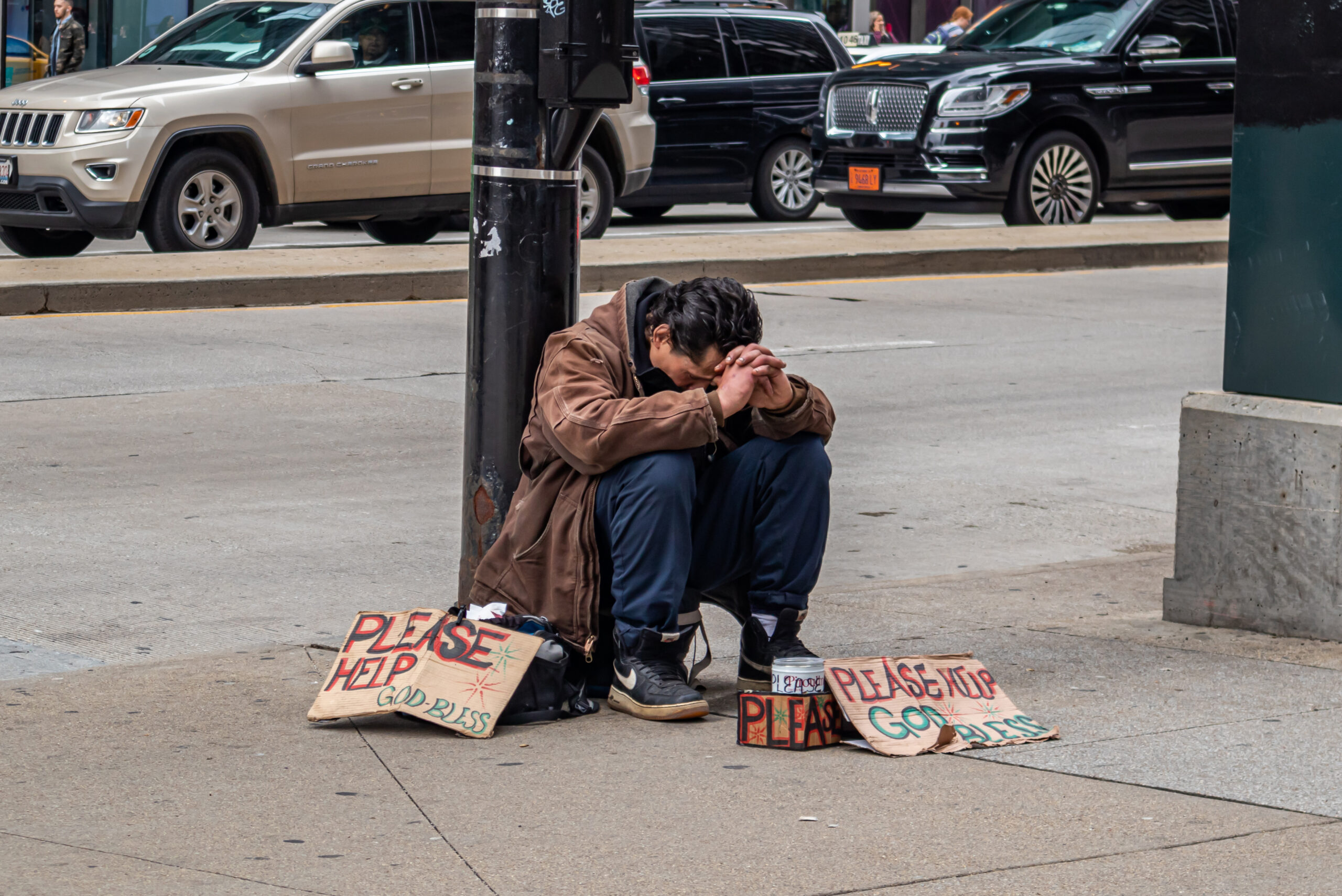
Law enforcement agencies across the United States are more and more involved in responding to homelessness. Calls for service involving people who are unhoused, especially those who are chronically homeless, take up a great deal of officer time and agency resources. But being homeless is not a crime. This fact means homelessness is not, at its core, a law enforcement issue.
Homelessness is a complex social problem. It is shaped by housing costs, health care systems, job markets, and social safety nets. These are systems that law enforcement agencies do not control. For this reason, law enforcement agencies should not lead a community’s response to homelessness. Instead, they should be one part of a larger, shared response. They are most effective when they work closely with local partners to address the problem together.
Because law enforcement officers are available 24 hours a day, every day of the year, they often become the default responders to homelessness. However, they are rarely the best equipped to lead a full response. Law enforcement agencies should have a seat at the table, but they should not sit at the head of it. Strong responses require many partners, shaped by local needs. These partners often include other government agencies, housing providers, mental health professionals, public health agencies, outreach workers, researchers, and people with lived experience of homelessness. Law enforcement officers play an important role, but that role works best when it is supportive, strategic, and collaborative—not punitive or isolated.
Why Focus on Chronic Homelessness?
Most people who experience homelessness do so for a short time and often out of public view. A much smaller group experiences homelessness for long periods. This group is known as the chronically homeless. They are more likely to live unsheltered, be highly visible in public spaces, and experience serious mental illness, substance use disorders, and long-term health problems. Some may also be resistant to services.
Because of these factors, people who are chronically homeless have frequent contact with law enforcement, emergency medical services, hospitals, and courts. Their visibility creates pressure for action. Residents, businesses, and elected officials often view homelessness as a public safety issue and look to law enforcement for quick solutions, often through enforcing quality-of-life laws.
While arrests may sometimes be necessary, research shows they are rarely the preferred response—for officers, service providers, or people experiencing homelessness. Enforcement may reduce visibility in the short term, but it does not reduce homelessness. It can also damage trust in law enforcement. In many cases, it traps people in cycles of arrest, tickets, and displacement that raise costs without improving safety or well-being.
The Real Costs of Enforcement-Driven Responses
Using the criminal justice system to respond to chronic homelessness is expensive. Repeated law enforcement contacts, jail stays, emergency room visits, and court involvement can cost tens of thousands of dollars per person each year. These costs are often much higher than the cost of supportive housing or coordinated service responses.
At the same time, people who are chronically homeless face high risks of being victimized, becoming seriously ill, or dying early. Some experience violent crimes, including hate-based attacks. Yet they are less likely to report these crimes due to fear, distrust of authorities, or lack of access to help. This highlights an important truth: people experiencing homelessness are not only subjects of enforcement—they are also among the most vulnerable victims in our communities.
A Response Guide for Police Agencies
To help address these challenges, the Homelessness Response Guide provides a problem-solving framework based on data, partnerships, and local conditions. The guide encourages law enforcement agencies to:
- Build a clear understanding of homelessness in their community using available data, such as police records, Homelessness Management Information System data, 311 calls, and partner information.
- Ask hard but necessary questions about who is most affected, where interactions happen, and how current responses impact both individuals and the community.
- Invest in strong partnerships with housing providers, health services, outreach teams, and social service agencies, recognizing that no single organization can solve the problem alone.
- Consider specialized homelessness outreach teams made up of experienced officers with strong communication skills and patience—or, for smaller agencies, one or two well-trained officers focused on this work.
The guide also presents a research-based menu of law enforcement responses to homelessness. These responses range from outreach and relationship-building to de-escalation, prevention, and, when needed, law enforcement action. Throughout the guide, the focus is on using discretion and matching responses to individual needs and community expectations.
A Menu of Responses
The guide does not claim there is one “best” law enforcement response to homelessness. The evidence base is not strong enough to support a single solution, and what works will vary by community. Instead, the menu offers a starting point for agencies seeking thoughtful and flexible approaches. Proactive responses, which are the most common, include:
- Outreach and coordination with service providers
- Prevention and safeguarding
- Laissez-faire approaches (a more hands-off response)
- Altruistic actions, such as buying food for someone
Reactive responses usually occur after a call for service or complaint and include:
- De-escalation support
- “Parenting” responses, such as verbal warnings about known behaviors and possible consequences
- Law enforcement actions, including arrest
- Partner inquiries, such as assisting another agency trying to locate an unhoused person
Because there are no national standards, agencies must clearly define what success looks like and measure whether their responses are working. This means tracking more than arrests or citations. Agencies should also track service referrals, repeat contacts, victimization reporting, and the strength of partnerships with community organizations.
Navigating a Changing Legal Landscape
The legal rules around homelessness and policing continue to change. In 2024, the U.S. Supreme Court’s decision in City of Grants Pass v. Johnson changed how courts interpret the Eighth Amendment in these cases. However, this decision did not remove all legal limits. Fourth Amendment protections, equal protection claims, disability rights laws, and state-level rules still shape how and when enforcement can occur.
For law enforcement agency leaders, following the law is necessary but not enough. Agencies must also consider how enforcement choices affect public trust, legitimacy, and long-term problem-solving—especially on an issue as visible and politically sensitive as homelessness.
Moving Forward
Homelessness highlights the limits of enforcement-based solutions. This response guide reinforces a key message: while officers are often the most visible responders, they are only one part of a broader system. Effective responses are not about doing more policing. They are about better problem-solving.
By using data and working closely with service providers and community partners, law enforcement agencies can address the public safety aspects of chronic homelessness without becoming the main response system.
Key Takeaways for Agency Leaders
- Responding to chronic homelessness requires more than enforcement and more than officers acting alone.
- Homelessness is not a single issue. Chronic homelessness reflects breakdowns in housing, health care, behavioral health, and social support systems.
- A small number of chronically unsheltered individuals account for a large share of contacts with law enforcement, EMS, hospitals, and courts, making targeted problem-solving essential.
- Law enforcement agencies should be partners and facilitators, not the lead service providers.
- Strong partnerships with housing, health, outreach, and people with lived experience are essential.
- Enforcement-heavy approaches are costly and do not reduce homelessness or improve public safety.
- Success should be measured beyond arrests, including service connections, reduced repeat contacts, victimization prevention, and trust-building.
For more information, see the full Homelessness Response Guide.
Download the Seven Things to Know/Six Actions to Take guide document.
Written by
Natalie Kroovand Hipple, PhD
Professor and Chair, Department of Criminology, Indiana University
Kayla Allison, PhD
Assistant Professor, Department of Sociology & Criminology, University of Arkansas
Topic Area(s)
For general inquiries, please contact us at info@policefoundation.org.
Share
Strategic Priority Area(s)
Topic Area(s)
For general inquiries, please contact us at info@policefoundation.org
If you are interested in submitting an essay for inclusion in our OnPolicing blog, please contact Erica Richardson.
Share
Facts Only
Law enforcement agencies across the U.S. are increasingly responding to homelessness, particularly chronic homelessness.
Homelessness is not a crime, and its causes include housing costs, healthcare systems, job markets, and social safety nets.
Chronically homeless individuals are more likely to live unsheltered, experience mental illness or substance use disorders, and have frequent contact with law enforcement and emergency services.
Enforcement-driven responses to homelessness are costly and do not reduce homelessness or improve public safety.
The Homelessness Response Guide provides a framework for law enforcement to address homelessness through data, partnerships, and localized strategies.
The guide recommends building partnerships with housing providers, health services, and outreach teams.
It suggests specialized homelessness outreach teams within law enforcement agencies.
The guide outlines proactive responses (outreach, prevention) and reactive responses (de-escalation, law enforcement action).
Success should be measured by service referrals, reduced repeat contacts, and victimization reporting, not just arrests.
The 2024 U.S. Supreme Court decision in *City of Grants Pass v. Johnson* affects how courts interpret the Eighth Amendment in homelessness cases.
The article was written by Natalie Kroovand Hipple, PhD, and Kayla Allison, PhD, affiliated with Indiana University and the University of Arkansas.
Executive Summary
Full Take
The strongest version of this narrative acknowledges that law enforcement is often the default responder to homelessness due to its 24/7 availability, but it rightly argues that policing alone cannot solve a problem rooted in systemic failures of housing, healthcare, and social services. The article avoids emotional exploitation or distortion, instead presenting a measured, evidence-based approach that emphasizes collaboration over enforcement. It steelmans the role of police as facilitators rather than leaders, which aligns with broader calls for community-based solutions to social issues.
However, the narrative assumes that law enforcement agencies are willing and able to shift from enforcement to a supportive role—a transition that may face institutional resistance or resource constraints. The focus on chronic homelessness, while justified by its high visibility and resource intensity, risks sidelining the broader structural issues affecting all unhoused individuals. The article also does not address potential conflicts between law enforcement and advocacy groups that may view police involvement as inherently harmful.
Root cause: The paradigm here is one of systemic interdependence—homelessness is framed as a failure of multiple institutions, requiring coordinated responses. The unstated assumption is that law enforcement can be reformed to prioritize problem-solving over punishment, a shift that depends on political will and funding.
Implications: If adopted, this approach could reduce the criminalization of homelessness and redirect resources toward housing and healthcare. However, it may also place additional burdens on underfunded social services. The second-order consequence is a potential shift in public perception of police, from enforcers to community partners—a change that could either build trust or exacerbate tensions if expectations are unmet.
Bridge questions: How might law enforcement agencies balance their traditional enforcement role with this collaborative model? What safeguards are needed to ensure that partnerships with police do not deter unhoused individuals from seeking help? Would decriminalizing homelessness lead to more sustainable solutions, or would it require even greater investment in social services?
Counterstrike scan: A bad actor pushing this narrative might use it to justify expanded police budgets under the guise of "community partnerships," while maintaining punitive practices. However, the article's emphasis on data, partnerships, and non-enforcement metrics suggests a genuine effort to reform, not exploit, the system.
Patterns detected: none
Sentinel — Human
This text appears to be written by humans, not AI. The authors are identified as professors and the writing shows a personal voice and idiosyncratic emphasis, which are characteristics of human authorship.