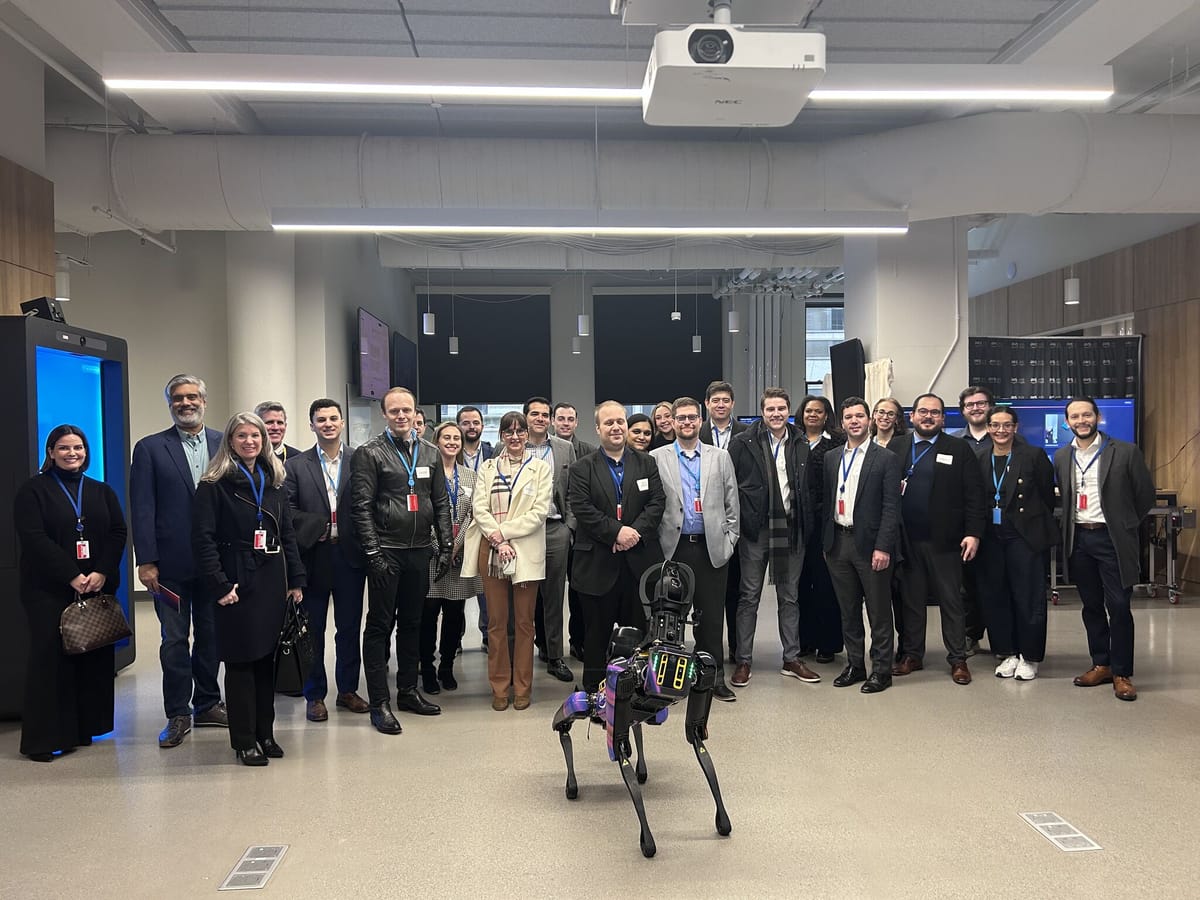
A little-known group stacked with lobbyists for the artificial intelligence industry has been sending congressional staffers on upscale trips over the past year to tour AI companies in San Francisco, London, New York City, and Los Angeles, according to House and Senate gift travel disclosures. On the junkets, sponsored by the Innovative Future Collective (IFC), senior congressional aides are taken through visits to Big Tech companies like Meta and Amazon and MAGA-aligned defense contractors like Palantir and Anduril.
The nonprofit IFC says it brings together “industry, government, and experts” and “allows lawmakers to directly witness AI’s capabilities” and “understand its applications.” Its Advisory Committee is dominated by corporate interests: of its 15 members, 12 are current or recent corporate lobbyists, including at least six lobbyists for AI companies like OpenAI and VC firm Andreessen Horowitz. Another advisor, Gerry Patrella, is general manager of U.S. public policy for Microsoft, which has committed around $145 billion this year in capital expenditures, largely for AI infrastructure. These AI companies are engaged in a sprawling influence campaign to push for federal preemption legislation that would block states from passing AI protections and override state laws already on the books.
IFC, founded in December 2024, releases little information about the AI policies that House and Senate staffers have been hearing about on their trips while staying at locations like London’s five-star Marriott Hotel Grosvenor Square. IFC was formed by political fundraising firm Fulkerson Kennedy & Company (FK&Co.), whose founders tout the “record dollar amounts” they have raised for Senate Democratic clients like Minority Leader Chuck Schumer. The firm also advertises its political funding strategy services in arranging corporate partnerships for unnamed clients.
IFC’s sponsored trips for Hill staffers come as the AI industry gears up to spend hundreds of millions of dollars in the 2026 midterms against House and Senate candidates it deems unsupportive of its agenda. Though IFC’s founders are fundraisers for the Schumer-aligned Senate Majority PAC and others, its advisors lobby for AI companies now funding attack ads against Democrats in primaries through the super PAC Leading the Future. One target is New York Assemblymember Alex Bores, a House candidate who co-authored AI safety legislation titled the RAISE Act that would apply to large companies spending over $100 million on AI models. IFC’s advisors are rounded out by government affairs executives and lobbyists at Coinbase, the cryptocurrency giant that flooded the last election cycle with outside spending and is prepared to unleash even more this cycle, and Stripe, which lobbies on crypto issues.
Facts Only
The Innovative Future Collective (IFC) sponsors trips for congressional staffers to tour AI companies.
Visits include Big Tech companies like Meta and Amazon, as well as MAGA-aligned defense contractors like Palantir and Anduril.
IFC Advisory Committee dominated by corporate interests, including current or recent corporate lobbyists for AI companies like OpenAI and VC firm Andreessen Horowitz.
Gerry Patrella, general manager of U.S. public policy for Microsoft, is an advisor to IFC.
IFC was founded by political fundraising firm Fulkerson Kennedy & Company (FK&Co.).
IFC's sponsored trips for Hill staffers come as the AI industry gears up to spend hundreds of millions of dollars in the 2026 midterms against House and Senate candidates.
IFC advisors lobby for AI companies funding attack ads against Democrats in primaries through the super PAC Leading the Future.
One target of these attack ads is New York Assemblymember Alex Bores, a House candidate who co-authored AI safety legislation.
IFC advisors also include government affairs executives and lobbyists at Coinbase and Stripe.
Executive Summary
Full Take
This article presents a potential influence campaign by the AI industry, as represented by the Innovative Future Collective (IFC), to push for federal preemption legislation. The IFC's trips for congressional staffers to tour AI companies can be seen as an attempt to influence lawmakers' understanding and perception of AI's capabilities and applications. The dominance of corporate interests in the IFC's advisory committee raises questions about the balance between industry influence and public interest in shaping AI policies.
The involvement of political fundraising firm Fulkerson Kennedy & Company (FK&Co.), which touts its services in arranging corporate partnerships for unnamed clients, suggests a potential overlap between political fundraising and lobbying efforts. The fact that IFC advisors are engaged in attack ads against Democrats in primaries raises concerns about the influence of money in politics and the potential for this influence to shape AI policy in ways that favor certain companies over others or over public interests.
Patterns detected: ARC-0043 Motte-and-Bailey, ARC-0024 Ambiguity
Root cause: The underlying driver appears to be the AI industry's desire to shape policy in its favor, potentially through the use of lobbying, political funding, and attack ads.
Implications: The impact of this influence campaign could be significant, as it may shape AI policies in ways that favor certain companies over others or over public interests. This could have implications for the development and regulation of AI technologies, potentially affecting privacy, security, and ethical considerations.
Bridge questions: What role should industry play in shaping AI policies? How can we ensure that AI policies serve the public interest? What mechanisms can be put in place to prevent the undue influence of money in politics?