Antonio Bustamante has kept a watercolor of labor leader César Chavez for more than 35 years, hanging it on the wall of his law office in Yuma, Arizona. As a young man, he was moved by Chavez and helped organize workers before joining his security team.
Like many others, Bustamante must now wrestle with reconciling the man he adored with the allegations Chavez groomed and sexually abused women and young girls.
“I’m trying to figure out how emotionally and intellectually I’ll be able to understand my perception of him as an extremely good man,” Bustamante said, his voice heavy with emotion, “compared to these things that are said he did.”
Chavez built a national reputation organizing in the fields. With Dolores Huerta — also one of his victims — he co-founded the United Farm Workers union, led a hunger strike, a grape boycott with Filipino farmworkers, and eventually pressured growers to negotiate better wages and working conditions for Mexican American farmworkers.
RELATED: Cesar Chavez’s legacy lives on in Biden’s staff, Oval Office
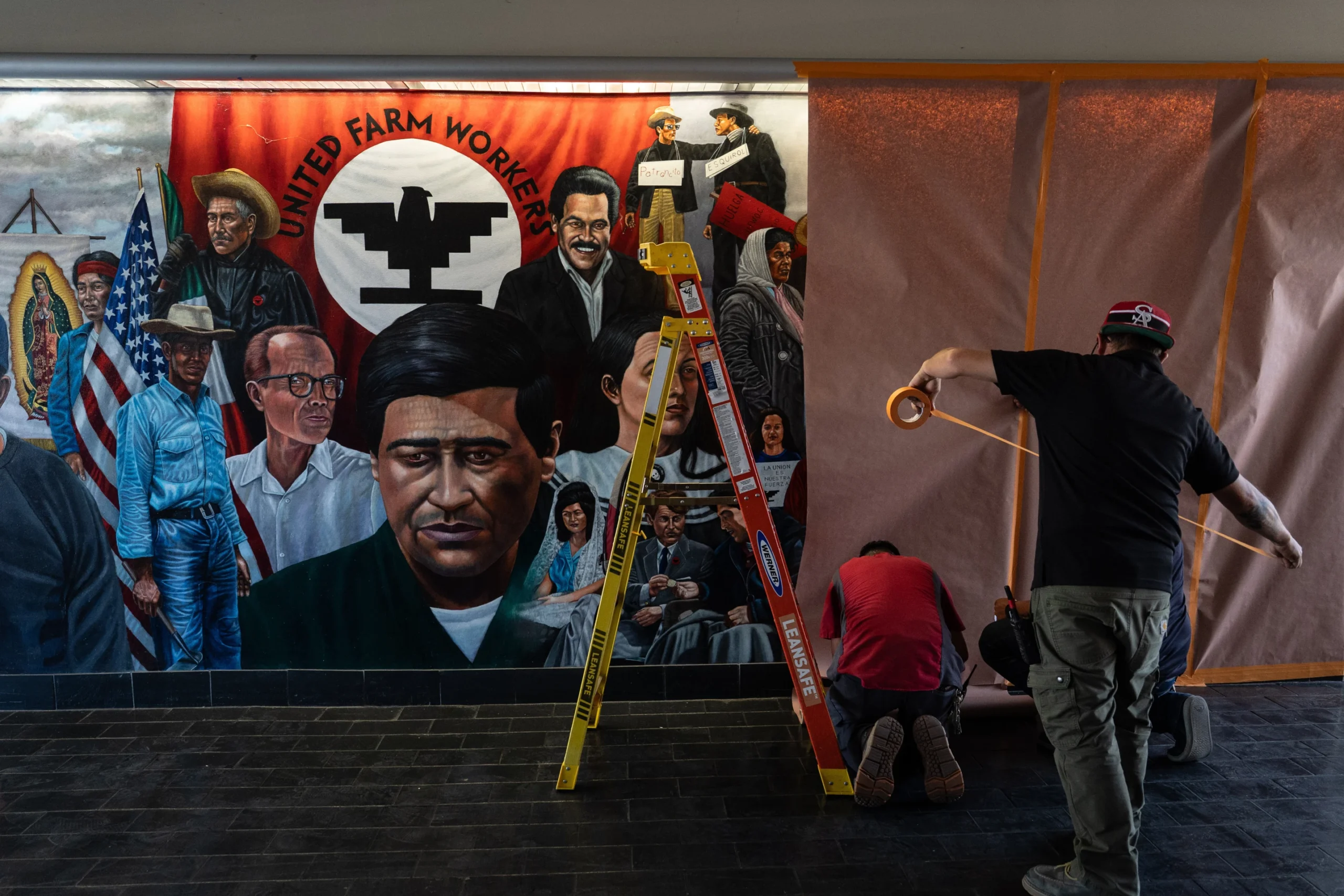
Nearly two weeks after a New York Times report detailing allegations of sexual abuse, communities and rights groups across the country are still figuring out how he should be remembered. His name and image have already been erased from monuments, streets and murals around the country.
Reckoning with a legacy
Bustamante said he learned of the allegations when an old friend called to tell him about the upcoming report. What flashed through his mind, he said, were the faces of others who had known and admired Chavez, and “how their eyes would be devastated.”
“We were looked down upon by society, we were Mexicans,” Bustamante said, recalling the first time he saw Chavez speak outside the Arizona Capitol in 1972 as he launched a hunger strike. He “gave us worth, and for young people that was everything.”
Now, some of Bustamante’s friends have taken down images of Chavez. In his community, Bustamante likened it to denouncing Catholicism and removing photos of the pope.
One person does not make a movement
For many, it’s an example of why movements should not be tied to a single leader.
Teresa Romero, president of United Farm Workers, said the contradiction between the Chavez’s legacy and the allegations is unavoidable.
“We have in one hand César Chavez, the man who committed horrible acts that we’re not going to justify,” Romero said. “On the other hand, we have César Chavez, the organizer who brought thousands and thousands of people together to be able to work for farm workers, and improve their lives and working conditions.”
RELATED: California’s Gov. Newsom supports move to rename César Chavez Day over alleged sexual abuse
Unfortunately, both of those things came from the same person, Romero said.
Sehila Mota Casper, executive director of Latinos in Heritage Conservation, said the farmworker movement was always driven by collective effort.
“The rights and protections that came from it belongs to the people that built it,” she said. “It wasn’t just one individual.”
That perspective, she said, offers a way to move forward: Recognizing Chavez’s role without letting it overshadow the contributions of others, including Huerta, and the challenges they faced.
Advocacy groups like the nonprofit Voto Latino took a similar stance, saying, “The women who organized, marched, and sacrificed alongside farmworkers carried this movement on their backs.”
Dismantling a man, preserving history
The allegations also prompted swift public action. Within days, statues were removed and celebrations cancelled or renamed, including events tied to the federal César Chavez Day on March 31.
Political leaders from both parties have condemned the alleged abuse. Some Republicans, including Texas Gov. Greg Abbott, cited it as part of a broader criticism of Chavez’s progressive legacy.
Abbot said Texas — a state with dozens of Confederate monuments — would no longer celebrate César Chavez Day, saying the allegations “undermine the narrative that elevated Chavez as a figure worthy of official state celebration.”
At the same time, groups like the nonpartisan Latino Victory Project, which focuses on developing Hispanic political leadership, said this current moment should not distract from the still-ongoing civil rights battles.
“Those legacies are unchanged,” said Paul Ortiz, a labor history professor at Cornell University and director of graduate studies for Latino Studies. “And those legacies are all about people power.”
What seems inevitable, Bustamante said, is that there will always be an asterisk next to Chavez’s name.
“Does that take away the greatness of what his accomplishments were, the meaning of them? No, it doesn’t,” he said. “But can we look past that to honor him? That’s the tough part.”
Facts Only
Antonio Bustamante: helped organize workers and joined security team for César Chavez
Young man: moved by Chavez's work and organizing abilities
César Chavez: co-founded United Farm Workers union, led hunger strike, grape boycott, and pressured growers for better wages and working conditions
Dolores Huerta: co-founder of the United Farm Workers with Chavez; one of his victims according to allegations
Allegations of sexual abuse: detailed in a New York Times report
Removal of images of Chavez: some friends of Bustamante have taken down images of Chavez
Statues removed and celebrations cancelled or renamed: following the allegations of sexual abuse
César Chavez Day on March 31: events tied to this day have been affected by the allegations
Executive Summary
Antonio Bustamante, a former protege of labor leader César Chavez, is grappling with the allegations of sexual abuse against Chavez that have recently come to light. The article discusses the contradiction between Chavez's legacy as a civil rights activist and organizer and the accusations of sexual misconduct, which has prompted communities and rights groups across the country to reassess his memory.
The removal of statues and the cancellation or renaming of events tied to César Chavez Day are examples of the public action that followed the allegations. Political leaders from both parties have condemned the alleged abuse, with some using it as part of a broader critique of Chavez's progressive legacy. However, groups focusing on Hispanic political leadership argue that this moment should not overshadow ongoing civil rights battles.
Full Take
Patterns detected: ARC-0024 Ambiguity (The article presents a complex narrative with conflicting elements, inviting readers to grapple with the legacy of César Chavez in light of the sexual abuse allegations).
Steelman: Presenting César Chavez as a highly influential labor leader who played a crucial role in organizing farmworkers and improving their conditions. The article acknowledges his accomplishments but also includes the recent allegations of sexual abuse against him, which have led to a reassessment of his legacy.
Root Cause: The article reflects broader societal debates about the treatment of historical figures who have significant contributions but are also accused of wrongdoings. It raises questions about how we remember and honor such individuals, especially when their actions may be seen as out of step with contemporary values.
Implications: The reassessment of César Chavez's legacy has implications for the broader discussion around historical figures and their legacies, as well as the treatment of sexual abuse allegations in various contexts. It also raises questions about how communities deal with conflicts between an individual's personal behavior and their public contributions.
Bridge Questions: How should we approach reassessing the legacy of historical figures when faced with accusations of wrongdoings? What role do sexual abuse allegations play in shaping a person's legacy, particularly when they have made significant contributions to society?
Sentinel — Human
The text shows signs of being human-written, with a personal narrative and diverse perspectives that are not typically found in synthetic content. However, some stylometric signals suggest the possibility of human authorship.