[The content of this article has been produced by our advertising partner.]
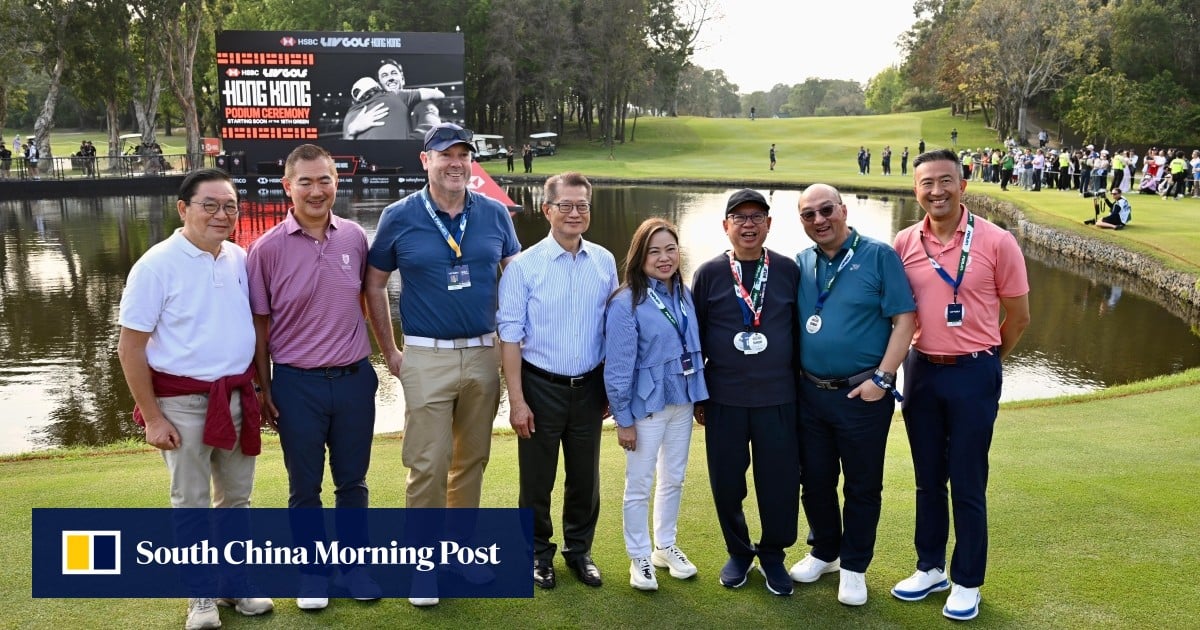
The Hong Kong Jockey Club extends its warmest congratulations on the successful conclusion of this year’s LIV Golf Hong Kong on 8 March at the Hong Kong Golf Club (HKGC) Fanling Golf Course. HKSAR Government Financial Secretary Paul Chan, HKSAR Government Secretary for Culture, Sports and Tourism Rosanna Law, Club Executive Director of Corporate Affairs Raymond Tam and other guests attended the tournament, witnessing the trophy‑lift moment.
The Club additionally supported the launch of the Jockey Club Community Golf Programme, which aims to enhance community participation in and awareness of golf and to promote the sport’s long-term development in Hong Kong.
The Programme will offer activities including school-based events, experiential courses and inter-school competitions, with complimentary tickets made available to people in underprivileged communities. In the lead-up to the golf tournament, elite international golfers visited a primary school to engage with students and inspire interest in the sport. Arrangements were also made for golf professionals from HKGC to mentor young players of differing abilities to promote inclusion. These initiatives aim to give young and underprivileged people opportunities to experience the excitement of golf both on and off the course.
The Club’s booth in the fan village added further colour to the event by offering attendees the chance to explore sports beyond golf. Members of the Club’s CARE@HKJC Volunteer Team also took part, creating balloon figures and bringing joy to spectators.
Through these activities and engagement opportunities, local residents had more opportunities to connect with golf, while top golfers and visitors from around the world experienced Hong Kong's unique character and its capability to host high-calibre major events. This, in turn, helped strengthen the Hong Kong brand and share positive stories about the city.
In 2024/25, the Club’s Charities Trust supported eight “M” Mark events as Official Community Partner. These included the Hong Kong Sevens, the Volleyball Nations League and the Hong Kong Open Badminton Championships, reaching over 81,000 beneficiaries. These partnerships not only inspire the community’s enthusiasm for sport but support the HKSAR Government in strengthening Hong Kong’s status as a premier destination for outstanding sports competitions and major cultural events.
The Club’s support for these sports events, like all its charity and community donations, is made possible by its unique integrated business model through which racing and responsible sports wagering generate substantial tax contributions, charity support and employment opportunities for Hong Kong.
Facts Only
The Hong Kong Jockey Club was the Official Community Partner for the LIV Golf Hong Kong tournament, held on 8 March at the Hong Kong Golf Club’s Fanling Golf Course.
Attendees included HKSAR Government Financial Secretary Paul Chan, Secretary for Culture, Sports and Tourism Rosanna Law, and Club Executive Director of Corporate Affairs Raymond Tam.
The Club launched the Jockey Club Community Golf Programme to increase community participation in golf.
The Programme includes school-based events, experiential courses, inter-school competitions, and complimentary tickets for underprivileged communities.
Elite international golfers visited a primary school before the tournament to engage with students.
Golf professionals from the Hong Kong Golf Club mentored young players of varying abilities to promote inclusion.
The Club operated a booth in the fan village offering sports-related activities and had volunteers creating balloon figures for spectators.
In 2024/25, the Club’s Charities Trust supported eight “M” Mark events, including the Hong Kong Sevens, Volleyball Nations League, and Hong Kong Open Badminton Championships.
These initiatives reached over 81,000 beneficiaries.
The Club’s funding for these programs comes from its integrated business model, which includes racing and sports wagering revenues.
Executive Summary
The Hong Kong Jockey Club served as the Official Community Partner for the LIV Golf Hong Kong tournament, which concluded on 8 March at the Hong Kong Golf Club’s Fanling Golf Course. High-profile attendees included HKSAR Government officials, such as Financial Secretary Paul Chan and Secretary for Culture, Sports and Tourism Rosanna Law, alongside Club executives. Beyond sponsorship, the Club launched the Jockey Club Community Golf Programme to broaden access to the sport, particularly for underprivileged youth, through school-based activities, free tickets, and mentorship initiatives. Elite golfers and professionals engaged with students and young players, emphasizing inclusion. The Club also enhanced the event’s fan experience with interactive booths and volunteer-led activities.
This initiative aligns with the Club’s broader strategy of supporting major sports events in Hong Kong, including the Hong Kong Sevens and the Volleyball Nations League, as part of its Charities Trust’s 2024/25 commitments. These efforts aim to bolster Hong Kong’s reputation as a host for high-profile competitions while fostering community engagement. The Club’s funding model, which relies on racing and sports wagering revenues, enables these charitable contributions, tax payments, and employment opportunities. The narrative underscores a dual focus: promoting sports development and reinforcing Hong Kong’s global event-hosting capabilities.
Full Take
The strongest version of this narrative presents the Hong Kong Jockey Club as a catalyst for both elite sports and grassroots development, leveraging its financial model to create tangible community benefits. The emphasis on inclusion—through mentorship, free access, and school engagement—aligns with broader social responsibility goals, while the high-profile event reinforces Hong Kong’s status as a global sports hub. The integration of government officials and international athletes lends credibility, framing the initiative as a public-private partnership with measurable impact.
However, the narrative leans heavily on institutional authority and borrowed credibility (ARC-0024 Ambiguity, ARC-0043 Motte-and-Bailey). The Club’s role is portrayed as unquestionably benevolent, yet the funding model—rooted in gambling revenues—raises ethical questions about the trade-offs between charitable outcomes and the social costs of wagering. The focus on "underprivileged communities" as beneficiaries is commendable, but the article lacks voices from those communities, creating a top-down framing that risks sanitizing systemic inequities. The pattern of using sports as a vehicle for soft power and brand enhancement is evident, echoing historical trends where elite events are paired with philanthropic gestures to legitimize broader agendas.
The root cause here is the intersection of corporate social responsibility and urban branding. Hong Kong’s government and institutions are actively positioning the city as a premier destination for major events, using sports as a tool for economic and reputational gains. The unstated assumption is that trickle-down engagement—from elite tournaments to grassroots programs—will yield long-term social cohesion. Yet, the second-order consequences merit scrutiny: Does this model genuinely democratize access to sports, or does it reinforce dependency on institutional patronage? Who defines "underprivileged," and how are their needs assessed beyond symbolic inclusion?
Bridge questions: How might the Club’s initiatives be evaluated for long-term impact beyond participation metrics? What alternative funding models could achieve similar goals without relying on gambling revenues? If the primary beneficiaries of these events are Hong Kong’s global image and the Club’s reputation, how can the community ensure its interests remain central rather than instrumental?
Counterstrike scan: A coordinated influence campaign would amplify the Club’s role as a benevolent actor while downplaying critiques of its funding model, using emotional appeals (e.g., "inspiring youth") and authority figures to preempt skepticism. The actual content aligns with this pattern but stops short of outright manipulation—it’s a polished institutional narrative, not a deceptive one. The absence of critical perspectives or data on gambling’s societal costs is notable but expected in a promotional context.
Sentinel — Human
The article shows strong signs of human authorship, with natural stylistic variation, specific institutional details, and a clear promotional voice typical of corporate press releases.