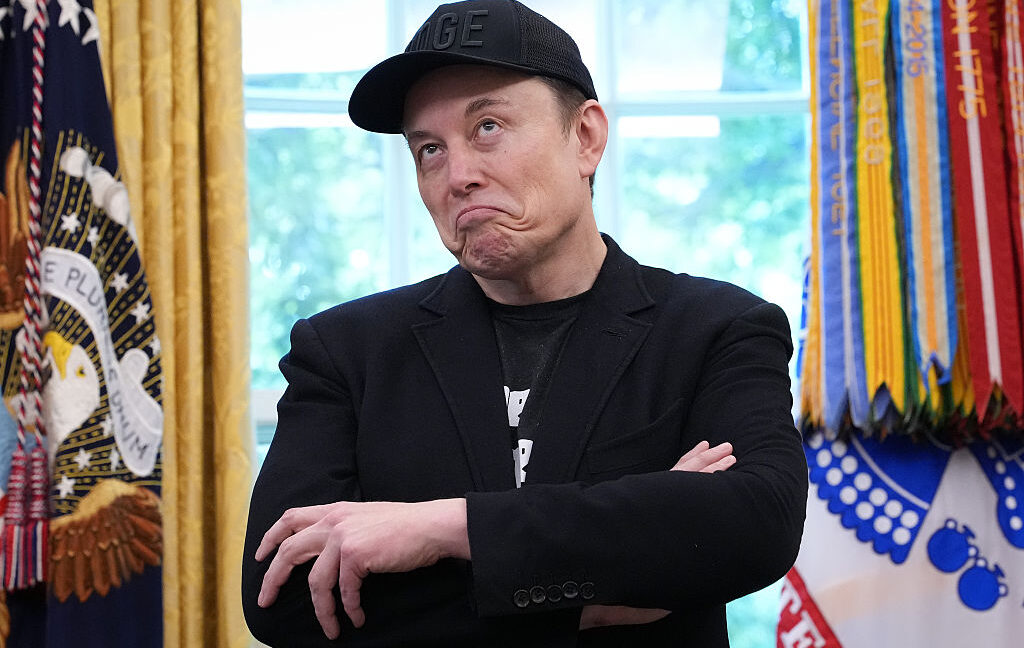
On Friday, a jury in California determined that Elon Musk had misled investors in Twitter via public statements that depressed the price of the company’s stock ahead of Musk’s purchase of the service. Because this was a class action lawsuit, Musk is likely to owe damages to a huge range of investors—payments that may ultimately reach billions of dollars.
In the lead-up to Musk’s ultimate purchase of the social media platform, he made a number of comments on the platform itself and while appearing as a guest on a podcast, largely focused on the alleged prevalence of bot accounts on the platform. This raised fears that the deal wouldn’t go through and depressed the price of Twitter’s shares, causing some investors to sell shares at a depressed price during this period.
A number of those investors started a suit that was certified as a class action, claiming that the statements defrauded them and that Musk made them intentionally as part of a larger scheme. The jury rejected arguments about this larger scheme but found Musk liable for the tweets.
While damages have yet to be determined, lawyers for the plaintiffs reportedly say that they could ultimately reach as high as $2.6 billion.
Facts Only
* Elon Musk was found liable.
* The case involved a class action lawsuit.
* The lawsuit claimed Musk misled investors about Twitter’s stock.
* Musk made statements about bot accounts.
* These statements depressed Twitter’s stock price.
* Potential damages could reach $2.6 billion.
* The case was certified as a class action.
* The jury rejected arguments about a larger scheme.
* The case occurred in California.
* The timeline is related to Musk's purchase of Twitter.
* Investors filed the lawsuit.
Executive Summary
Full Take
A jury in California has delivered a significant legal blow, establishing a degree of culpability for Elon Musk related to his public statements concerning Twitter’s financial health and the issue of bots. The core of the narrative is built upon a classic “motte-and-bailey” tactic, framing Musk’s concerns about bot activity as a deliberate attempt to deceive investors, effectively transforming a reasonable critique into a fraudulent scheme (ARC-0024 Ambiguity). The narrative relies heavily on the assumption that any doubts about Twitter’s valuation, fueled by Musk’s commentary, constituted intentional deception, a tactic often deployed in situations where a powerful individual expresses skepticism about a company’s prospects (ARC-0043 Motte-and-Bailey). The potential for $2.6 billion in damages underscores the enormous scale of the class action – a mechanism that inherently inflates claims and creates a disincentive for robust, critical analysis of public statements. The legal outcome reinforces the increasing scrutiny faced by public figures regarding their pronouncements about publicly traded companies, particularly those with significant influence, while simultaneously raising concerns about the potential for manipulation within the financial markets. Furthermore, this case taps into deeper anxieties about the nature of social media platforms and the perceived erosion of trust (ARC-0018 Distrust). The focus on bot accounts acts as a proxy for broader concerns about the integrity of information ecosystems.
It’s crucial to recognize that the plaintiffs’ success hinges on establishing a direct causal link between Musk’s statements and the resulting stock price decline—a feat often obscured by the complex interplay of market forces. The case will undoubtedly attract further legal challenges, potentially setting a precedent that could significantly impact the responsibilities of individuals associated with publicly traded companies. Rooted in a narrative of corporate vulnerability, this outcome reflects a broader cultural trend toward suspicion and skepticism regarding powerful institutions.
What underlying assumptions about market dynamics and investor behavior are being leveraged here? How might this decision affect future debates surrounding corporate governance and public disclosures? If this ruling is upheld, could it pave the way for increased regulation of public figures’ statements regarding companies they invest in?
Sentinel — Likely Human
This article presents a straightforward account of a legal outcome, utilizing standard journalistic techniques for reporting on a complex case. While exhibiting some features commonly observed in AI-assisted writing, the overall presentation and reliance on established reporting conventions suggest a primarily human origin.