Radeon RX 9070 XT bundle bonanza includes free SSDs, AIO coolers, and power supplies for $699 — Red Team rescues gamers with reasonably-priced GPU bundles
Solid alternative to the RTX 5070 Ti without the AI tax.
Get Tom's Hardware's best news and in-depth reviews, straight to your inbox.
You are now subscribed
Your newsletter sign-up was successful
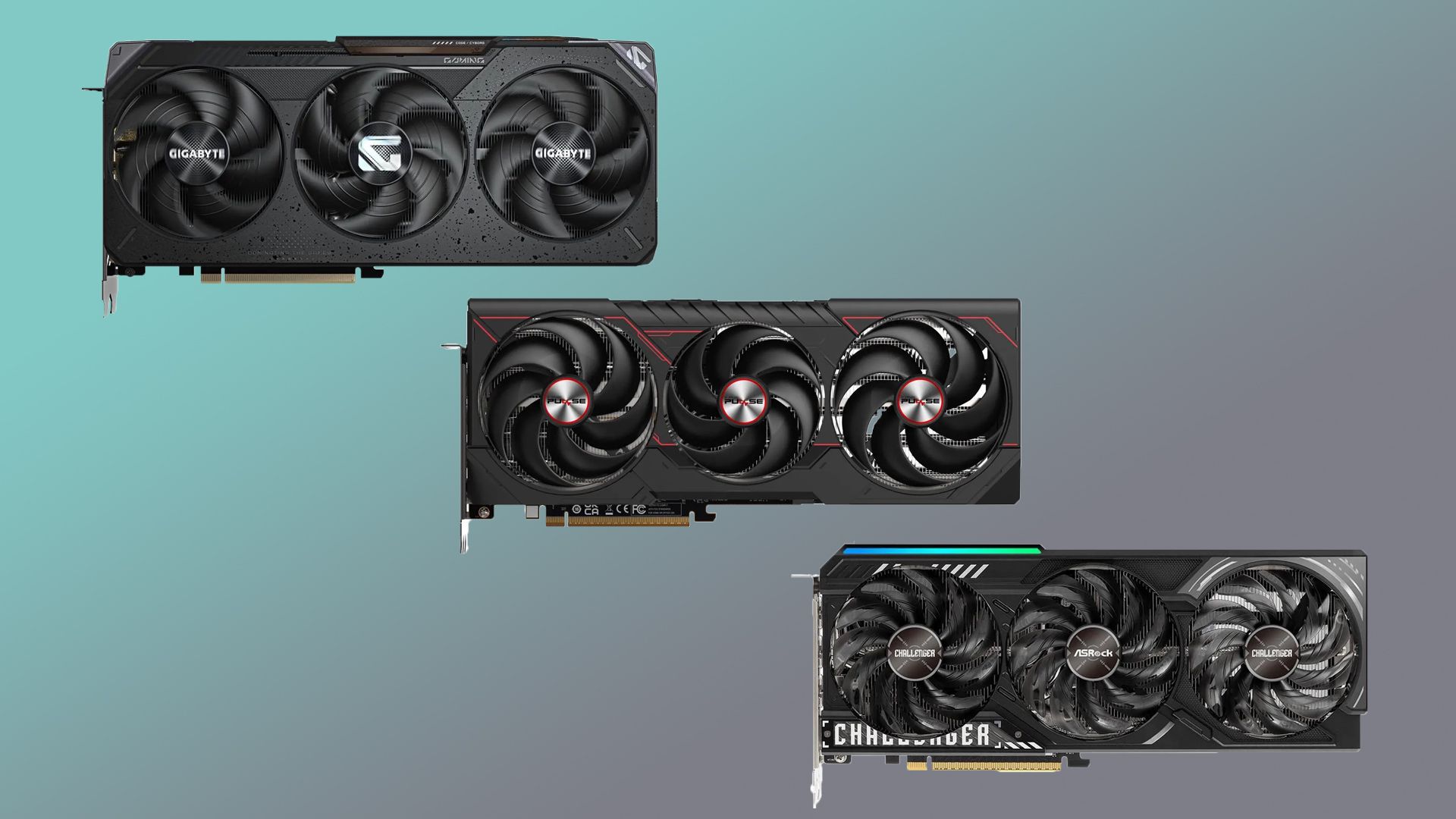
The AMD Radeon RX 9070 XT is one of the best graphics cards in 2026. The graphics card is now available at $699 through different bundles. Newegg has listed the ASRock Challenger Radeon RX 9070 XT at $729.99, the Gigabyte Radeon RX 9070 XT Gaming OC at $739.99, and the Sapphire Pulse Radeon RX 9070 XT at $769.99. By applying dedicated promo codes at checkout, buyers can bring the price down to $699, plus a free copy of Crimson Desert and an additional PC component, depending on the model.
- Check out the Sapphire Pulse Radeon RX 9070 XT deal on Newegg
- Check out the ASRock Challenger Radeon RX 9070 XT deal on Newegg
- Check out the Gigabyte Radeon RX 9070 XT Gaming OC deal on Newegg
The ASRock Challenger Radeon RX 9070 XT includes a 360mm AIO liquid cooler, the Gigabyte Radeon RX 9070 XT Gaming OC comes with a free 512GB PCIe 4.0 SSD, and the Sapphire Pulse Radeon RX 9070 XT bundles a 750W Gold-rated power supply.
The Radeon RX 9070 XT is a well-rounded 4K gaming GPU that offers performance on par with the RTX 5070 Ti at a lower cost. That said, the GPU market continues to spiral, as street prices for most modern GPUs are significantly higher than MSRP due to ongoing DRAM shortages driven by AI. On top of that, AMD recently raised the price of its Radeon RX 9000 series by $10 per 8GB of VRAM, effectively increasing the MSRP of the RX 9070 XT from $599 to $619.
The Radeon RX 9070 XT was introduced last year, based on AMD’s RDNA 4 architecture, with 64 compute units, a boost clock speed of 2.97 GHz, 16GB of GDDR6 VRAM with 20 Gbps transfer speeds over a 256-bit interface, and a TBP (Total Board Power) of 304W. Our testing found that the RX 9070 XT delivers similar performance in both 1440p and 4K gaming at ultra settings compared to Nvidia’s RTX 5070 Ti. It is worth noting that the 5070 Ti is currently priced significantly higher, with prices starting at $1,000 compared to its MSRP of $749.
For those looking to upgrade, these deals make the RX 9070 XT a more compelling option, especially with the free bundled items on Newegg. However, with prices still elevated across the board, buyers will need to weigh whether to jump in now or wait for the market to stabilize.
Follow Tom's Hardware on Google News, or add us as a preferred source, to get our latest news, analysis, & reviews in your feeds.
Get Tom's Hardware's best news and in-depth reviews, straight to your inbox.
Kunal Khullar is a contributing writer at Tom’s Hardware. He is a long time technology journalist and reviewer specializing in PC components and peripherals, and welcomes any and every question around building a PC.
Facts Only
AMD Radeon RX 9070 XT is available at $699 through bundles on Newegg.
ASRock Challenger Radeon RX 9070 XT is listed at $729.99, reducible to $699 with a promo code.
Gigabyte Radeon RX 9070 XT Gaming OC is listed at $739.99, reducible to $699 with a promo code.
Sapphire Pulse Radeon RX 9070 XT is listed at $769.99, reducible to $699 with a promo code.
Bundles include free copies of *Crimson Desert* and additional components.
ASRock Challenger bundle includes a 360mm AIO liquid cooler.
Gigabyte Gaming OC bundle includes a 512GB PCIe 4.0 SSD.
Sapphire Pulse bundle includes a 750W Gold-rated power supply.
RX 9070 XT features 64 compute units, 2.97 GHz boost clock, 16GB GDDR6 VRAM, and 304W TBP.
RX 9070 XT performance is comparable to Nvidia’s RTX 5070 Ti in 1440p and 4K gaming.
RTX 5070 Ti is currently priced starting at $1,000, above its $749 MSRP.
AMD raised RX 9000 series prices by $10 per 8GB of VRAM, increasing RX 9070 XT MSRP from $599 to $619.
GPU market prices remain elevated due to AI demand and DRAM shortages.
Executive Summary
Full Take
The strongest version of this narrative highlights AMD’s strategic bundling as a consumer-friendly move in a market distorted by AI-driven demand and supply constraints. By offering tangible value—like SSDs, coolers, and PSUs—AMD positions the RX 9070 XT as a pragmatic choice for gamers facing inflated prices. The comparison to Nvidia’s RTX 5070 Ti underscores a broader industry trend: AI’s "tax" on hardware is reshaping pricing structures, with AMD’s price hike on VRAM reflecting systemic pressures. However, the framing of these bundles as a "rescue" for gamers risks oversimplifying the issue. The bundles are still priced above the original MSRP, and the added components may not align with every buyer’s needs. This raises questions about whether the deals are genuinely consumer-centric or a clever way to offload inventory in a constrained market.
Patterns detected: ARC-0024 Ambiguity (framing bundles as a "rescue" without addressing long-term market distortions), ARC-0043 Motte-and-Bailey (implied criticism of Nvidia’s pricing while downplaying AMD’s own price increases).
The root cause here is the collision of gaming and AI demand, where DRAM shortages and corporate pricing strategies create a zero-sum game for consumers. The narrative assumes that bundling mitigates harm, but it doesn’t address whether this is a sustainable solution or a temporary band-aid. Who benefits? AMD and its partners move inventory; consumers get short-term value but may still overpay. Second-order consequences could include normalized higher prices or reduced competition if Nvidia follows suit with its own bundles.
Bridge questions: How much of this bundling strategy is driven by genuine consumer benefit versus supply chain necessity? Would AMD offer these deals if DRAM prices were stable? What would it take for the market to correct itself—technological shifts, regulatory intervention, or consumer pushback?
Counterstrike scan: A coordinated influence campaign would amplify the "rescue" framing to paint AMD as a hero while obscuring its role in price increases. The actual content aligns partially—it acknowledges AMD’s price hike but still leans into the consumer-friendly angle. This isn’t outright manipulation, but it’s a soft sell that could be weaponized by bad actors to polarize brand loyalty.