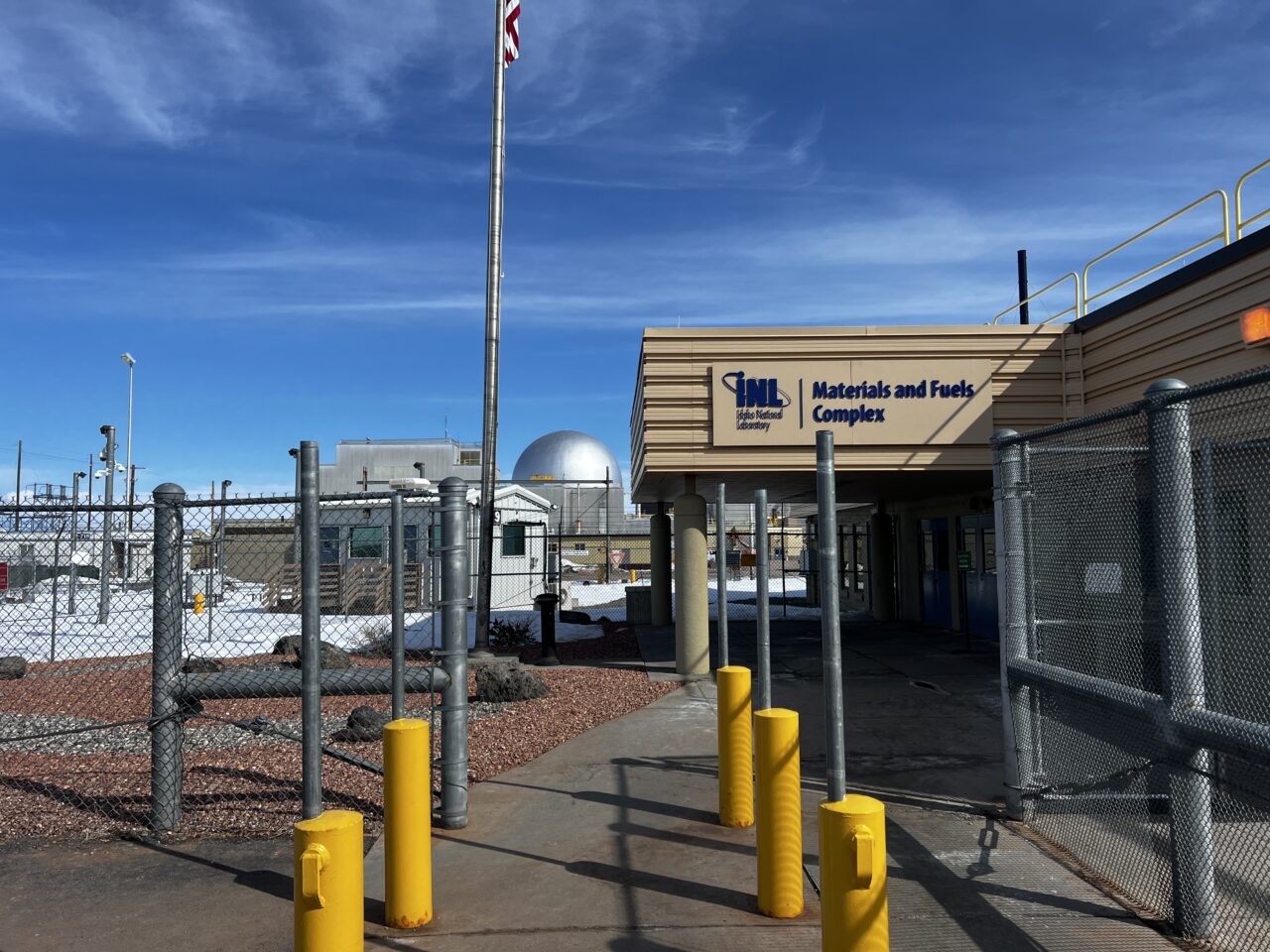
The Senate Committee on Energy and Natural Resources convened March 19 for a full committee hearing to examine the Department of Energy’s (DOE’s) implementation of President Trump’s May 2025 nuclear energy executive orders. Three witnesses—DOE Assistant Secretary Theodore Garrish, Kairos Power CEO Dr. Michael Laufer, and Idaho National Laboratory (INL) Director Dr. John C. Wagner—testified, painting a picture of an American nuclear sector moving with urgency not seen in decades, while flagging the supply chain vulnerabilities, regulatory ambiguities, and workforce gaps that could slow the momentum. Here are the key takeaways from their testimony.
1. The 400-GW Target Is Driving Everything
The administration’s goal of expanding U.S. nuclear capacity from roughly 100 GW today to 400 GW by 2050—a quadrupling in less than 30 years—served as the organizing principle across all three testimonies. Assistant Secretary Garrish (Figure 1) framed the ambition as part of President Trump’s broader “Energy Dominance Agenda,” while INL Director Wagner described it as requiring a simultaneous push on every front: uprating existing reactors, restarting shuttered plants, demonstrating advanced designs, and getting at least 10 new large reactors under construction by 2030.
The four executive orders signed in May 2025 established what Wagner called “the most aggressive nuclear-deployment timelines in American history,” including the headline goal of three reactors achieving criticality by July 4, 2026, the U.S.’s 250th anniversary. Wagner expressed optimism that the milestone will be met.
2. Near-Term Capacity Is Coming from Restarts and Uprates
While much of the nuclear conversation centers on next-generation reactor designs, Garrish emphasized that the shortest path to new megawatts runs through the existing fleet. The DOE announced a $1 billion loan for the Crane Restart project in Pennsylvania, which is expected to bring 835 MW online by 2028. The Palisades plant in Michigan is expected to restart this summer, adding another 800 MW.
Perhaps most notably, Garrish testified that reactor uprates alone, that is, improving efficiency and output at operating plants, could add 2.5 GW by 2027 and 5 GW by 2029 at a fraction of the cost of new construction. This forms the core of the DOE’s strategy to meet surging demand in the short term while building new capacity for the long term.
3. Enrichment and Fuel Supply Are a Critical Vulnerability
All three witnesses flagged domestic fuel supply as one of the most urgent challenges facing the nuclear buildout. In 2024, Russian imports still accounted for roughly 20–25% of the enriched uranium consumed by U.S. reactors. With the Prohibiting Russian Uranium Imports Act now in effect, the U.S. must fill a gap of more than 3 million separative work units (SWUs) to maintain the current fleet, let alone fuel new reactors.
Garrish announced three $900 million enrichment awards designed to produce both low-enriched uranium (LEU) and high-assay low-enriched uranium (HALEU). Wagner pointed out that no commercial-scale HALEU production exists outside Russia and China, and that projected demand through 2030 will far exceed current capacity. He described multiple pathways being pursued in parallel: Urenco’s expansion in New Mexico, Orano’s Oak Ridge facility, Centrus scaling HALEU production, new entrants like General Matter, and INL’s own Zirconium Extraction (ZIRCEX) process for recovering uranium from spent fuel.
Kairos Power’s Laufer raised a lesser-known but equally consequential supply chain vulnerability: enriched lithium-7. His company’s molten salt reactors require Flibe coolant, which is a chemically stable mixture of lithium-fluoride and beryllium-fluoride salts, enriched to greater than 99.99% in the lithium-7 isotope, and no domestic supplier currently produces it at scale. Historical U.S. stockpiles are projected to run out in the early 2030s, with remaining supply importable only from Russia. Kairos Power broke ground on a salt production facility in Albuquerque, New Mexico, in 2024 to address this gap, a facility Laufer said could potentially serve the entire U.S. nuclear industry.
4. Kairos Power Offers a Case Study in a New Development Model
Laufer’s testimony (Figure 2) provided a detailed window into how at least one advanced reactor company is approaching the challenge differently. Kairos Power, which grew from a 2012 DOE-funded university research project to more than 550 employees, is building the Hermes demonstration reactor in Oak Ridge, Tennessee. It is the first Generation IV (Gen IV) reactor approved for construction by the Nuclear Regulatory Commission (NRC) and the first non-light-water reactor to receive a U.S. construction permit in more than 50 years.
The company’s approach emphasizes rapid iteration through a series of non-nuclear engineering test units (ETUs), vertical integration of manufacturing to control supply chain risk, and milestone-based contracting with the DOE. Under a $303 million technology investment agreement—the first of its kind at DOE—Kairos Power is paid only upon achieving predetermined milestones. Laufer advocated strongly for this model to become the standard for federal energy innovation funding, arguing it places the government in the role of an investor seeking results rather than paying for work.
Kairos Power has also secured a landmark power purchase agreement (PPA) through a tri-party collaboration with the Tennessee Valley Authority (TVA) and Google, under which the Hermes 2 demonstration plant will deliver up to 50 MW to the TVA grid, supporting Google data centers. It is the first PPA in which a U.S. utility has agreed to buy electricity from an advanced Gen IV reactor, and the first deployment under a broader deal with Google to build up to 500 MW of new nuclear generation by 2035.
5. INL Is Building a One-of-a-Kind Demonstration Ecosystem
Wagner’s testimony detailed a suite of testing facilities at INL that together form what he described as an integrated reactor demonstration ecosystem unmatched anywhere in the world. The highlights include DOME (Demonstration of Microreactor Experiments, which repurposed the former Experimental Breeder Reactor-II facility for microreactor demonstrations, with construction completion anticipated by March 31, 2026); LOTUS (Laboratory for Operation and Testing in the United States, a test bed for first-of-a-kind experimental microreactors); SPARC (System Physics Advanced Reactor Critical Facility, a critical experiment facility for nuclear physics testing of new fuels and designs); and RACE (Reactor and Critical Experiment Facility, which supports defense and space reactor systems).
The Nuclear Energy Launch Pad, modeled after NASA’s Stennis and Marshall Space Flight Center approach, establishes more than 2,000 acres at INL specifically for privately funded advanced nuclear facilities. It offers developers shared infrastructure, pre-completed site characterization, and a choice between DOE authorization and NRC licensing pathways.
Ten companies and 11 projects have been selected for the Reactor Pilot Program established by executive order, including Aalo Atomics, Oklo, Radiant, Antares, and others. Multiple reactors are targeting the July 4, 2026, criticality deadline.
6. AI and Nuclear Are Becoming Symbiotic
Wagner described the artificial intelligence (AI)–nuclear relationship as running in both directions: AI is accelerating nuclear development, and nuclear is enabling AI infrastructure. INL is collaborating with Amazon, Microsoft, NVIDIA, and others to develop AI tools for reactor design, safety analysis, and operations. Early results show development speed more than doubling for certain tasks.
Two flagship INL programs stood out. PROMETHEUS aims to demonstrate an autonomous reactor designed, analyzed, manufactured, and operated by AI systems, promising up to fivefold schedule acceleration. VULCAN targets materials discovery and qualification—historically a 10-to-20-year bottleneck—using AI-driven experimentation to compress timelines dramatically.
The commercial dimension is equally significant. Wagner noted that Microsoft, Google, Amazon, and Oracle have all made commitments to nuclear-powered data center infrastructure, with Microsoft’s 20-year commitment to the Crane Clean Energy Center as the leading example.
7. China and Russia Dominate Global Nuclear Construction and Exports
Wagner’s testimony laid out the competitive landscape in stark terms. China and Russia account for 94% of all reactors currently under construction worldwide—59 of 63 units. Since 2017, 92% of all global reactor construction starts have been Chinese or Russian designs. China alone has 32 reactors under construction and is on track to surpass the U.S. in total nuclear capacity by 2030. Russia’s Rosatom is building 27 units, including 20 reactors in seven other countries.
The stakes extend well beyond electricity markets. Nations that purchase reactors select long-term strategic partners for fuel supply, training, maintenance, regulatory development, and nonproliferation monitoring across relationships spanning 60 to 80 years. Wagner argued that the competition for nuclear exports is ultimately a competition to shape the global nonproliferation regime itself.
There are signs of opportunity: Poland has selected Westinghouse AP1000 technology for a $47 billion project, Ukraine has committed to nine AP1000s, and Bulgaria and Romania are pursuing U.S. designs. But Wagner emphasized that foreign customers purchase proven technology, making domestic deployment essential to export success.
8. DOE Authorization Authority Needs Statutory Clarification
One of the most policy-significant portions of the hearing was Wagner’s detailed case for expanding the DOE’s authority to authorize reactor construction and operation. The current framework, rooted in the Atomic Energy Act and Energy Reorganization Act, creates ambiguity about which projects require NRC licensing versus DOE authorization. Language covering “demonstration nuclear reactors” intended for “commercial application” is undefined, and Wagner argued it could force projects into NRC timelines that conflict with executive order goals.
Wagner (Figure 3) recommended two specific statutory changes. First, clarifying that the DOE can authorize non-commercial demonstration reactors without NRC approval regardless of whether the design is intended for eventual commercial use; and second, explicitly authorizing the DOE to approve commercial reactor projects on federal lands. He emphasized this would not mean relaxed safety standards—the DOE’s authorization framework has supported 52 reactor operations at INL—but rather applying a rigorous, experienced framework to a broader set of activities.
He also called for eliminating the mandatory hearing requirement for new reactor licenses, noting that INL’s analysis found these hearings add four to seven months to every licensing action while never reaching a different conclusion than NRC staff.
9. The Nuclear Waste Question Hasn’t Gone Away
While the hearing’s focus was on deployment, Wagner noted that the Nuclear Waste Policy Act of 1982 reflects priorities from four decades ago and was designed without consideration of advanced reactor fuel cycles, recycling pathways, or consolidated interim storage. The DOE established the Center for Used Fuel Research at INL in January 2026, and the agency’s Nuclear Lifecycle Innovation Campus initiative is seeking state partners to host comprehensive fuel-cycle facilities. Wagner urged Congress to begin updating the statutory framework for spent fuel management now, warning that the need has only grown more urgent as the advanced reactor fleet takes shape.
10. International Markets Represent Both Opportunity and Strategic Imperative
Garrish, drawing on his previous role as Assistant Secretary for International Affairs, emphasized that successful domestic deployment positions U.S. companies to compete for global reactor contracts. Intergovernmental agreements brokered during the first Trump administration are expected to lead to U.S. reactor deployments in Poland and Romania, and the DOE is looking to expand into Eastern Europe, Asia, and smaller countries developing civil nuclear programs.
The International Nuclear Energy Act of 2025, included in the fiscal year 2026 National Defense Authorization Act (NDAA), authorizes $65.5 million for export support, establishes a Nuclear Export Working Group, and mandates pursuit of at least 20 new Section 123 nuclear cooperation agreements. But as Wagner emphasized, no amount of export financing can substitute for the credibility of active domestic deployment.
Looking Ahead
The testimony from all three witnesses converged on a central theme: the alignment of market demand, policy support, private investment, and technological readiness has created a window for American nuclear energy that may not remain open indefinitely. The challenges—fuel supply, regulatory clarity, workforce development, manufacturing capacity, and nuclear waste management—are substantial but addressable. Whether the U.S. capitalizes on this moment will depend on sustained collaboration between Congress, the executive branch, national laboratories, and the private sector. As Wagner put it, “The nuclear energy future we have long envisioned is no longer a distant aspiration. It is our immediate responsibility.”
—Aaron Larson is POWER’s executive editor.
Facts Only
* The U.S. Department of Energy (DOE) is exploring expanding its authority to authorize nuclear reactor construction and operation.
* The hearing focused on demonstration nuclear reactors intended for commercial application.
* The Atomic Energy Act and Energy Reorganization Act create ambiguity regarding DOE authorization versus Nuclear Regulatory Commission (NRC) licensing.
* The DOE aims to expedite project timelines by streamlining the authorization process.
* The NRC currently requires a hearing for new reactor licenses, adding four to seven months to the process.
* The DOE’s authorization framework has supported 52 reactor operations at INL.
* The DOE is seeking to authorize non-commercial demonstration reactors without NRC approval.
* The DOE seeks to explicitly authorize commercial reactor projects on federal lands.
* The International Nuclear Energy Act of 2025 aims to support export of U.S. reactor technology.
* The DOE established the Center for Used Fuel Research at INL.
* The Nuclear Waste Policy Act of 1982 is being re-evaluated in light of advanced reactor fuel cycles.
* The DOE is developing the Nuclear Lifecycle Innovation Campus initiative.
Executive Summary
Full Take
Patterns detected: ARC-0024 Ambiguity – The language around “commercial application” within the Atomic Energy Act is demonstrably vague, creating a crucial ambiguity. This creates a space for the DOE to claim broad authority based on a definition that is open to subjective interpretation. It's a classic motte-and-bailey tactic – building a higher point (commercial application) to defend a narrower one (demonstration reactors).
The entire narrative is structured around a narrative of “urgency.” The framing repeatedly emphasizes a limited window of opportunity for American nuclear energy, fueling a desire for immediate action and potentially overlooking longer-term systemic challenges. This echoes a common pattern in technological transitions: an initial burst of enthusiasm followed by periods of regulatory friction.
The underlying paradigm is a blend of American exceptionalism – the belief that the U.S. can “solve” problems through technological innovation – and a pragmatic interest in energy security. This combination inevitably leads to a tendency to prioritize national interests over international norms or concerns about proliferation. The emphasis on export opportunities suggests a covert ambition to extend U.S. influence via nuclear technology.
The implications are profoundly unsettling. Giving the DOE control over reactor licensing fundamentally shifts the balance of power. Without robust oversight, there's a heightened risk of prioritizing speed over safety, and potentially introducing systemic biases into the regulatory process. It's a classic case of weaponizing innovation – using a seemingly benign technology to expand state capacity.
The root cause is a fundamental misalignment between the legal architecture established in the 1980s and the realities of 21st-century nuclear technology. The Nuclear Waste Policy Act reflects a linear, fission-based model that’s entirely inadequate for advanced reactor designs that could recycle fuel or consolidate waste.
Regarding the counterstrike scan, if a bad actor were to deliberately amplify this narrative, they would likely focus on highlighting the potential for job creation, national security benefits, and technological leadership – all while downplaying the inherent risks and uncertainties. They’d likely utilize emotionally charged language ("bold vision," "America's future") to generate support, and then subtly shift the focus to the need for decisive action, creating a sense of pressure.
Sentinel — Likely Human
This article presents a detailed, highly structured overview of the Department of Energy's nuclear energy initiatives, primarily through witness testimony. While well-researched, the text’s rigid structure, excessive hedging, and uniform sentence rhythms suggest a degree of AI assistance, though it leans heavily on factual detail and a proactive, optimistic viewpoint characteristic of human journalism.