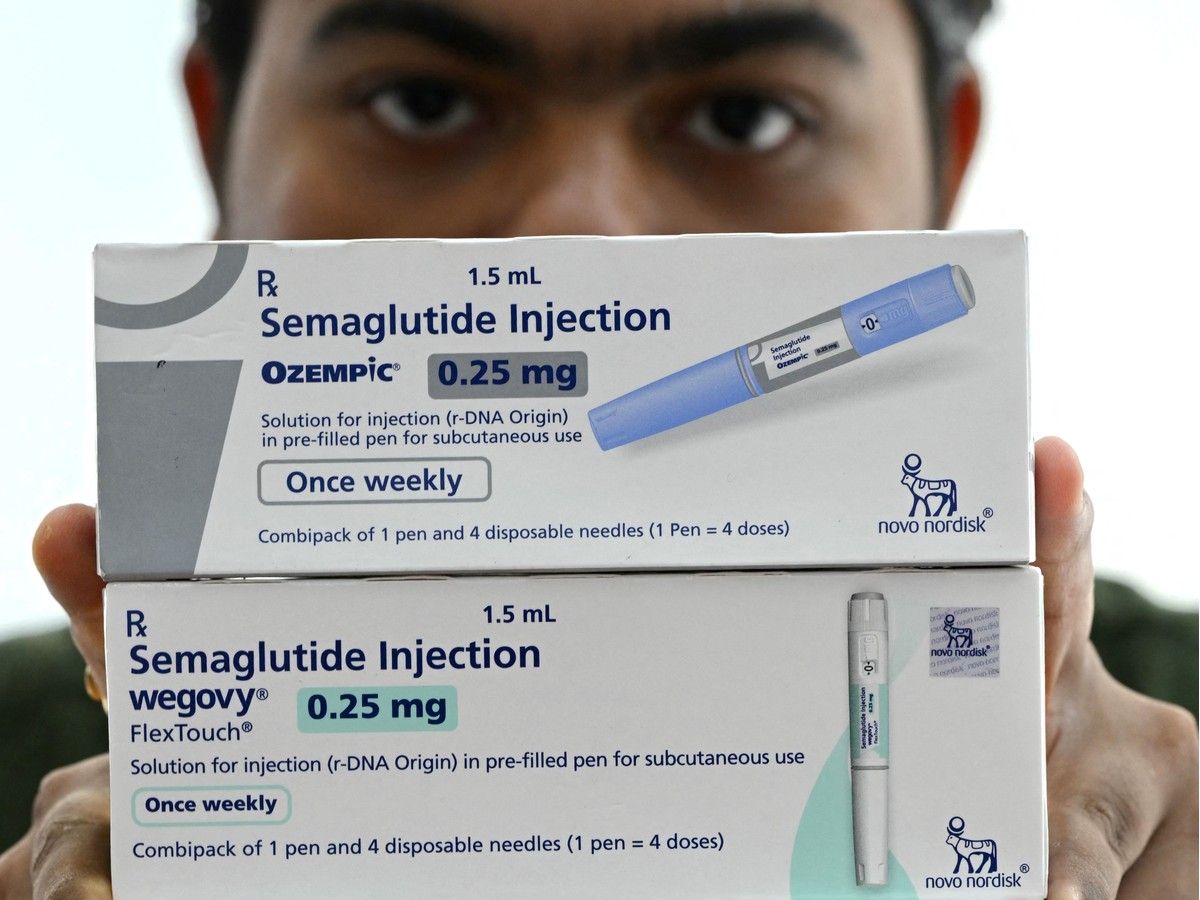
Patients in Canada have been paying between $300 and $400 a month for Ozempic and Wegovy, depending on the prescribed dose
With the expiration of the Canadian patents for weight-loss drugs Ozempic and Wegovy in January, experts are looking to mid-summer for cheaper generic replacements to come on the market.
The patents kept the cost of those drugs high because Danish drug manufacturer Novo Nordisk was the only company that could make them.
Patients in Canada have been paying between $300 and $400 a month, depending on the prescribed dose.
Dr. Sanjeev Sockalingam, scientific director of Obesity Canada, says accessibility to these medications is a significant consideration for his patients. The cost “limits one tool in our toolbox for obesity management.”
These drugs mimic a natural gut hormone to help control blood sugar levels, slow digestion and increase feelings of fullness.
Health Canada says it is reviewing nine submissions for generic versions of the popular weight loss medications. The submissions are for generic forms of semaglutide, the active ingredient in Novo Nordisk’s injectable drugs Ozempic and Wegovy, the former approved by Health Canada for diabetes and the latter for weight loss.
The government department doesn’t give a timeline regarding when generic forms of these drugs will be approved, but Mina Tadrous, associate professor of pharmacy at the University of Toronto, told CBC News that generics might be available by this summer or early fall.
Meanwhile, in India, several companies obtained early approval for generic replacements and began selling them the day the patents expired. One Indian company was offering generics for as little as C$19 a month. Analysts expect around 50 generics could enter the Indian market within months.
Tadrous says India may be a major supplier of pharmaceuticals to Canada, but the generics still have to go through Health Canada’s approval process before consumers can buy them.
- India drugmakers to sell Ozempic copy for $14 a month as Novo patent expires
- The surprising windfall that airlines could reap from weight-loss drugs
- Advertisement 1Story continues below
Swiss generic drugmaker Sandoz told Reuters last November that unbranded versions of Ozempic should launch in Canada by the end of June.
The company is hoping to be one of the first entrants in the Canadian market, after the expiration of Novo Nordisk’s patent for semaglutide expires. The regulatory process is underway for Sandoz, as well as Apotex, Teva Canada, Taro Pharmaceuticals and Aspen Pharmacare Canada.
Our website is the place for the latest breaking news, exclusive scoops, longreads and provocative commentary. Please bookmark nationalpost.com and sign up for our daily newsletter, Posted, here.
Postmedia is committed to maintaining a lively but civil forum for discussion. Please keep comments relevant and respectful. Comments may take up to an hour to appear on the site. You will receive an email if there is a reply to your comment, an update to a thread you follow or if a user you follow comments. Visit our Community Guidelines for more information.
Facts Only
Canadian patents for Ozempic and Wegovy expired in January.
Generic versions of semaglutide, the active ingredient in Ozempic and Wegovy, are expected in Canada by mid-summer or early fall.
Patients in Canada currently pay $300 to $400 per month for Ozempic and Wegovy, depending on the dose.
Health Canada is reviewing nine submissions for generic semaglutide.
Ozempic is approved for diabetes, while Wegovy is approved for weight loss.
Dr. Sanjeev Sockalingam, scientific director of Obesity Canada, notes that high costs limit obesity treatment options.
Semaglutide mimics gut hormones to control blood sugar, slow digestion, and increase fullness.
Indian companies began selling generic semaglutide for as low as $14 per month after patents expired.
Health Canada’s approval is required before Indian generics can be sold in Canada.
Swiss drugmaker Sandoz aims to launch unbranded Ozempic in Canada by the end of June.
Other companies seeking approval include Apotex, Teva Canada, Taro Pharmaceuticals, and Aspen Pharmacare Canada.
Executive Summary
Generic versions of the weight-loss drugs Ozempic and Wegovy are expected to enter the Canadian market by mid-summer or early fall, following the expiration of Novo Nordisk’s patents in January. These drugs, which contain the active ingredient semaglutide, have been priced between $300 and $400 per month in Canada, creating accessibility challenges for patients managing obesity or diabetes. Health Canada is currently reviewing nine submissions for generic semaglutide, though no official approval timeline has been provided. In contrast, India has already seen the launch of generic versions at significantly lower costs—some as low as $14 per month—though these would still require Health Canada’s approval before being sold in Canada. Swiss drugmaker Sandoz and other companies, including Apotex and Teva Canada, are among those seeking to introduce generic alternatives. While the arrival of generics could lower costs, the regulatory process and market dynamics remain uncertain.
The high cost of branded semaglutide has limited treatment options for obesity, a condition that experts like Dr. Sanjeev Sockalingam of Obesity Canada describe as requiring multiple management tools. The drugs work by mimicking gut hormones to regulate blood sugar, slow digestion, and promote satiety. The potential for cheaper generics raises hopes for broader accessibility, though the timeline and pricing in Canada remain unclear. Meanwhile, the Indian market’s rapid adoption of low-cost generics highlights disparities in global pharmaceutical pricing and regulatory pathways.
Full Take
The strongest version of this narrative highlights a potential breakthrough in accessibility for obesity and diabetes treatments, framing generic semaglutide as a long-overdue correction to monopolistic pricing. The article credibly outlines the regulatory process, market dynamics, and patient impact, avoiding overt emotional manipulation. However, it subtly reinforces a "pharma-as-villain" motif by emphasizing Novo Nordisk’s patent-driven pricing without exploring the R&D costs or innovation incentives behind branded drugs. The contrast between Canada’s deliberate regulatory pace and India’s rapid generic adoption could imply systemic inefficiency, though the piece stops short of explicit criticism.
Patterns detected: ARC-0024 Ambiguity (implied inefficiency without direct evidence), ARC-0043 Motte-and-Bailey (framing generics as unquestionably good while sidestepping trade-offs like quality control or supply chain risks).
Root cause: The narrative assumes that lower drug prices are inherently equitable, but it doesn’t interrogate whether generics will maintain efficacy or whether cost savings will reach patients. The paradigm echoes historical tensions between intellectual property rights and public health, where patents are portrayed as barriers rather than incentives.
Implications: If generics flood the market, short-term benefits for patients could clash with long-term innovation disincentives. Who bears the cost? Potentially future patients if R&D slows. Second-order consequences might include supply chain vulnerabilities (e.g., reliance on Indian manufacturers) or unintended shifts in healthcare priorities.
Bridge questions: How might generic semaglutide’s quality compare to branded versions? What trade-offs exist between affordability and pharmaceutical innovation? Would you support faster generic approvals if it meant less rigorous testing?
Counterstrike scan: A coordinated influence campaign would amplify outrage over "greedy pharma" while downplaying regulatory safeguards. This article avoids that trap, presenting facts neutrally. No structural alignment with manipulation detected.