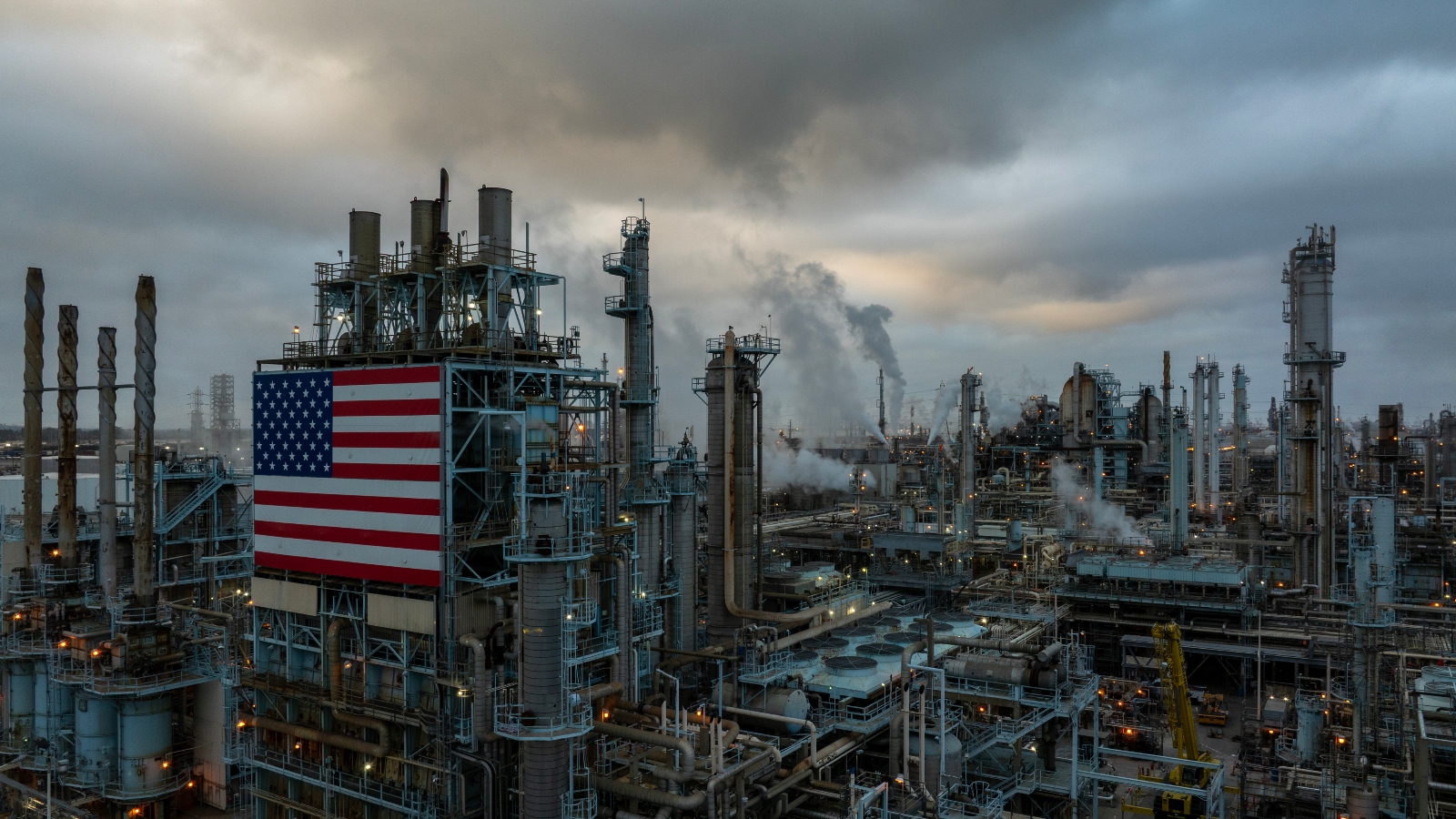
California has managed a remarkable feat over the past 20 years. Even as its economy has grown to overtake Germany’s as the fourth-largest in the world, the state’s consumption of gasoline has declined by almost 15 percent, and consumption of petroleum diesel has fallen by around two-thirds. This has happened due to some of the world’s most aggressive climate policies, including a tax on carbon emissions and a strict requirement to adopt clean-burning fuels such as “renewable diesel” made from fats and oils.
During the same period, California’s production of crude oil has also fallen by around half, and many oil wells have shut down. The state now imports almost two-thirds of its crude oil from tanker ships, which is cheaper and more practical because it is separated by steep mountains from oil-producing zones such as Texas. Some of the state’s largest gasoline and diesel refineries are also shutting down amid declining demand, which will make the state dependent on imports of refined gasoline, too.
The state’s diminished fossil-fuel sector has made it especially vulnerable to the oil shock of the Israeli-U.S. war with Iran — and to interventions from the Trump administration that could delay or even reverse California’s trend toward renewable energy. Gas prices in the state have spiked toward $7 a gallon in recent weeks, the highest prices in the country. As other economies clamp down on fuel exports, it’s possible the state could face even higher crude prices or a shortage of gasoline.
Two weeks after the war began, President Donald Trump’s Justice Department issued a legal memorandum arguing that the federal government can use the Defense Production Act to preempt state law in the event of energy emergencies. The Department of Energy then moved to restart a long-defunct California offshore oil pipeline owned by the company Sable Offshore. The order from Energy Secretary Chris Wright cited “California’s reliance on foreign oil vulnerable to geopolitical disruption,” with “a significant share traveling through the Strait of Hormuz.” The pipeline has been shut down since a 2015 oil spill that killed hundreds of animals, and state officials had not given it clearance to reopen. On the very next day, the pipeline reopened. California has sued to shut it back down.
For now, the Sable pipeline is ramping up to process around 50,000 barrels a day, which would provide around 3 percent of the state’s daily oil needs. Chevron has already said it will buy and refine 20,000 barrels of crude from the pipeline starting in April. The addition of new supply from Sable could lower costs for refineries, said Mike Umbro, an energy entrepreneur who runs Californians for Energy and Science, an educational nonprofit that advocates for increased oil production. Beyond Sable, though, there aren’t many good options for increasing crude supplies in the short term.
“Sacramento’s saying, ‘You don’t have a long-term future here,’ so the companies aren’t going to dump a bunch of money in to increase production,” Umbro said.
Nevertheless, the Interior Department said this week it would consider a proposal from another offshore oil company to frack undersea oil wells in order to increase production. The administration has also held oil lease sales on federal land in California, and has sued to block a state law that would limit drilling near homes and schools, both measures that would open up more onshore oil production in the state.
But more upstream oil production won’t help resolve the current fuel crunch. Even as some oil producers consider pumping more crude, no one has suggested building more refineries. In fact, Chevron and other large refinery owners have warned that California’s “cap-and-invest” program — a carbon tax that gets more expensive as time goes on — could soon drive them out of the state. The California Air Resources Board, the state’s climate regulator, is supposed to debut new rules for the carbon tax later this year, which would reduce the amount of free emissions refineries would be allowed to emit and make refineries less likely to stay in California.
The oil industry’s argument against these regulations follows the same logic as the Trump administration’s. “Continued erosion of California’s refining capacity risks increased reliance on imported fuels that are slower to arrive, more exposed to global supply disruptions, and less reliable during emergencies or periods of heightened geopolitical risk,” Andy Walz, a senior executive at Chevron, wrote in a letter to state leaders.
At the CERAWeek energy conference this week in Texas, Walz said he believes the state could soon have a shortage of gasoline and jet fuel, and that Chevron might close its own refineries within a decade. Those refineries account for 30 percent of capacity, and losing them could cause huge supply shortages for Bay Area drivers, Central Valley farmers, and even Air Force bases.
Democrats and environmental groups in the state, meanwhile, say that the refiners may be crying wolf about the state’s carbon tax. They see the Iran crisis as more evidence that the state should lean harder into its transition away from oil. Indeed, as Katelyn Roedner Sutter, the California state director for the Environmental Defense Fund, sees it, the current gas spike may only speed up the state’s energy transition by making electric vehicles even more attractive. Governor Gavin Newsom’s latest budget proposed a subsidy for first-time EV buyers, designed to replace the repealed Inflation Reduction Act tax credits, and she said the Iran crisis could strengthen the governor’s case.
“I do think the war actually makes it even more important to move forward with this, because I think it just underscores how vulnerable we are, being so dependent on fossil fuels,” she said.
Facts Only
California’s gasoline consumption has declined by nearly 15% over the past 20 years, while petroleum diesel consumption has fallen by around two-thirds.
The state’s economy has grown to become the fourth-largest in the world, surpassing Germany.
California’s crude oil production has decreased by about half, leading to increased reliance on imports, which now account for nearly two-thirds of its crude oil.
The state imports much of its crude oil via tanker ships due to geographic barriers separating it from oil-producing regions like Texas.
Gas prices in California have spiked to nearly $7 per gallon, the highest in the U.S., amid geopolitical tensions involving Iran.
The Trump administration’s Justice Department issued a legal memorandum arguing that the federal government can preempt state law under the Defense Production Act during energy emergencies.
The Department of Energy ordered the restart of the Sable Offshore pipeline, which had been shut down since a 2015 oil spill.
The Sable pipeline is now processing around 50,000 barrels per day, supplying approximately 3% of California’s daily oil needs.
Chevron has agreed to buy and refine 20,000 barrels of crude from the pipeline starting in April.
The Interior Department is considering a proposal to allow offshore fracking to increase oil production.
The Trump administration has held oil lease sales on federal land in California and sued to block a state law limiting drilling near homes and schools.
Chevron and other refiners warn that California’s carbon tax and regulatory policies could force refinery closures, potentially leading to fuel shortages.
Governor Gavin Newsom has proposed subsidies for first-time electric vehicle buyers to replace repealed federal tax credits.
Executive Summary
California has achieved significant reductions in gasoline and petroleum diesel consumption over the past two decades, even as its economy grew to become the world's fourth-largest. This shift is attributed to aggressive climate policies, including carbon taxes and mandates for cleaner fuels like renewable diesel. However, the state's declining oil production and refinery closures have increased its reliance on imported crude and refined fuels, making it vulnerable to geopolitical disruptions, such as the recent Israeli-U.S. conflict with Iran. Gas prices in California have surged to nearly $7 per gallon, the highest in the nation, amid concerns of potential shortages.
The Trump administration has intervened by invoking the Defense Production Act to restart a long-dormant offshore oil pipeline, the Sable Offshore, despite California's opposition due to environmental concerns. The pipeline, which had been shut down since a 2015 oil spill, is now processing 50,000 barrels per day, providing about 3% of the state's daily oil needs. Additionally, the administration is considering proposals to expand offshore fracking and has challenged state laws limiting drilling near communities. Meanwhile, oil refiners like Chevron warn that California's carbon tax and regulatory policies could force them to close refineries, exacerbating fuel shortages. Environmental groups and state Democrats argue that the current crisis underscores the need to accelerate the transition to electric vehicles and renewable energy, with Governor Newsom proposing new EV subsidies to replace federal tax credits.
Full Take
The strongest version of this narrative highlights California’s successful reduction in fossil fuel consumption through aggressive climate policies, while also exposing the vulnerabilities created by its growing dependence on imported oil. The Trump administration’s intervention to restart the Sable pipeline and expand offshore drilling frames the crisis as a national security issue, emphasizing California’s exposure to geopolitical disruptions. Meanwhile, environmental groups and state leaders argue that the current gas price spike reinforces the urgency of transitioning to renewable energy, positioning the crisis as a catalyst for accelerating EV adoption.
Patterns detected: ARC-0024 Ambiguity (the framing of the crisis as either a reason to double down on fossil fuels or accelerate renewables, without resolving the tension), ARC-0043 Motte-and-Bailey (the oil industry’s argument that refinery closures risk fuel shortages, while downplaying the long-term viability of fossil fuels in a carbon-constrained world).
The root cause of this narrative is the tension between energy security and climate policy. California’s policies have successfully reduced fossil fuel demand, but the state’s geographic and regulatory constraints have made it dependent on imports, creating a paradox: the more it succeeds in reducing local production, the more vulnerable it becomes to global supply shocks. The unstated assumption is that energy independence must come from domestic fossil fuel production, rather than renewable alternatives—a framing that benefits incumbent oil interests.
The implications for human agency are significant. Consumers face higher costs and potential shortages, while policymakers must balance immediate energy needs against long-term climate goals. The second-order consequences include potential refinery closures, which could disrupt fuel supplies for critical sectors like agriculture and military operations, and accelerated EV adoption, which could reshape transportation infrastructure.
Bridge questions: What would a truly resilient energy system look like for California, one that doesn’t rely on either imported oil or domestic fossil fuels? How might the state reconcile the short-term need for energy security with its long-term climate goals? What role should federal intervention play in state-level energy transitions?
Counterstrike scan: A coordinated influence campaign would likely amplify fears of fuel shortages to justify rolling back climate policies, while framing renewable energy as unreliable. The actual content aligns partially with this pattern, as the Trump administration’s actions and the oil industry’s warnings emphasize vulnerability to foreign oil. However, the inclusion of environmental counterarguments and the state’s push for EV subsidies suggests a balanced rather than manipulative narrative.
Sentinel — Human
The provided article shows signs of human authorship. It displays varied sentence lengths, hedging, and passionate arguments, indicating a unique human writing style.