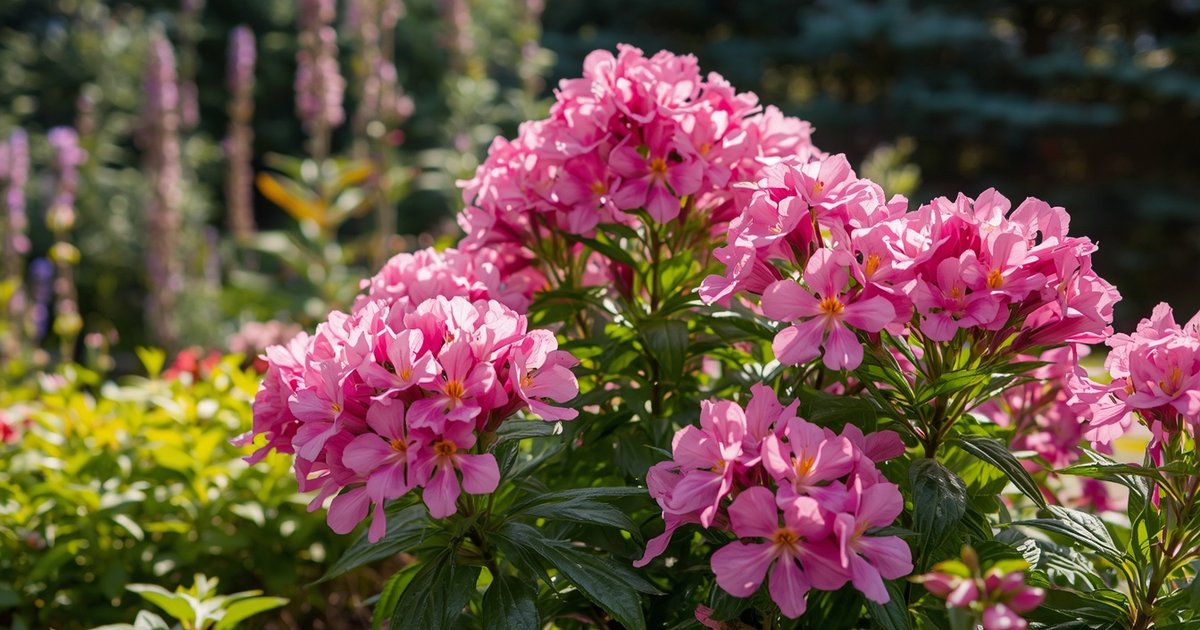
Annual phlox is one of those quietly reliable garden performers that rewards attention with an almost effortless abundance of color. Unlike its perennial cousins that form long-term clumps, annual phlox delivers a single season of dense, continuous bloom—soft clouds of color that work beautifully in containers, borders, and pollinator-friendly plantings across Fort Collins and the wider Front Range.
With its delicate flowers and surprisingly tough constitution, phlox is a natural fit for Colorado’s bright sun, dry air, and variable summer weather.
At [Plantorium.com](https://plantorium.com?utm_source=chatgpt.com annual phlox is a valued addition to summer collections, especially for gardeners looking to add fine-textured blooms that soften more structural plantings.
Why Annual Phlox Performs Well in Northern Colorado
Annual phlox (often seen in modern garden centers as compact, flowering bedding varieties) brings a lighter, more airy presence to summer gardens compared to bold blooms like petunias or pentas.
Each plant produces clusters of small, star-shaped flowers that form dense flower heads, creating a soft carpet of color when planted in groups.
In Fort Collins and surrounding areas, phlox performs well because:
- It enjoys full sun in cool to moderate temperatures
- It tolerates dry air better than many delicate annuals
- It flowers continuously throughout summer with proper care
- It attracts pollinators, especially butterflies
Color ranges are broad and often include:
- Soft pink
- Lavender
- White
- Coral
- Red
- Bi-color combinations
The overall effect is less about bold impact and more about continuous, fine-grained color.
When to Plant Phlox in Fort Collins
Annual phlox is sensitive to frost, so timing is important.
In Northern Colorado, it should be planted after the last frost date—typically mid-May in Fort Collins and nearby communities.
Once established in warm soil, phlox settles in quickly and begins producing blooms within a short time, especially when planted in sunny, well-prepared beds or containers.
Sunlight Requirements
For best flowering, annual phlox prefers full sun.
In Front Range gardens:
- Aim for at least 6 hours of direct sunlight daily
- Morning sun is especially beneficial
- Light afternoon shade can help during peak heat periods
Too much shade tends to reduce flowering and can make plants more prone to stretching.
In full sun, phlox forms dense flowering clusters that can last through much of the summer season.
Soil and Growing Conditions
Phlox prefers well-draining soil that retains moderate moisture without becoming soggy.
In Colorado landscapes:
- Amend clay soils with compost for improved structure
- Avoid compacted planting areas
- Use quality potting mix for containers
Good drainage is especially important during sudden summer rainstorms, which can temporarily saturate soils before rapid drying resumes.
Watering in a Dry Climate
While phlox is relatively adaptable, consistent moisture produces the best floral display.
Recommended approach:
- Water deeply rather than frequently
- Allow soil to dry slightly between waterings
- Increase watering during hot, windy periods
- Avoid prolonged dryness, which reduces bloom density
In containers, especially on exposed patios, more frequent watering may be required during peak summer heat.
Fertilizing for Continuous Blooms
To maintain steady flowering, phlox benefits from light, regular feeding.
A balanced fertilizer applied every few weeks helps support:
- Dense flower clusters
- Continuous blooming
- Healthy foliage growth
Avoid excessive nitrogen, which can lead to leafy growth at the expense of flowers.
Garden Role and Design Use
Annual phlox is most effective when used as a softening or filler plant in garden design.
It works especially well in:
- Mixed annual borders
- Cottage-style gardens
- Pollinator gardens
- Container edges
- Mass planting schemes
In Fort Collins landscapes, phlox is often used to bridge stronger structural plants, filling gaps with continuous color and texture.
Pollinator Benefits
One of the strongest advantages of annual phlox is its appeal to pollinators.
Butterflies, bees, and other beneficial insects are frequently attracted to its clustered blooms throughout the summer.
For gardeners building ecologically supportive landscapes along the Front Range, phlox offers both beauty and habitat value.
Handling Colorado Weather Conditions
Annual phlox performs well in many Front Range conditions, but like all flowering annuals, it responds best to balanced care.
It handles:
- Sun exposure
- Dry air
- Moderate heat
It is more sensitive to:
- Extended drought stress
- Poor drainage
- Severe hail damage (flowers may be temporarily reduced but plants often recover)
Light trimming after weather stress can encourage renewed flowering.
Companion Planting
Phlox blends naturally with a wide range of sun-loving annuals.
Excellent companions include:
- Petunias
- Verbena
- Calibrachoa
- Angelonia
- Sweet Alyssum
- Dusty Miller
- Ornamental grasses
Its fine texture makes it especially useful alongside bold or trailing plants, where it adds softness and continuity.
A Soft-Spoken Summer Essential
Annual phlox may not dominate a garden visually the way larger blooms do, but its value lies in its consistency and texture. It fills space with continuous color, supports pollinators, and brings a gentle, layered quality to summer plantings.
In Fort Collins and across the Front Range, it remains a dependable choice for gardeners who appreciate subtle beauty and steady performance throughout the growing season.
Explore seasonal availability and additional annuals at [Plantorium.com’s full plant catalog](https://plantorium.com/all-plants/?utm_source=chatgpt.com
Facts Only
Annual phlox is an annual flowering plant that blooms densely for one season.
It is suitable for containers, borders, and pollinator-friendly gardens in Fort Collins and the Front Range.
The plant prefers full sun and tolerates dry air better than many delicate annuals.
It attracts pollinators, particularly butterflies.
Flower colors include soft pink, lavender, white, coral, red, and bi-color combinations.
In Fort Collins, annual phlox should be planted after the last frost, typically mid-May.
It requires at least 6 hours of direct sunlight daily for optimal flowering.
Well-draining soil with moderate moisture retention is ideal for growth.
Deep, infrequent watering is recommended, with adjustments for hot, windy periods.
Light, regular fertilization supports continuous blooming.
Annual phlox is often used as a filler plant in mixed borders, cottage gardens, and containers.
It is sensitive to extended drought, poor drainage, and severe hail damage.
Companion plants include petunias, verbena, calibrachoa, and ornamental grasses.
The plant is available for purchase through Plantorium.com’s catalog.
Executive Summary
Annual phlox is a versatile and resilient flowering plant well-suited to the climate of Northern Colorado, particularly in Fort Collins and the Front Range. Unlike perennial varieties, annual phlox provides a single season of dense, continuous blooms, making it ideal for containers, borders, and pollinator-friendly gardens. It thrives in full sun, tolerates dry air, and attracts pollinators like butterflies, while offering a soft, fine-textured aesthetic that complements bolder plants. Planting should occur after the last frost, typically mid-May, in well-draining soil with consistent moisture. Regular light fertilization supports prolonged flowering, and the plant pairs well with other sun-loving annuals. While it handles Colorado’s sun and moderate heat, it is sensitive to drought, poor drainage, and hail damage. Its role in garden design is often as a filler or softening element, bridging structural plants with continuous color and supporting local ecosystems.
The article highlights annual phlox as a dependable choice for gardeners seeking low-maintenance, pollinator-friendly plants that perform well in the region’s variable summer conditions. It emphasizes practical care tips, such as sunlight requirements, watering strategies, and companion planting, while noting the plant’s ecological benefits. The piece also directs readers to a plant catalog for further exploration, suggesting its utility as both an informational and promotional resource.
Full Take
This article presents annual phlox as a practical and ecologically beneficial choice for Northern Colorado gardeners, emphasizing its adaptability to local conditions and its role in supporting pollinators. The narrative is straightforward and informative, focusing on the plant’s characteristics, care requirements, and design applications. However, it also serves as a subtle promotional piece for Plantorium.com, weaving in references to the retailer’s catalog without overtly framing the content as advertising.
**Pattern Scan:** The article employs a soft-sell approach, blending useful horticultural information with promotional links. While not manipulative, the inclusion of branded references without explicit disclosure could be seen as a form of borrowed credibility (ARC-0012), where the authority of the informational content lends legitimacy to the commercial aspect. The tone remains neutral and educational, but the repeated mentions of Plantorium.com suggest a dual purpose beyond pure gardening advice.
**Root Cause:** The underlying paradigm here is the intersection of practical gardening advice and commercial interest. The article assumes that readers value both functional plant knowledge and convenient access to purchasing options, which aligns with modern content marketing strategies. The unstated assumption is that gardeners prioritize ease of acquisition alongside plant performance, which may not always be the case.
**Implications:** For gardeners, the article provides actionable insights into cultivating annual phlox, but the embedded promotional elements could influence plant selection based on availability rather than purely horticultural merit. The ecological benefits highlighted—such as pollinator support—are genuine, but the commercial tie-in might lead readers to overlook alternative sources or native plant options that could be equally or more beneficial.
**Bridge Questions:**
How does the commercial promotion of annual phlox compare to the ecological benefits of native Colorado plants?
What other low-water, pollinator-friendly annuals might be better suited to the Front Range’s climate but are less commercially promoted?
How might gardeners balance convenience (e.g., purchasing from a single retailer) with ecological diversity in their plant choices?
**Counterstrike Scan:** If this were part of a coordinated influence campaign, the playbook would involve positioning a specific plant as the ideal solution for regional gardening challenges while subtly directing readers toward a preferred vendor. The actual content aligns with this pattern but does so transparently, without misleading claims or exaggerated benefits. The promotional elements are present but not deceptive, making this a clean example of content marketing rather than manipulation.
Patterns detected: ARC-0012 Borrowed Credibility
Sentinel — Human
The text exhibits high coherence and detailed practical knowledge, suggesting human expertise is involved, though the structure is highly optimized for clarity.