14.05.2026 - 22:41
|
Actualització: 14.05.2026 - 22:56
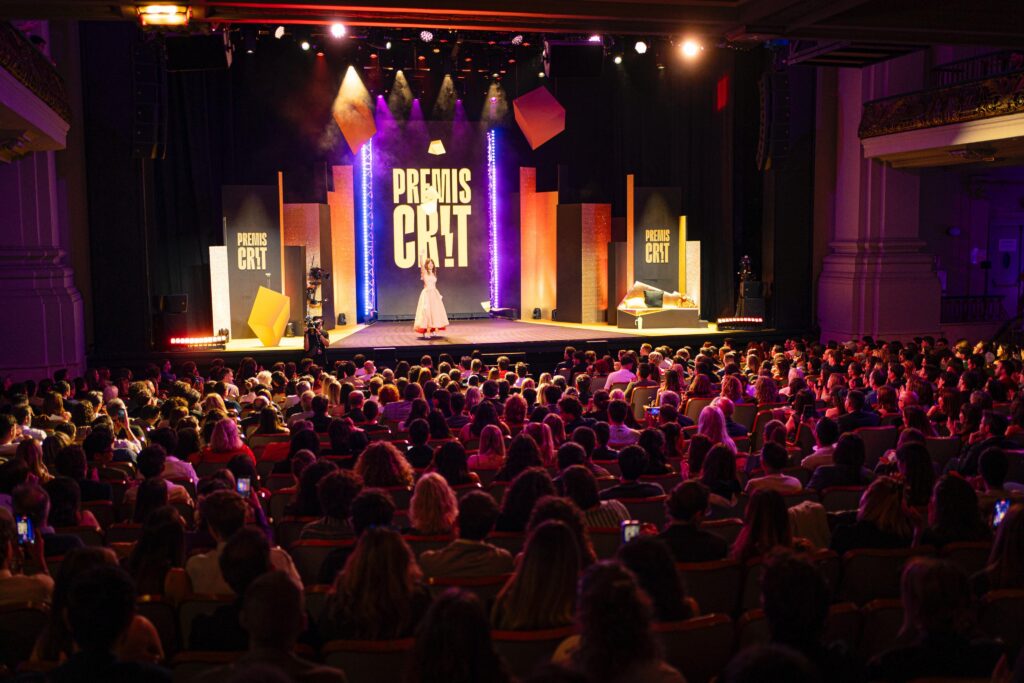
Barcelona s’ha tornat a convertir en l’epicentre de la creació digital en català amb la gala dels segons premis CRIT. S’ha fet al Teatre Coliseum i ha estat un acte molt reivindicatiu en favor de la llengua i dels Països Catalans. Impulsats per 3Cat, Accent Obert i l’Associació de Mitjans d’Informació i Comunicació, amb el suport de la Generalitat de Catalunya i l’Ajuntament de Barcelona, els premis CRIT han reconegut una quinzena de persones o col·lectius per la seva feina a les xarxes socials.
La gran vencedora de la nit ha estat Laura Grau, distingida amb el premi de millor creadora de l’any. Ha pres el relleu de Fran Tudela, Cabrafotuda, i s’ha refermat com una de les figures més influents del món digital català actual. Grau ha aprofitat el discurs per demanar contingut compromès: “Un contingut sense compromís social és un contingut compromès amb el capital, cal dir-ho clar. I ara mateix no ens ho podem permetre, tenim una responsabilitat.” Per això ha animat tots els creadors de contingut: “Si tant us estimeu el català, sortiu a la vaga amb tots els mestres que l’han d’ensenyar a les noves generacions, i si teniu la sort que algú us vol per fer un reel publicitari, mireu que no financin un genocidi.”
El discurs de Laura Grau no ha estat l’únic reivindicatiu. El pòdcast L’Arrabassada ha estat guardonat amb el premi CRIT d’entreteniment, i els integrants del programa –Marc Lesan, Oriol Lapeira i Iñaki Sola– han fet un discurs abrandat en què han denunciat que pronunciar-se sobre certs debats polítics tanca moltes portes: “En aquests temps de pacificació socialista, de despolitització imposada i de folklorització de la catalanitat, en què tot el contingut que promou la Corpo [Corporació Catalana de Mitjans Audiovisuals] i tot el que hi ha al voltant és blanc i neutre, fer un pòdcast que es posiciona clarament i que parla sense embuts de com està el país, creiem que és una mica revolucionari”, ha dit Oriol Lapeira.
Tot seguit, Iñaki Sola ha enumerat un seguit de coses que, a parer seu, costen de dir als mitjans de comunicació: “Que les Illes Balears i el País Valencià estan governades per feixistes que volen eliminar la nostra llengua i la nostra cultura. Recordar que a Espanya, als noranta, es van torturar independentistes a Madrid i a Barcelona. I és molt difícil dir que el govern del Salvador Illa es dedica a infiltrar policies a les assemblees de professors.”
“Nosaltres podem ser avui aquí perquè la catalanitat continua essent un motor cultural molt viu i, malgrat que hi ha qui li interessa dir que la catalanitat i la nostra cultura s’apaga, som aquí demostrant que aquesta terra, aquesta història i aquest esperit continua movent el país i la gent. Aquesta és la nostra força i el que ens empeny a ser lliures”, han dit els membres de SOS Català quan han recollit el premi Crit de llengua i literatura. I han afegit: “El català és una llengua molt viva i molt útil, i qui digui el contrari no en té ni puta idea. Nosaltres tampoc els hem de convèncer a ells. Visca la terra lliure i els Països Catalans.”
Els premis Crit també ha distingit la campanya Correllengua Agermanat amb el premi a millor campanya digital, en reconeixement de la seva capacitat d’activar i promoure la llengua i la cultura catalanes a les xarxes socials. Josep Buades, cap de comunicació del Correllengua, ha estat l’encarregat d’agrair el premi, i ho ha aprofitat per reivindicar un projecte com el seu, autogestionat, fet per milers de voluntaris d’arreu dels Països Catalans, “sense recursos, sense suport de grans corporacions però sentint a darrere l’impuls de tota la societat civil”. I també ha fet aquesta reivindicació: “El jovent organitzat és qui ha d’escriure el futur del nostre poble.”
En la categoria de projectes, Ets i Uts, una sèrie d’EVA de vint reportatges sobre salvar la llengua protagonitzada per Marc Tarrida i Mònica Glaenzel, ha estat reconegut com a millor projecte d’indústria. Guarres! s’ha endut el guardó de millor projecte independent, i Emma Soler el premi com a creadora emergent de l’any.
El palmarès ha evidenciat la riquesa i diversitat del sector amb guardons per a creadors i projectes de múltiples àmbits: Pol Casellas (cultura), Sara S. Ribes (compromís social), Entre fones i neurones (divulgació científica), Enric Luzán (esports), Alegria de Poble (estil de vida), La cuina de la Lola (gastronomia), elPolyklin (humor), Laura Tapiolas (informació i actualitat) i Norman López (videojocs i oci alternatiu).
Un dels moments més celebrats i emotius de la nit ha estat l’aparició sorpresa d’Enric Luzán. El creador ha interromput temporalment la seva volta al món a peu per desplaçar-se d’Istambul a Barcelona i recollir personalment el premi de millor creador de contingut d’esports. Ha aixecat una de les ovacions més intenses de la gala.
Facts Only
The second CRIT Awards took place on May 14, 2026, at Teatre Coliseum in Barcelona.
The event was organized by 3Cat, Accent Obert, and the Associació de Mitjans d’Informació i Comunicació, with support from the Generalitat de Catalunya and Barcelona City Council.
Fifteen creators and collectives were awarded for their digital content in Catalan.
Laura Grau won the award for best creator of the year.
Fran Tudela, known as Cabrafotuda, was the previous year’s winner in the same category.
The podcast *L’Arrabassada*, hosted by Marc Lesan, Oriol Lapeira, and Iñaki Sola, received the entertainment award.
*SOS Català* was awarded the prize for language and literature.
*Correllengua Agermanat* won the award for best digital campaign.
*Ets i Uts*, a series by EVA, was recognized as the best industry project.
*Guarres!* received the award for best independent project.
Emma Soler was named emerging creator of the year.
Other category winners included Pol Casellas (culture), Sara S. Ribes (social commitment), *Entre fones i neurones* (science outreach), Enric Luzán (sports), *Alegria de Poble* (lifestyle), *La cuina de la Lola* (gastronomy), *elPolyklin* (humor), Laura Tapiolas (news and current affairs), and Norman López (gaming and alternative leisure).
Enric Luzán interrupted his global walking journey to attend the ceremony and accept his award in person.
Executive Summary
Full Take
The CRIT Awards ceremony serves as a microcosm of broader cultural and political tensions in Catalonia, where digital creators are positioning themselves as both cultural preservers and political activists. The event’s tone was overtly combative, with winners using their platforms to challenge media neutrality, corporate influence, and what they frame as systemic repression of Catalan identity. Laura Grau’s call for "content with social commitment" and her critique of corporate sponsorship aligns with a growing trend of creators leveraging their influence to demand ethical accountability—though her framing risks conflating commercial partnerships with moral complicity, a potential oversimplification of complex economic realities.
The speeches by *L’Arrabassada* and *SOS Català* reveal a deeper narrative: the weaponization of cultural production as resistance. Their rhetoric—denouncing "folklorization" of Catalan identity and framing their work as "revolutionary"—echoes historical patterns of minority language movements using media as a tool for political mobilization. However, the uncritical repetition of claims about "fascist" governance in the Balearic Islands and Valencia, or allegations of state torture, risks reinforcing partisan divides without nuance. Such statements, while emotionally resonant, may prioritize moral signaling over constructive dialogue.
The event’s emphasis on grassroots activism (e.g., *Correllengua Agermanat*’s volunteer-driven model) contrasts sharply with its institutional backing by the Generalitat and Barcelona City Council, raising questions about the relationship between state-funded cultural initiatives and radical critique. If the state is both patron and target, how sustainable is this dynamic? The ceremony’s focus on "Països Catalans" also revives longstanding debates about linguistic nationalism versus civic inclusion—does this framing unite or further polarize?
**Bridge Questions:**
1. How might the CRIT Awards’ blend of institutional support and radical rhetoric shape the future of Catalan digital media—will it foster resilience or deepen fragmentation?
2. To what extent does the conflation of cultural activism with political resistance risk alienating audiences who support Catalan language but reject partisan framing?
3. What would it look like for these creators to balance advocacy with bridge-building, rather than treating media as a zero-sum battleground?
**Patterns detected:** ARC-0024 Ambiguity (broad, unverified claims about political repression), ARC-0043 Motte-and-Bailey (shifting between "cultural preservation" and overt political activism as needed).
**Counterstrike Scan:** A coordinated influence campaign would likely amplify the event’s most divisive rhetoric (e.g., "fascist governance" claims) to provoke backlash and entrench polarization. However, the actual content reflects genuine grassroots frustration rather than a structured disinformation play. The alignment with activist narratives is organic, not manipulative—though the lack of counter-perspectives in the reporting may inadvertently serve as an echo chamber.
Sentinel — Human
The text exhibits characteristics consistent with human journalism, successfully integrating specific, context-dependent cultural and political commentary while maintaining a clear, fact-based reporting structure.