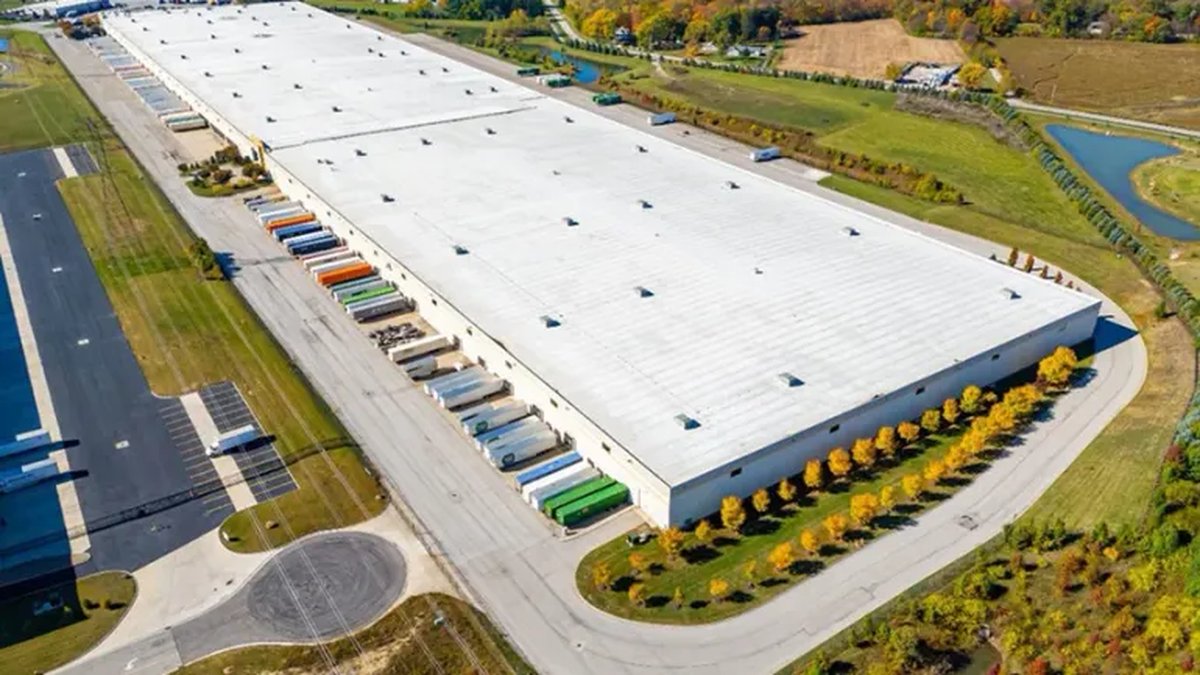
Levi Strauss is closing its Hebron, Kentucky, distribution center, with layoffs beginning in late August, according to a June 30 Worker Adjustment and Retraining Notification Act notice from the company.
About 303 employees are expected to lose their jobs due to the closure of the site located at 3750 North Bend Road. Separations will start around Aug. 30, but some employees will be able to apply for jobs at other Levi Strauss locations, per the notice.
Levi Strauss first disclosed plans to close the site last year as the denim giant shifted from an owned and operated distribution model in the U.S. to a mix of owned and third-party operated locations. Initially, layoffs were expected to start around Aug. 18, 2025.
However, Levi Strauss pushed back the completion date for that overhaul due to a longer-than-expected process to transition work from Hebron to a third-party facility in Groveport, Ohio. The company incurred higher distribution costs to maintain operations at the Hebron facility amid the transition.
During a March UBS conference, EVP and Chief Financial and Growth Officer Harmit Singh said the shift in activity to the Maersk-operated facility was taking a little longer to stabilize and ramp up technology. At the same time, demand for Levi Strauss' products was spiking. Singh added that Levi Strauss hired distribution experts to help the company work with providers like Maersk and GXO and better manage its hybrid distribution model.
Singh updated investors on the overhaul's progress in April, saying the transition would be complete by the middle of the year. He added that distribution expenses as a percentage of revenue have improved.
"Longer term, this transition positions our network to support omnichannel growth and drive efficiency," Singh said.
This story was first published in our Operations Weekly newsletter. Sign up here.
Sentinel — Human
The text reads like factual reporting sourced from internal corporate announcements and executive commentary, exhibiting the typical structure of business journalism rather than synthetic generation.