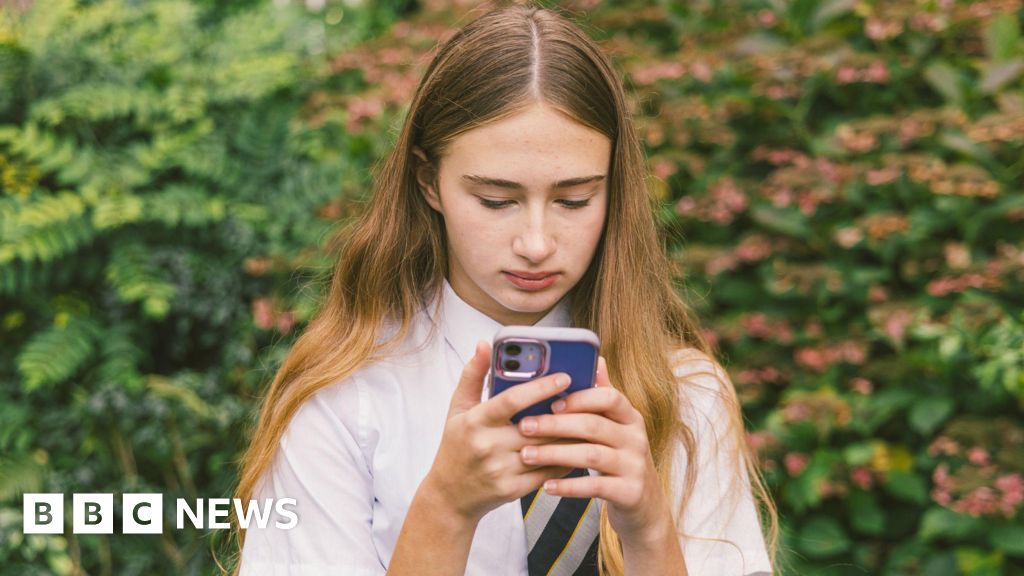
Social media bans, digital curfews and time limits on apps are to be trialled in the homes of hundreds of UK teenagers.
The test, led by the UK government, will see 300 teens have their social apps disabled entirely, blocked overnight or capped to one hour's use - with some also seeing no such changes at all - in order to compare their experiences.
It will run alongside the government's consultation asking whether the UK should follow in Australia's footsteps by making it illegal for under-16s to have access to many social media sites.
Technology Secretary Liz Kendall said it was about "testing different options in the real world".
"These pilots will give us the evidence we need to take the next steps, informed by the experiences of families themselves," she added.
Children and parents involved in the trial will be interviewed before and after the pilot scheme to assess its impact.
Meanwhile, the government's consultation about banning social media for children will continue to run until 26 May.
Such a move has widespread political support - with countries including France, Spain and Indonesia also considering emulating Australia's ban - and the backing of some campaigners and children's charities.
Other experts are more sceptical, warning such restrictions could be easily circumvented or could push children to darker corners of the internet.
But some believe tech companies should make their platforms safer, not just be banned for children.
Rani Govender, associate head of child safety online policy at the NSPCC, said the charity welcomed the government's efforts to keep young people safe online, but said it must also be ready to take "decisive action" when its pilot and consultation end.
"This must include ensuring tech companies build safety into every device, platform and AI tool so children do not see harmful or illegal content and can only use age-appropriate services," she told the BBC.
The Molly Rose Foundation, meanwhile, said it was "entirely right" for the government to be consult on its next steps rather than "rushing to implement" bans that may not work as intended.
"Parents want decisive and evidence-based measures to protect children online and these tests will provide welcome insights into the practicality and feasibility of further interventions," said its chief executive Andy Burrows.
How will it work?
The pilot scheme will run in the homes of 300 teenagers.
Participants from across the UK will be split into four groups, three of which will try out the different kinds of interventions while the fourth will act as a control group.
One group - where the most popular apps are made totally unavailable - is intended to mimic what a social media ban would look like.
The other two groups are intended to provide insights into how more limited restrictions would work, either by capping app use at 60 minutes per day or making them unavailable between 21:00 and 07:00.
Participants will be asked about the impacts on their family life, sleep and school work.
They will also be quizzed about the practical challenges they faced, such as the ability to set up parental controls or "workarounds that the teenagers may find to bypass them".
Data from the pilots will be assessed by officials and academics alongside consultation responses from parents and children.
The government says it has received nearly 30,000 responses so far.
Second study in Bradford
Away from the pilot, some families are already taking matters into their own hands.
Allyne Jamieson lets her 13-year-old daughter Lucinda have a smartphone, but doesn't allow her to have any social media over concerns of mature content, calling it a "rabbit hole".
Allyne would support a social media ban for under 16s, saying the platforms pose a "danger to children" and believes it is "not something they need in their life".
Her daughter Lucinda told BBC News not being on social media "hasn't really affected" her and she knows "it's for the best".
Ministers say the pilot schemes will be complemented by what they call the "world's first major scientific trial looking at the effects of reducing social media use among adolescents".
The independent study, funded by the Wellcome Trust, is set to begin later this year and will be co-led by the Bradford Institute for Health Research and University of Cambridge psychologist Prof Amy Orben.
Prof Orben told the BBC she was "really proud that the UK is home to this really important research".
The study will recruit 4,000 students aged 12 to 15 from ten Bradford secondary schools and seek to assess the impact of having less access to social media - particularly on their sleep, anxiety levels and social interactions, as well as absence and bullying in schools.
Prof Orben said it is meant to address the current lack of quality data on both what impact social media currently has on children and what difference restricting it might make.
The UK's online safety minister said the government was not taking "once-and-done" approach with these studies, instead wanting to tackle the matter in way that "sticks over time".
Kanishka Narayan told BBC 5 Live the government would "continue pretty deep engagement" in studies to make sure "the interest of British kids is put first, and done so in a way that is led by evidence".
Additional reporting by Emma Calder.
Sign up for our Tech Decoded newsletter to follow the world's top tech stories and trends. Outside the UK? Sign up here.
Facts Only
Three hundred teenagers in the UK will participate in a pilot scheme testing social media restrictions
Teens will have apps blocked overnight, capped to one hour of use or have no such changes at all
Pilot aims to compare experiences of participants and assess impact on family life, sleep, school work
Additional study by Bradford Institute for Health Research and University of Cambridge psychologist Prof Amy Orben recruiting 4,000 students aged 12 to 15 in ten Bradford secondary schools will assess impact of less social media access
Executive Summary
Full Take
This trial represents an attempt by the UK government to address concerns around the impact of social media on teenagers. While the trial and consultation seek to find ways to protect children online, it has received widespread political support and backing from some campaigners and charities. However, concerns remain about the effectiveness of restrictions, as they may be easily circumvented or could push children towards darker corners of the internet. Additionally, some argue that tech companies should make their platforms safer, rather than banning them for children. The trial and consultation come amid growing interest in similar measures across countries such as France, Spain, and Indonesia.
Patterns detected: ARC-0024 Ambiguity, ARC-0031 False Dilemma
Sentinel — Human
While some stylometric signals suggest a human author, the text also exhibits qualities such as idiosyncratic emphasis and personal voice that further support its human origin. The analysis indicates a likelihood of human authorship.