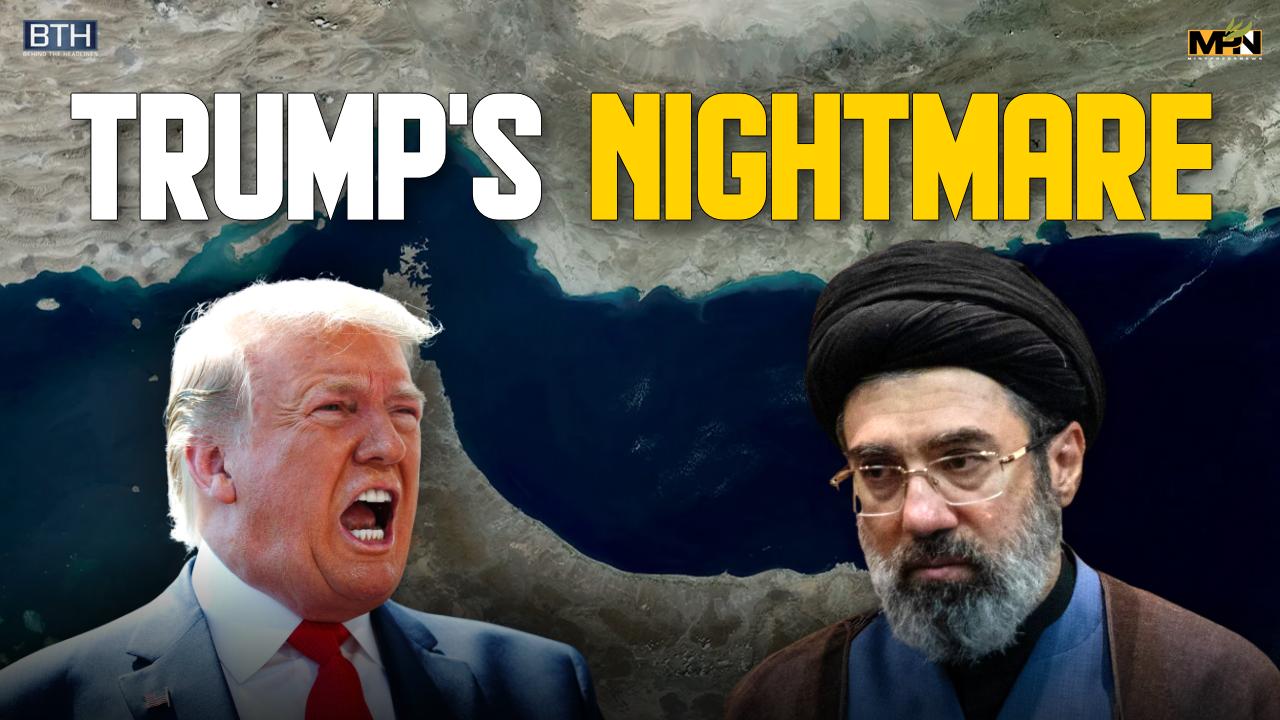
In this week’s episode of the MintCast podcast hosted by MintPress director Mnar Adley, we are joined by Iranian political analyst Ali Alizadeh to talk about Trump’s miscalculation in the U.S.-Israeli war against Iran. Twenty-seven days into the U.S.-Israeli war on Iran, what was expected to be a swift and decisive campaign is instead spiraling into a far more dangerous and unpredictable confrontation. Early assumptions that Iran’s leadership could be “decapitated” through targeted airstrikes—triggering internal collapse—have proven dramatically misplaced.
The human toll has already been severe. Nearly 2,000 people in Iran have reportedly been killed, with more than 24,000 injured from U.S. and Israeli strikes. Yet rather than capitulate, Iran has responded with force—downing U.S. aircraft, striking American bases across the region, and launching attacks on Israeli military infrastructure. Most consequentially, Tehran has moved to close the Strait of Hormuz, a critical artery for global energy and trade.
The closure of the strait represents a potential economic shock of historic proportions. While Iran has allowed select allied nations to continue limited passage, the broader disruption has sent panic through Western and Gulf economies heavily dependent on uninterrupted oil flows. At the same time, Tehran’s decision to conduct oil transactions in Chinese yuan signals a deeper geopolitical shift—one that could accelerate the erosion of dollar dominance in global energy markets.
The war is also exposing fractures in long-standing assumptions about security in the Gulf. For decades, regional states believed that hosting U.S. military forces guaranteed protection. Now, those same bases appear to function as liabilities, drawing retaliatory strikes and placing critical infrastructure—from desalination plants to airports—within immediate range of Iranian missiles. The notion that proximity to U.S. power ensures safety is being fundamentally challenged.
Meanwhile, contradictory messaging from Washington underscores the uncertainty surrounding the conflict. While U.S. officials have at times claimed success in achieving regime change, reports also indicate growing concern within the administration, including signals from Donald Trump himself calling for de-escalation. Despite this, discussions of a potential ground invasion—an operation that would dwarf the scale of Iraq—remain on the table.
Analysts warn that such a move would be extraordinarily risky. Iran’s geography, military capabilities, and regional alliances present a far more formidable challenge than previous U.S. wars in the Middle East. Over the past weeks, Tehran has demonstrated not only resilience but also an ability to project power across multiple fronts.
At the same time, emerging alignments with global powers such as China and Russia point toward a broader transformation in the international order. The conflict is no longer confined to a regional struggle—it is increasingly tied to the rise of a multipolar world.
What began as a calculated show of force is now raising a far more uncomfortable question: has Washington fundamentally misjudged both Iran’s strength and the consequences of this war?
Facts Only
The U.S.-Israeli war on Iran has lasted 27 days.
Nearly 2,000 people in Iran have been killed, with over 24,000 injured from U.S. and Israeli strikes.
Iran has downed U.S. aircraft and struck American bases across the region.
Iran has launched attacks on Israeli military infrastructure.
Iran has closed the Strait of Hormuz, disrupting global energy and trade flows.
Iran has allowed select allied nations limited passage through the strait.
Iran is conducting oil transactions in Chinese yuan.
U.S. military bases in the Gulf have become targets for Iranian retaliatory strikes.
U.S. officials have made contradictory statements, including claims of success and calls for de-escalation.
Discussions of a potential ground invasion of Iran remain under consideration.
Iran has demonstrated resilience and the ability to project power across multiple fronts.
Iran is aligning with global powers such as China and Russia.
Executive Summary
Full Take
The strongest version of this narrative highlights a significant miscalculation by the U.S. and Israel in underestimating Iran’s military and strategic resilience. The conflict’s escalation—from targeted strikes to a broader confrontation—challenges long-held assumptions about regional power dynamics and the efficacy of U.S. military presence in the Gulf. The closure of the Strait of Hormuz and Iran’s shift to yuan-denominated oil transactions underscore the potential for economic and geopolitical upheaval, accelerating trends away from Western dominance.
Patterns detected: ARC-0024 Ambiguity (contradictory messaging from Washington), ARC-0043 Motte-and-Bailey (initial claims of swift victory vs. later calls for de-escalation).
Root cause: The narrative assumes that U.S.-Israeli military superiority would guarantee a quick resolution, echoing historical patterns of overconfidence in interventionist strategies (e.g., Iraq, Afghanistan). The unstated assumption is that Iran’s internal fractures would lead to collapse under pressure, ignoring its adaptive capabilities and regional alliances.
Implications: Human agency is tested as civilians bear the brunt of the conflict, while global powers recalibrate alliances. The shift toward a multipolar order could erode U.S. influence, but it also risks destabilizing energy markets and escalating proxy wars. Second-order consequences include potential economic shocks, further militarization of the Gulf, and accelerated de-dollarization.
Bridge questions: How might Iran’s alliances with China and Russia reshape global energy politics? What evidence would change the assessment of Iran’s military resilience? Are there historical precedents where similar miscalculations led to prolonged conflicts?
Counterstrike scan: A coordinated influence campaign would amplify fears of economic collapse (e.g., Strait of Hormuz closure) while downplaying Iran’s strategic vulnerabilities. The actual content aligns partially with this pattern but includes balanced acknowledgment of risks and uncertainties, reducing the likelihood of overt manipulation.