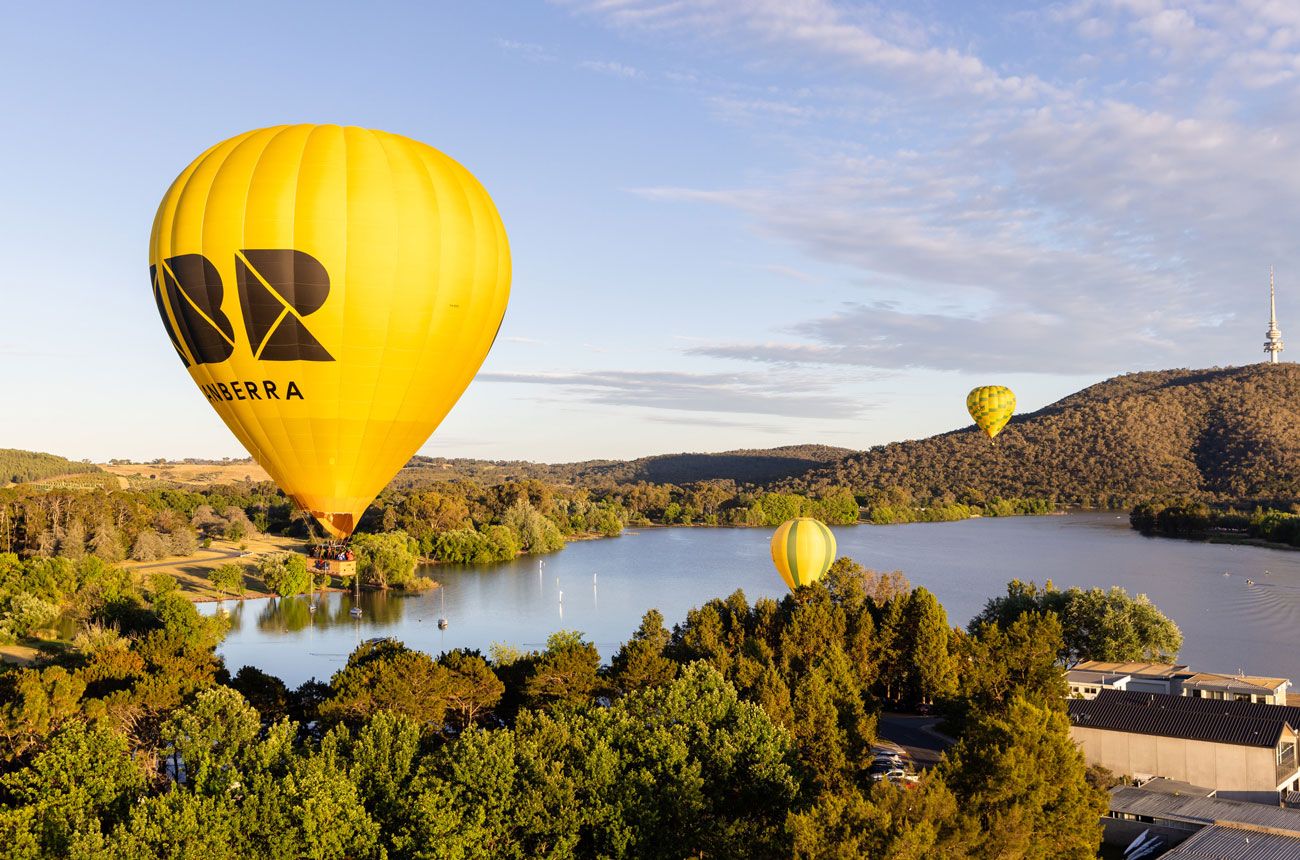
Discover Canberra’s cool-climate wine scene
Did you know that Australia’s capital is home to a wine region? Established by scientists in the 1970s, Canberra District now makes compelling cool-climate Shiraz and Riesling, as well as championing Italian and Spanish grapes.
Get our daily fine wine reviews, latest wine ratings, news and travel guides delivered straight to your inbox.
You are now subscribed
Your newsletter sign-up was successful
Sun-ripened Shiraz. Bold Cabernets. Australia’s modern wine identity has for long been defined by warmth and power.
Yet, in the vicinity of the nation’s capital, a very different story has been unfolding, one shaped by altitude, restraint and terroir expression.
A 35-minute drive from the city leads to the Canberra District wine region, where vineyards sit between 500m and 850m above sea level.
Here, warm days are followed by cool nights, allowing wines to develop slowly, retaining fragrance, acidity, and finesse.
Over the last six decades, the region has quietly become one of Australia’s most compelling cool-climate frontiers.
Medium-bodied Shiraz with spice and restraint, piercing Rieslings with longevity, and an increasingly convincing suite of Italian varieties are redefining what Australian wine can be.
A scientific beginning
Unlike many Australian wine regions, Canberra’s viticultural roots lie not in farming heritage but in scientific curiosity.
Get our daily fine wine reviews, latest wine ratings, news and travel guides delivered straight to your inbox.
The story began in the late 1960s at Clonakilla, when Dr John Kirk, an Irish biochemist recruited by Australia’s national science agency, the Commonwealth Scientific and Industrial Research Organisation (CSIRO), arrived in Canberra.
He questioned why a wine industry did not exist in a climate that closely resembled parts of Europe.
In 1971, he purchased a 17ha former wool farm near Murrumbateman and planted vines, undeterred by scepticism that Australian wine belonged firmly in warmer regions.
His son, Tim Kirk, recalls arriving in Australia by sea in 1968, aged nine, and growing up among the vines.
The first commercial vintage – for both the winery and the region – was in 1976. It consisted of a Riesling and Cabernet-Shiraz blend, but the early years were modest.
Growth and development
The first vintage of Clonakilla’s iconic Shiraz-Viognier – now a benchmark for Australian elegance and known for its aromatic lift, spice and silky texture – was made by Tim in 1992.
What began as an experimental bottling in tiny amounts (in 1994 only three barrels were produced) has grown significantly.
Today the winery’s total annual production is around 20,000 cases and exports span Asia, the US, the UK and Scandinavia.
As Clonakilla was getting established, other scientists were also experimenting. In 1973, CSIRO researcher Ken Helm planted vines east of Murrumbateman, followed in 1974 by Dr Edgar Reik, who established Lake George Winery.
Though they did not initially know one another, these early pioneers collectively laid the foundations for a region built on experimentation, restraint and quality.
Today, the Canberra District comprises over 140 vineyards and 50 wineries. Small by national standards, arguably its influence far exceeds its size.
High and dry
Canberra’s elevation plays a defining role in its wines, slowing ripening and preserving acidity.
Meanwhile diurnal temperature shifts, often reaching 20°C during the growing season, allow grapes to rest overnight, locking in aromatics and freshness.
Fergus McGhie, sales and marketing manager at Mount Majura Vineyard and president of the Canberra District Wine Industry Association, notes that the region’s stylistic direction was evident from the beginning.
‘Very early, local makers knew that our fruit was more delicate in character, more aromatic and blessed by higher natural acidity,’ he says. ‘The wines are better suited to subtle French oak influences rather than bolder American oak treatments.’
Soils across the region vary considerably but all contribute to this pared back character. The presence of granite, red clay loams, ironstone and limestone naturally restrain vine vigour.
Emma Shaw, general manager of Collector Wines, describes these as ‘lean, hungry soils’, conditions that bring vines into balance without excessive intervention.
Canberra’s climate is also notably dry, with average annual rainfall of around 600mm, spread evenly across the seasons.
According to McGhie, this results in, ‘lower disease pressure and reduces the need for chemical intervention in the vineyard, allowing growers to focus on fruit purity and site expression’.
Shiraz with restraint
Shiraz has emerged as Canberra’s most visible calling card, though its expression is markedly different from warmer Australian regions.
‘The climate and our natural acidity, as well as fine tannin and variation across subregions, means that our Shiraz winemaking can be almost Burgundian,’ says Shaw. ‘We’re producing elegant, medium-bodied wines of restrained power.’
This style has found increasing recognition. Over the past three years, Canberra Shiraz has claimed top honours at Australia’s major wine shows, culminating in the Four Winds Vineyard Shiraz 2023 winning the prestigious Jimmy Watson Memorial Trophy in 2024. A remarkable achievement for a region producing a fraction of the volume of Australia’s major wine areas.
For McGhie, the region’s signature lies in its freshness.
‘The typicity of the region is very pretty reds and perfumed whites with a lovely freshness of fruit character’ he says.
The quiet constant: Riesling
If Shiraz is Canberra’s calling card, Riesling is its quiet constant. At Helm Wines, Riesling has been central to expressing the region’s identity since the 1970s.
Sourced from a secluded valley east of Murrumbateman, dominated by Mt Ramsay at 730m, Helm’s vineyards highlight how Canberra’s climate preserves citrus purity, balance and longevity.
The combination of warm days and cool nights allows Riesling grapes to retain low pH and crisp acidity, while developing flavour slowly.
That acidity is sharpened by diurnal change and soils of granite and clay adding structure.
Helm’s wines have consistently received high critical acclaim, reinforcing the variety’s natural affinity with the region.
Italian and Spanish flavour
Alongside Shiraz and Riesling, Canberra is also known for its success with Italian varieties, particularly Sangiovese.
At Four Winds Vineyard, CEO Sarah Collingwood explains that the focus has always been on working with varieties that suit the region.
‘Rather than fighting that cool-climate identity, we’ve built our business around it,’ she says. ‘Shiraz with pepper and spice, Riesling with fresh citrus structure, and Sangiovese that shows what this delicious lighter-bodied red grape can do.’
McGhie points to growing quality across the district in both Sangiovese and Spanish grape Tempranillo.
He also notes early promise in white grapes: Italy’s Fiano and Spain’s Albariño.
‘It’s early days, but Albariño could become another signature white for the region,’ he says.
Cellar doors, place and discovery
Despite its proximity to Australia’s capital, Canberra’s wine region still surprises many visitors.
‘People are either surprised that Canberra has a wine region, or that we’re producing such good quality,’ says Shaw, who also runs Canberra Cellar Door, a hub dedicated to showcasing wines from across the district. ‘It’s tasting the wines that convinces them.’
Hospitality plays a central role in communicating terroir. At Four Winds, Collingwood has deliberately embraced simplicity.
‘Guests sit overlooking the vineyard, enjoy wood-fired pizza and wine, and connect directly with the place,’ she says. ‘No unnecessary complexity; just the essentials.’
Meanwhile at Mount Majura Vineyard, guided tastings explore clones, soils and trial plantings, reinforcing the region’s scientific roots and ongoing curiosity.
Looking forward
The Canberra District’s greatest strength, its small scale, is also its biggest challenge.
‘Our greatest opportunity is the quality of wine we’re producing,’ Collingwood says.
‘But being small is also our challenge. Limited volumes restrict our voice nationally and internationally.’
Shaw echoes this tension, noting broader pressures from climate change and declining global wine consumption.
But she remains optimistic. ‘Because we’re producing cool-climate, elegant wines, and artisan wines with a story and culture behind them, I see interest in our wine region growing all the time.’
Related articles
Expert’s Choice: Hunter Valley Semillon
A wine lover’s guide to Kangaroo Valley
New South Wales on a high: Orange & Hilltops
Teja Lele is a freelance writer specialising in travel, architecture, food and lifestyle.
Facts Only
* Established in the 1970s by scientists.
* Located in the Canberra District, vineyards at 500m-850m altitude.
* Produces Shiraz, Riesling, Italian and Spanish grape varieties.
* Warm days followed by cool nights.
* 1976 was the first commercial vintage.
* Clonakilla winery was founded in 1971.
* Over 140 vineyards and 50 wineries exist today.
* Annual rainfall averages 600mm.
* Shiraz is a prominent style, described as “Burgundian”.
* Riesling is a signature variety with preserved acidity.
Executive Summary
Full Take
Patterns detected: ARC-0024 Ambiguity - The article consistently frames the Canberra District's success as an “experiment” without fully addressing the strategic and deliberate choices made by the initial founders. It presents the region as almost accidentally successful, obscuring the conscious decision to cultivate a unique terroir.
The narrative relies heavily on a “heroic pioneer” archetype – Dr. Kirk, presented as a lone figure defying skepticism. This minimizes the coordinated efforts of multiple CSIRO researchers and subtly deflects attention from the institutional backing that enabled the initial experimentation. It's a classic Motte-and-Bailey tactic – establishing a compelling story (the lone scientist) while avoiding a deeper discussion of the systemic factors at play.
The emphasis on "restraint" is itself a subtly manipulative frame. It evokes a moral judgment, implying that other Australian wine regions are somehow "wrong" for pursuing bolder, more powerful styles. This resonates with a broader cultural tendency to valorize qualities perceived as "pure" or "natural" over those seen as artificial or excessive. It positions the Canberra District as a virtuous outlier, reinforcing its exclusivity and elevating its perceived quality.
The root cause driving this narrative is a desire to establish a distinct, premium wine brand – one that can compete on a global stage by emphasizing a carefully curated, demonstrable difference. It’s not just about making good wine; it’s about crafting a compelling story of origin and terroir that justifies a higher price point.
Implications: The narrative subtly reinforces the idea that "authenticity" is a key driver of value in wine. This aligns with broader trends in consumerism, where provenance and artisanal production are increasingly important selling points. However, the emphasis on restraint risks ignoring the potential for innovation and experimentation within cool-climate winemaking.
Bridge Questions: Beyond the immediate stylistic differences, what systemic factors (e.g., government support, marketing strategies) have influenced the development of cool-climate wine regions in Australia? How might a more critical analysis of the Canberra District’s early successes reveal broader patterns in the evolution of Australian wine?
Counterstrike Scan: If a strategic influence campaign were to amplify this narrative, it would likely focus on visually rich content (photos and videos) showcasing the pristine landscapes and meticulous vineyard management practices of the Canberra District, coupled with testimonials from the winemakers emphasizing their commitment to "natural" winemaking. They would likely employ a “virtuous pioneer” narrative, creating a highly polished and aspirational brand image to attract affluent consumers seeking "authentic" experiences. This mirrors patterns seen in campaigns promoting other premium food and beverage products.
Sentinel — Likely Human
This article presents a detailed account of Canberra’s cool-climate wine region, emphasizing its scientific origins and unique characteristics. While well-written and informative, the text exhibits stylistic features suggestive of AI assistance, primarily through its measured tone and reliance on general statements rather than specific evidence.