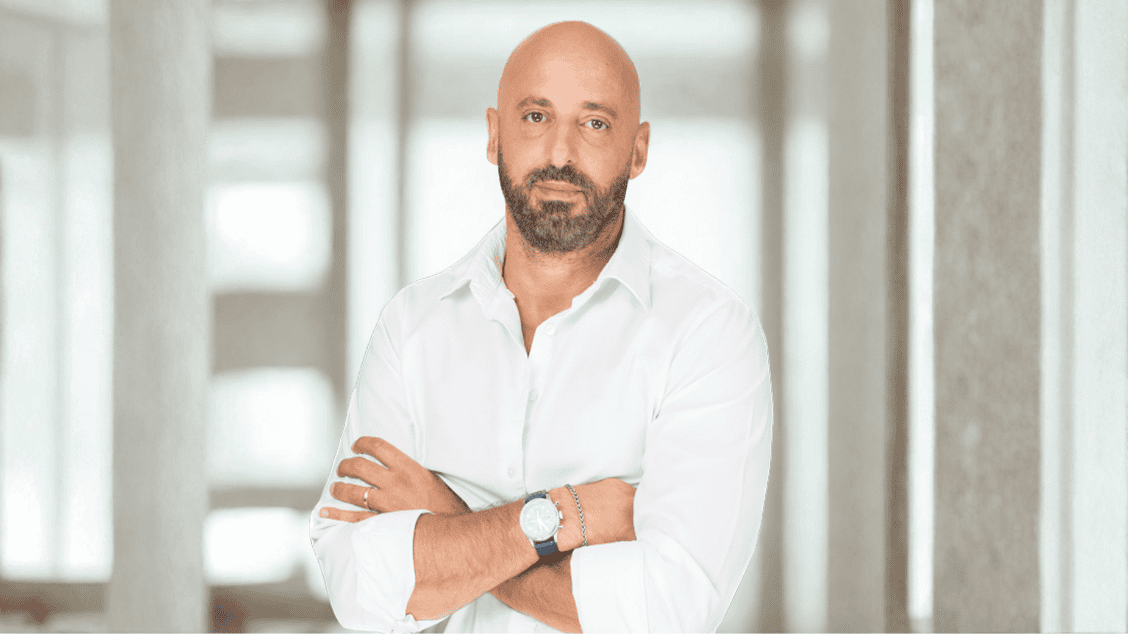
Liquidity CEO Ron Daniel says UAE operations remain resilient despite war risks, as Israeli firms expand after Abraham Accords normalization
Following the Abraham Accords, which normalized diplomatic relations between Israel and several Arab countries in 2020, more than 600 Israeli companies have begun operating in the United Arab Emirates (UAE). Among them: Liquidity, an AI-driven fintech direct lender that manages a multi-billion-dollar portfolio.
Liquidity’s largest office is now in Abu Dhabi, and its second largest in Tel Aviv. Liquidity CEO Ron Daniel spoke with Global Finance about the latest regional developments amid US and Israeli strikes on Iran.
Global Finance: How are you handling the situation?
Ron Daniel: Well, I have many people on the ground in the UAE and many people in Tel Aviv. In total, that’s more than half of my employees who are in a war zone right now. We are dealing with the situation daily. We continue business, but in both locations, a lot of work is done from home. Our first concern is the safety of our people. If someone wants to relocate to their home country, or outside the main cities, we finance that, but most of the team has been quite resilient.
From the UAE, only a few of our employees went back to their country of origin. Our office is open in Abu Dhabi, but most of our staff chose to work from home. We empower our staff to make the decisions that are right for them and their families. The company is functioning as normal; it’s a bit of a stressful time, but we hope it will end soon.
GF: Iran targeted the US-Israeli interests in the region. How is that affecting Liquidity?
Daniel: Yes, just before the war started, Iranian hackers published a direct threat through Telegram to Israeli companies. That meant we had to take additional measures. We contracted a private security company to ensure our office is safe and secure. Our employees are also able to contact them directly and receive advice for any security-related concerns. Thankfully, we’ve never had to use it because the Emirate authorities have been doing a good job in providing clear information and strong security.
GF: How have attacks on data centers in Bahrain and the UAE affected your business?
Daniel: The situation actually doesn’t affect our business, because our business is global, with multi-billion-dollar assets under management and capital deployed in over 45 verticals across 35 countries. Our research and development centers in Abu Dhabi are unaffected. I believe the UAE remains a very good location for data centers because it has affordable energy and ample land and I don’t see the security issue as a long-term threat. The UAE have intercepted most of the incoming drones and missiles. The region is, in my opinion, still a very good destination for investment.
GF: A big selling point for the UAE has always been its status as a safe haven for investment. Is that still true?
Daniel: I still think it’s a safe haven. If you look at the world, there really isn’t a 100% safe haven. Some investors have left the region, and I think it’s a mistake. It shows a lack of understanding of this region’s strategic advantage. At Liquidity, we don’t do politics. We do business, and as a business, the UAE has been and will remain a very significant hub for us. It sits between East and West, and geopolitically, they are OK with everyone, which is good for business. The security situation is a bit challenging, of course, but I believe it is temporary and will resolve itself relatively quickly. I chose to be in the UAE back in 2020 because it was a strategic location for us, and the current situation doesn’t change anything for me.
GF: You have been a strong advocate of normalization of relations between Israel and the UAE since 2020 – how do you see things evolving?
Daniel: I believe the region is heading towards a brighter future in the long run. I think, taking the fundamentals into account, it is a place that’s good for business and good for people. Overall, the situation doesn’t affect my feelings about the normalization process.
Facts Only
Over 600 Israeli companies have begun operating in the UAE following the 2020 Abraham Accords.
Liquidity, an AI-driven fintech direct lender, manages a multi-billion-dollar portfolio and has its largest office in Abu Dhabi and second-largest in Tel Aviv.
Liquidity CEO Ron Daniel states that more than half of the company’s employees are currently in war zones (UAE and Israel).
Most employees in Abu Dhabi and Tel Aviv are working from home due to regional tensions.
Liquidity has contracted a private security company for its UAE office in response to Iranian cyber threats.
Iranian hackers issued a direct threat via Telegram to Israeli companies before the recent escalation.
Attacks on data centers in Bahrain and the UAE have not disrupted Liquidity’s operations.
Liquidity operates in 35 countries with assets under management in over 45 verticals.
The UAE has intercepted most incoming drones and missiles, according to Daniel.
Some investors have left the UAE due to security concerns, but Daniel believes this is a mistake.
Daniel remains optimistic about the long-term benefits of Israel-UAE normalization.
Executive Summary
Since the 2020 Abraham Accords normalized relations between Israel and several Arab nations, over 600 Israeli companies have established operations in the UAE, including Liquidity, an AI-driven fintech lender with a multi-billion-dollar portfolio. Liquidity’s largest office is now in Abu Dhabi, with its second-largest in Tel Aviv. CEO Ron Daniel notes that while regional tensions—including US and Israeli strikes on Iran—have created challenges, the company continues operations with a focus on employee safety. Most staff in both locations work remotely, though offices remain open. Despite Iranian cyber threats and attacks on regional data centers, Liquidity’s global operations remain unaffected, with assets deployed across 35 countries. Daniel emphasizes the UAE’s strategic advantages, including its role as a business hub between East and West, and dismisses concerns about its status as a safe haven for investment, attributing recent instability to temporary geopolitical pressures. He remains optimistic about the long-term benefits of normalization between Israel and the UAE, citing the region’s business potential and resilience.
The interview highlights the tension between immediate security risks and long-term economic opportunities in the Middle East. While some investors have withdrawn due to perceived instability, Daniel argues that the UAE’s geopolitical neutrality and infrastructure make it a durable hub for global business. The situation underscores the complex interplay between geopolitics and commerce, with companies like Liquidity navigating risks while maintaining operations.
Full Take
The strongest version of this narrative presents the UAE as a resilient business hub despite geopolitical tensions, with companies like Liquidity adapting to risks while maintaining operations. Daniel’s perspective credits the UAE’s strategic location, infrastructure, and neutrality as enduring advantages, framing recent instability as temporary. The interview also highlights the human dimension—employee safety and adaptability—amid broader economic optimism.
Pattern scan: The narrative leans toward reassurance, emphasizing resilience and long-term potential while downplaying immediate risks. This could align with **ARC-0024 Ambiguity** (softening uncertainties) and **ARC-0043 Motte-and-Bailey** (retreat to "business as usual" when pressed on security). However, the tone remains measured, avoiding overt emotional exploitation or distortion.
Root cause: The paradigm assumes that economic integration (e.g., Abraham Accords) will outlast geopolitical volatility. This echoes post-Cold War globalization narratives, where commerce is seen as a stabilizing force. Unstated assumptions include the UAE’s ability to maintain neutrality and the temporary nature of regional conflicts.
Implications: For human agency, the narrative empowers businesses to navigate risks but may understate the psychological toll on employees. The UAE benefits from continued investment, while those bearing costs (e.g., relocated staff, wary investors) are acknowledged but framed as outliers. Second-order consequences could include a bifurcated market—firms with deep regional ties staying, while others retreat.
Bridge questions:
How might prolonged instability reshape the UAE’s appeal as a "safe haven" beyond short-term adaptability?
What perspectives from local employees or smaller businesses (not multinational firms) are missing from this assessment?
If the security situation worsens, what thresholds would trigger a reassessment of the UAE’s strategic value?
Counterstrike scan: A coordinated influence campaign would amplify the "business as usual" framing while suppressing dissenting voices (e.g., investors who left). The actual content includes nuance (acknowledging risks, employee concerns) and avoids overt propaganda. No structural alignment with a hypothetical attack playbook is detected.
Sentinel — Human
The article presents a balanced interview with Ron Daniel of Liquidity discussing the impact of the Abraham Accords on their operations in the UAE. The text demonstrates signs of human authorship, such as varied sentence length and a conversational tone.