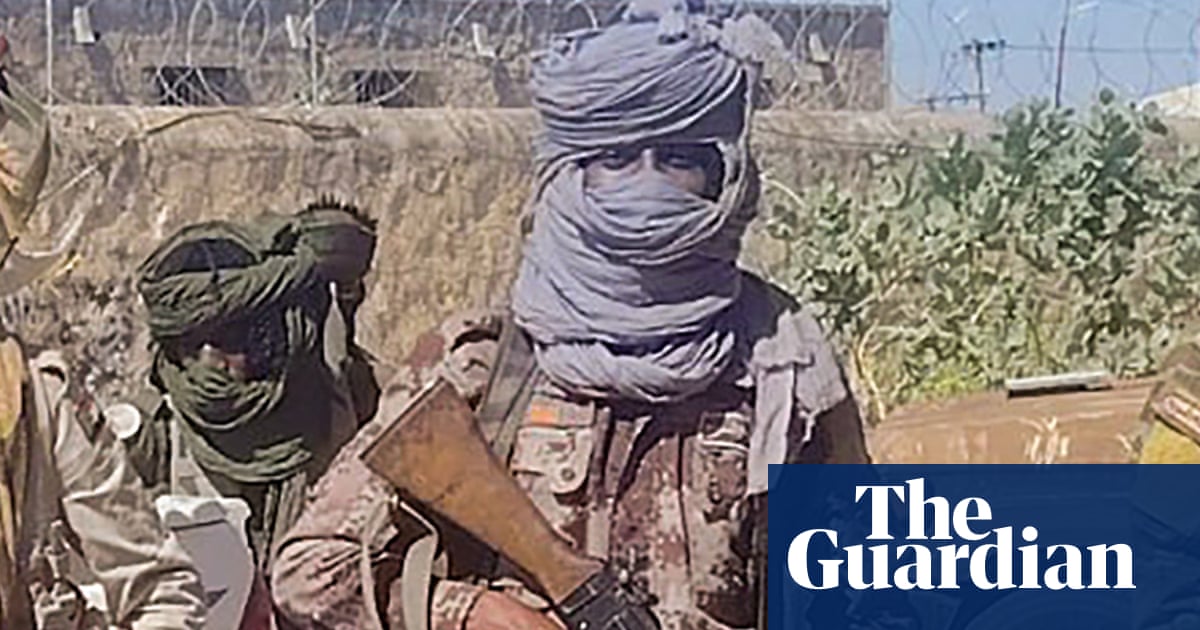
The Sudanese paramilitary Rapid Support Forces committed crimes against humanity and ethnic cleansing during its seizure of El Fasher last year, Amnesty International has alleged.
Many of the crimes, including murder, torture, rape, enslavement and sexual slavery, were carried out as part of a widespread and systematic attack against civilians and amounted to crimes against humanity, the human rights organisation said in a report released on Wednesday.
In the report, Amnesty also accused the RSF of deliberately targeting children during attacks in the city in North Darfur state.
In late October, the paramilitary force captured El Fasher, the last stronghold of the Sudan armed forces in the Darfur region, after an 18-month siege. The brutal takeover was marked by widespread massacres, with tens of thousands of people killed.
In February, an independent fact-finding mission for the UN said the RSF’s seizure of El Fasher showed “hallmarks of genocide” against non-Arab communities.
For the report, Amnesty interviewed 247 people, including 208 survivors of the fighting in the city and surrounding areas. It also analysed documentary and video material, and carried out analysis of satellite imagery from North Darfur.
Amnesty concluded that the RSF had committed war crimes in El Fasher and surrounding areas between mid-2024 and late 2025. It found the paramilitary force had often targeted non-Arab civilians and repeatedly used derogatory and dehumanising language in attacks. The RSF committed the crime against humanity of persecution on the basis of ethnicity, Amnesty concluded.
The human rights organisation said RSF’s destruction of towns and villages between December 2024 and March 2025 including Abu Zerega, which is populated by non-Arab ethnic groups, was consistent with ethnic cleansing.
The report said the abuses carried out by the paramilitary force had orphaned countless children and displaced hundreds of thousands of others, exposing them to death and injury during attacks or while fleeing.
Agnès Callamard, the secretary general of Amnesty International, said: “The war in Sudan is a war on civilians. The world was warned of the horrors that civilians in El Fasher confronted as the RSF laid siege to the city. It is a stain on the conscience of humanity.”
The report named three RSF commanders whom it said were responsible for serious violations of international law: Maj Gen Gedo Hamdan Ahmed Mohamed, also known as “Abu Shok”, Lt Col Abbas Khater Bakhit and commander Al-Fateh Abdullah Idris, also known as “Abu Lulu”.
The Sudanese civil war began in April 2023 when a power struggle between the Sudan armed forces led by Gen Abdel Fattah al-Burhan and the RSF headed by Gen Mohamed Hamdan Dagalo, commonly known as Hemedti, erupted into violence in the capital, Khartoum.
The fighting has killed hundreds of thousands of people and displaced more.
Amnesty called for an immediate ceasefire and for the urgent deployment of an international force to protect civilians.
Callamard said: “The international community must move beyond statements of concern and take concrete steps to protect civilians, breaking the cycle of impunity.”
Sentinel — Human
The text functions as a detailed summary of an investigative report, relying heavily on cited external sources and specific facts. It demonstrates characteristics consistent with high-quality journalistic reporting rather than purely synthetic generation.