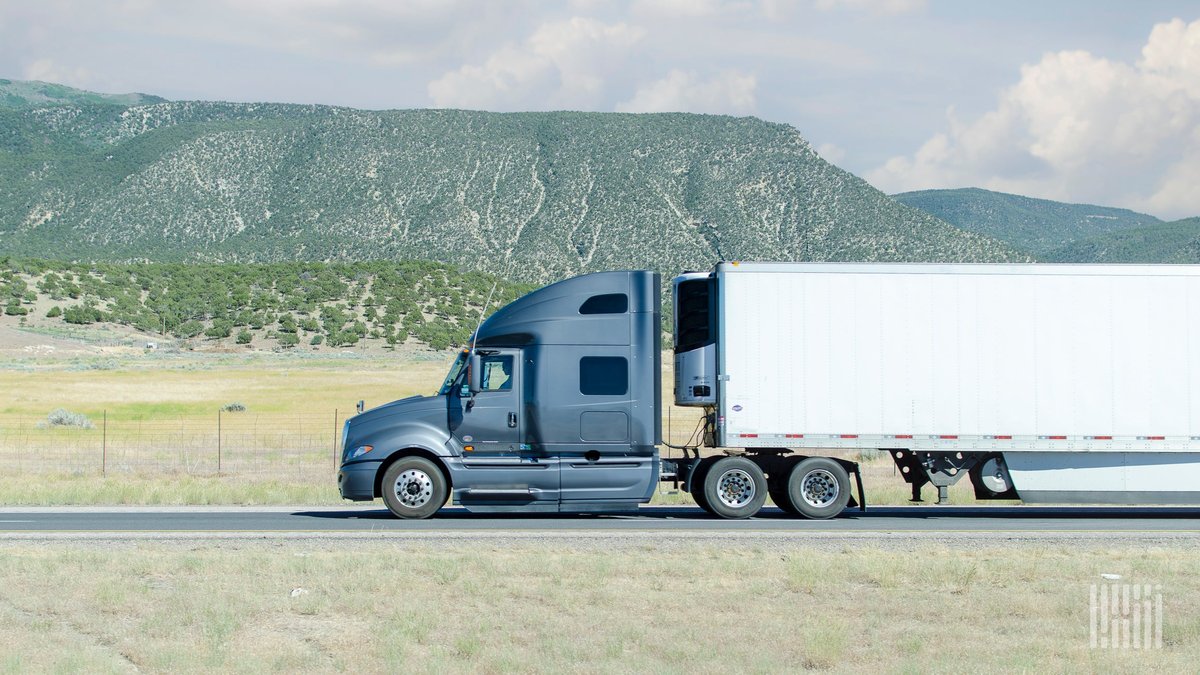
The long-awaited proposed changes in a set of EPA heavy-duty truck regulations that loosely is referred to as “the NoX rule,” because its provisions are aimed at reducing emissions of that pollutant, were released by the agency Thursday as it declared the revised standards will not bring any changes to the cost of truck manufacturing.
The possible revisions in the NoX rule don’t actually change the nitrogen oxide standards first promulgated in the Biden administration. “The more stringent standards and more representative test cycles finalized in the 2023 Final Rule remain in place,” the EPA said in its Notice of Proposed Rulemaking (NPRM) released Thursday.
A 45-day comment period is in place for the rule, which is expected to be published in the Federal Register Friday.
But the agency said there would be a small reduction in the earlier projections on the reduction in NoX coming from its rule as a result of the changes in other parts of the proposal.
The EPA said it believes the amended rule would retain 90% of the NoX reductions that were first called for in the 2023 Final Rule that is now proposed for revision. It also said the amended rule would reduce NoX emissions from on-road heavy-duty vehicles by 42% by 2055 compared to NoX emissions by that year had there been no rule.
Need time to read the whole thing
The 477-page NPRM was long enough that the group that might stand to be the most obvious beneficiary of changes in the rule was cautious in declaring a big victory for their members.
“The Engine Manufacturers Association looks forward to reviewing the proposal in greater detail and continuing to work constructively with EPA to ensure the final rule supports regulatory certainty and practical implementation for manufacturers and our customers,” the trade group said in its prepared statement published after the EPA released the NPRM.
But the agency said there would be a small reduction in the earlier projections on the reduction in NoX coming from its rule as a result of the changes in other parts of the proposal.
“The Engine Manufacturers Association looks forward to reviewing the proposal in greater detail and continuing to work constructively with EPA to ensure the final rule supports regulatory certainty and practical implementation for manufacturers and our customers,” the trade group said in its prepared statement published after the EPA released the NPRM.
The major revisions the NPRM seeks in the 2023 rule fall into four different categories.
- Reducing the required mileage for warranties to be in effect which had been an increase in the first proposal. Additionally, the longer warranty length of 450,000 in the original proposal would be sliced back to 100,000 miles, and would be delayed in implementation to model year (MY) 2030, as opposed to 2027, when the broader rule is to go into effect.
- The elimination of deratements, where an engine suddenly slows or stops if its emissions systems are signaling an issue with their operations. The deratement would be replaced with a visual or audible warning that a truck’s emission systems are failing in some regard, including a lack of diesel exhaust fluid (DEF) in the system. Deratement is a function of what the EPA calls “inducements,” processes that seek to ensure the operator of a diesel vehicle is properly using DEF through a selective catalyst reduction (SCR) system.
- A lengthening of the useful life provisions, a complex system that at its most basic definition sets guidelines for how long an older truck can stay on the road. The longer useful life provisions in the NPRM would allow a dirtier truck to continue operating longer than it would have under the original rule. The longer life provisions are created by delaying the tighter useful life provisions until 2030.
- Establishing noncompliance penalties (NCPs), which would allow an engine manufacturer to pay an amount for failing to meet NoX standards.
The EPA said “most” truck manufacturers in the past year “have communicated to the EPA that they will have a full lineup of products ready to meet the MY standards,” the agency writes in its proposal. “However, some truck and engine manufacturers and the broader industry, including trucking fleets and dealers, have raised concerns with the overall costs of new vehicles resulting from the 2023 Final Rule.”
No changes at OEMs predicted
The changes are small enough, the EPA said in the NPRM, that it “projects that manufacturers have finished their technology designs for MY 2027 engines, and the Agency believes that manufacturers are likely to maintain a steady design for MY 2028 and MY 2029 and will not redesign engines in response to the proposed shorter useful life periods for only two years.”
Zeldin’s EPA already had moved on the issue of deratements in March when it eliminated a rule that a truck maintain a diesel exhaust fluid (DEF) sensor that would report problems in the system or that supplies in the DEF tank were running low.
But the way the sensor would report the problems would be to slow or stop the vehicle.
The NPRM is recommending a 90-second audible warning that the DEF system is running low on fluid or has been tampered with. The fix might be as simple as filling the DEF tank, the EPA said. And that won’t be a problem. “It should not require much time to find and refill DEF to resolve the audible notification,” the EPA said.
As for the NCPs, their goal will be “to allow manufacturers to continue selling engines
they are currently producing while developing engines which meet the new standard,” the EPA said in the NPRM.
With the sheer heft of the proposed rule, outside observers had not all had time to digest it by Tuesday afternoon.
EDF checks in
In a prepared statement, Peter Zalzal, associate vice president for clean air strategies at the Environmental Defense Fund, was critical in a prepared statement.
“Heavy duty diesel vehicles like freight trucks and buses emit huge amounts of smog and soot-forming pollution into the air we breathe, but truck makers are already introducing new engines that can substantially cut this pollution and meet protective standards. EPA should abandon this proposal and instead maintain strong pollution safeguards for new heavy-duty vehicles,” he said.
However, in an interview with FreightWaves, Zalzal was more cautious about the impact of the changes.
He acknowledged that the fundamental NoX standards did not change in the proposal, which had been a source of concern in the environmental community.
“But there are changes to a number of provisions that are intended to ensure that those standards continue to be met over the vehicle’s lifetime,” Zalzal added, citing the useful life changes and the “inducements” as examples.
He expressed particular concern about the deratement changes, with the audible warning possibly not enough to ensure drivers use DEF in their systems, the so-called “inducement.”
“If that (DEF use) doesn’t happen, you know you could potentially go to completely uncontrolled engine exhaust, and that’s you know that’s not a little bit higher,” he said. “Tha could be 20 times higher in terms of pollution, and so these are important.”
More articles by John Kingston
TQL case on broker transparency heads to oral arguments
Highway, post-Montgomery, requiring ELD hookups for all carriers
Supply Chain AI Symposium
Past the hype. Join operators, founders, and enterprise leaders figuring out how to deploy AI in supply chain.
F3: Future of Freight Festival
Industry-defining keynotes, rapid-fire technology demos, and industry leaders networking in experiences across Chattanooga - plus the inaugural F3 Awards Dinner featuring the FreightTech and Shipper of Choice reveals.
Past the hype. Join operators, founders, and enterprise leaders figuring out how to deploy AI in supply chain.
The Old Post • Chicago, IL Register NowIndustry-defining keynotes, rapid-fire technology demos, and industry leaders networking in experiences across Chattanooga - plus the inaugural F3 Awards Dinner featuring the FreightTech and Shipper of Choice reveals.
The Signal at Chattanooga Choo Choo • Chattanooga, TN Register Now
Facts Only
* The EPA released a Notice of Proposed Rulemaking for revisions to the NoX rule Thursday.
* The revised standards are projected to bring no changes to the cost of truck manufacturing.
* The amendments retain the nitrogen oxide standards from the 2023 Final Rule.
* A 45-day comment period is in place for the rule.
* The proposed changes involve reducing warranty mileage, eliminating deratements, lengthening useful life provisions, and establishing noncompliance penalties (NCPs).
* The amended rule would reduce NoX emissions from on-road heavy-duty vehicles by 42% by 2055 compared to a no-rule scenario.
* The EPA projects manufacturers have finished technology designs for MY 2027 engines and anticipate steady design for MY 2028 and MY 2029.
* The deratement elimination would replace sudden slowdowns with an audible or visual warning regarding system failures or lack of DEF.
* Noncompliance penalties (NCPs) would allow manufacturers to pay for failing to meet NoX standards.
Executive Summary
Full Take
Sentinel — Human
This text reads like standard, fact-based reporting on a technical regulatory proposal, characterized by structured presentation of agency details and balancing external stakeholder commentary.