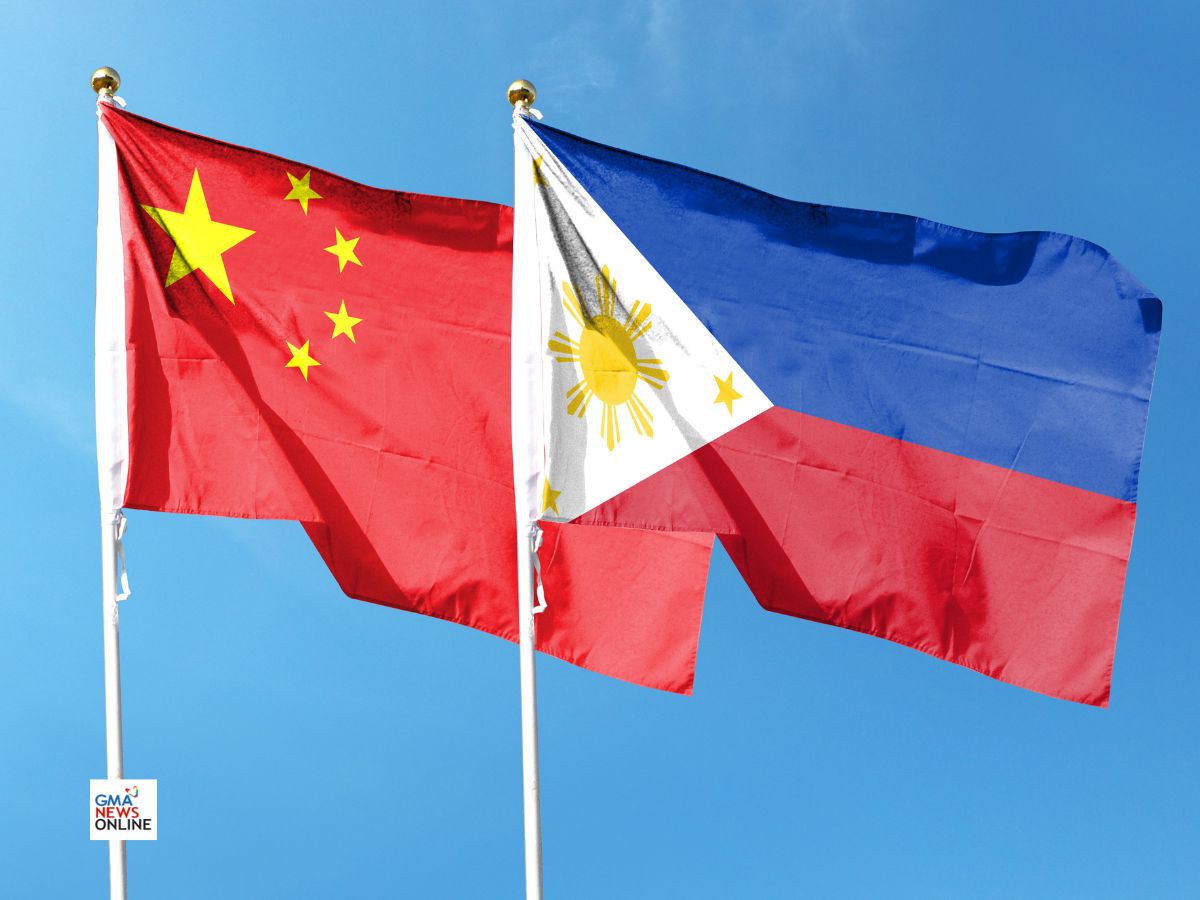
The Philippines and China have resumed talks under the 11th Bilateral Consultation Mechanism (BCM) in Fujian to discuss issues in the West Philippine Sea and negotiations on a Code of Conduct (COC) in the area, amid the conflict in the Middle East and the steep rise in the price of oil globally.
Foreign Affairs Undersecretary for Policy Leo M. Herrera-Lim confirmed that the two-day BCM was underway and mentioned the chance to discuss areas for cooperation for energy security in the region.
“Exploratory lang at best kung papayag sila na explore namin na mag-exchange ng views on potential values for cooperation, exchange of views on ‘yung impact ng prices sa Middle East, areas for cooperation," Foreign Affairs Undersecretary for Policy Leo M. Herrera-Lim said.
“Exploratory lang at best kung papayag sila na explore namin na mag-exchange ng views on potential values for cooperation, exchange of views on yung impact ng prices sa Middle East, areas for cooperation," Herrera-Lim said.
"Whether it’s oil, fertilizer, food, and whether we can use the energy crisis as an opportunity to have platforms for cooperation para may energy security within the region," he added.
(It is only exploratory and best if they agree that we explore to exchange views on potential values ??for cooperation, exchange of views on the impact of prices in the Middle East, areas for cooperation, whether it's oil, fertilizer, food, and whether we can use the energy crisis as an opportunity to have platforms for cooperation to have energy security within the region.)
President Ferdinand "Bongbong" Marcos, Jr., and China, through its embassy in Manila, over the past week, made references to joint energy projects in the South China Sea.
Marcos, in an interview with Bloomberg this week, said that he was open to restarting discussions with Beijing on a joint energy project in the South China Sea.
The Chinese Embassy in Manila on Thursday said discussions between the Philippines and China on possible joint oil and gas exploration in the South China Sea have made “positive progress.”
Herrera-Lim, however, said actual oil exploration was a long-term process and would not immediately produce results.
“'Yung oil exploration mahabang proseso yun. Siguro hindi mo ma-harvest yun within five to 10 years yung end product. Pero yung fact na China has a lot of refineries and refined products and yung ibang opportunities for say, ano bang potential for renewables in the Philippines in terms of share," Herrera-Lim said.
The BCM is also expected to help maintain the “momentum” of discussions on the long-awaited Code of Conduct in the South China Sea, which the Department of Foreign Affairs has said it hopes can be concluded within the year.
The talks will also include the continuation of discussions on the proposed Philippines-China memorandum of understanding on Coast Guard-to-Coast Guard cooperation. Herrera-Lim said the Philippine side is now waiting for China’s comments on the matter.
“So, aantayin lang namin yung comments ng China and then we’ll share it with Coast Guard," Herrera-Lim said.
The BCM has long served as a diplomatic platform for the Philippines and China to discuss developments in the West Philippine Sea, including maritime incidents, confidence-building measures, and areas of possible cooperation.
In a separate statement, the DFA says the 24th Philippines-China Foreign Ministry Consultations (FMC) and the 11th Meeting of the Philippines-China Bilateral Consultation Mechanism on the South China Sea (BCM) are being held back-to-back in Quanzhou, a city in Fujian province, China, on March 27 to 28, 2026.
The two meetings, according to the DFA, are “important bilateral dialogue mechanisms” meant for frank and candid exchanges on issues and concerns, as well as exploring possible cooperation in non-sensitive areas.
Data from the Department of Energy in 2020 showed that the West Philippine Sea may hold more than six million barrels of oil and over seven billion cubic feet of natural gas classified as undiscovered resources.
Among the areas believed to be rich in natural gas is Recto Bank, or Reed Bank, which lies within the Philippines’ exclusive economic zone.
Still, territorial tensions remain a key obstacle to any possible joint oil and gas development. China continues to assert sweeping claims over nearly the entire South China Sea, including areas within the West Philippine Sea, despite the 2016 arbitral ruling that rejected those claims, a decision Beijing does not recognize.
Facts Only
Actors: Philippines, China, President Ferdinand "Bongbong" Marcos, Chinese Embassy in Manila
Events: Resumption of talks under the 11th BCM, exploratory discussions on joint energy projects, progress on Coast Guard cooperation
Locations: Fujian (China), Quanzhou (Fujian province, China)
Timeline: March 27 to 28, 2026
Executive Summary
Full Take
Steelman: The article presents a diplomatic effort by the Philippines and China to discuss ongoing issues in the South China Sea, including potential energy cooperation and negotiations on a COC. While territorial tensions persist, both parties are seeking opportunities for collaboration to enhance regional energy security amidst the global oil crisis.
Patterns detected: ARC-0043 Motte-and-Bailey (exploratory discussions without firm commitments), ARC-0024 Ambiguity (unclear outcomes and timelines).
Root Cause: The ongoing territorial disputes in the South China Sea, exacerbated by the global oil crisis, are driving these diplomatic efforts aimed at finding common ground for cooperation.
Implications: Successful negotiations on joint energy projects could lead to increased energy security within the region, while failure to reach agreement may escalate tensions and undermine regional stability.
Bridge Questions: How will territorial tensions impact potential energy cooperation between the Philippines and China? What role can diplomacy play in managing these disputes and ensuring long-term regional stability?
Sentinel — Human
The text shows signs of being likely human-written. Sentence structures are varied, and there is a distinct personal voice present. However, it's essential to note that the analysis does not claim certainty as these indicators can sometimes be present in some AI-generated content.