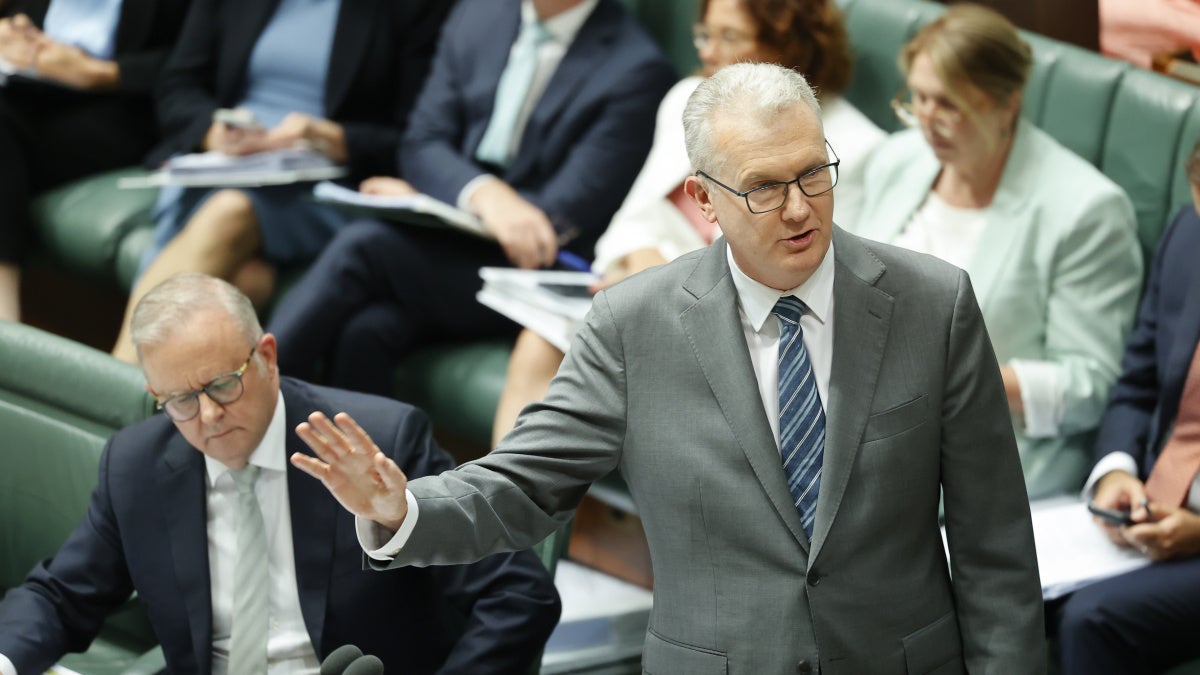
This week, the Australian government introduced a new bill, that if passed, will prevent people from conflict and crisis-affected countries from visiting Australia.
Under the Migration Amendment (2026 Measures No. 1) Bill 2026, the minister for home affairs can issue an “arrival control determination” that would stop people from specified regions from entering Australia on temporary travel visas such as tourist, student, or sporting visas. Once issued, an “arrival control determination” automatically freezes any temporary visa held by people within the designated group, preventing them from entering the country. This determination can be made at any time before a visa holder arrives in Australia, including while they are in transit through a third country.
The government’s explanatory materials state that people travelling legally to Australia on temporary visas could face mandatory detention and deportation upon arrival if a determination is issued while they are in transit.
While there are exemptions for people holding certain protection or humanitarian visas, the measures preclude asylum seekers who might initially enter countries on other types of visas. Australia has already blocked various routes to asylum including policies that subject people arriving by boat to offshore detention. Legal and safe pathways are already very limited.
The bill, which is expected to pass parliament this week, was introduced without consultation with Australia’s refugee and migration sector and continues a pattern of the government passing anti-migration legislation that grants the home affairs minister expanded authority with minimal scrutiny.
While no country is specifically mentioned in the bill, Assistant Citizenship Minister Julian Hill, when introducing the legislation, pointed to instability in the Middle East, saying the “current situation” showed how quickly circumstances could change and affect whether temporary visa holders would leave Australia at the end of their stay. Home Affairs officials have confirmed there are currently 61,000 people from Middle East countries with temporary travel visas.
The same day the draft legislation was announced, Home Affairs Minister Tony Burke drew global attention when he granted asylum protections to members of the Iranian women's national football team. Instead of introducing policies that place people affected by armed conflict at even greater risk, Australia should expand safe and legal pathways for everyone in need of protection.
Facts Only
The Australian government introduced the Migration Amendment (2026 Measures No. 1) Bill 2026.
The bill allows the Home Affairs Minister to issue "arrival control determinations" preventing people from specified regions from entering Australia on temporary visas.
Temporary visas affected include tourist, student, and sporting visas.
Determinations can be issued at any time before arrival, including while travelers are in transit.
Existing temporary visas held by designated individuals will be automatically frozen.
Affected individuals may face mandatory detention and deportation upon arrival if a determination is issued while they are in transit.
Exemptions exist for certain protection or humanitarian visa holders.
The bill does not specify which countries or regions will be targeted.
Assistant Citizenship Minister Julian Hill referenced instability in the Middle East as a justification.
Home Affairs officials confirmed there are 61,000 temporary visa holders from Middle Eastern countries.
The bill was introduced without consultation with refugee and migration sectors.
The same day the bill was announced, Home Affairs Minister Tony Burke granted asylum to members of the Iranian women's national football team.
Executive Summary
The Australian government has introduced the Migration Amendment (2026 Measures No. 1) Bill 2026, which, if passed, will grant the Home Affairs Minister the authority to issue "arrival control determinations" barring individuals from specified conflict-affected regions from entering Australia on temporary visas, including tourist, student, or sporting visas. These determinations can be issued at any time before arrival, even while travelers are in transit, and would freeze existing visas, potentially leading to mandatory detention and deportation upon arrival. Exemptions exist for certain protection or humanitarian visa holders, but the measures further restrict asylum pathways, which are already limited due to policies like offshore detention for boat arrivals.
The bill was introduced without consultation with refugee and migration sectors, continuing a trend of expanding ministerial powers with minimal oversight. While no specific countries are named, officials have cited instability in the Middle East, noting that 61,000 temporary visa holders from the region could be affected. The legislation contrasts with a recent decision by Home Affairs Minister Tony Burke to grant asylum to members of the Iranian women's national football team. Critics argue that the bill risks increasing vulnerabilities for those fleeing conflict, while proponents may frame it as a necessary security measure in response to rapidly changing global conditions.
Full Take
The strongest version of this narrative frames the bill as a proactive security measure, addressing the government's responsibility to respond swiftly to geopolitical instability. The legislation grants broad discretionary powers to the Home Affairs Minister, justified by the need to prevent potential overstays or security risks from conflict-affected regions. The reference to the Middle East and the simultaneous asylum grant to Iranian athletes could be interpreted as a balancing act—demonstrating both firmness and compassion. However, the lack of consultation and the sweeping nature of the powers raise concerns about transparency and accountability.
Patterns detected: **ARC-0024 Ambiguity** (vague criteria for "specified regions" and broad ministerial discretion), **ARC-0043 Motte-and-Bailey** (justifying broad powers with narrow security concerns while potentially enabling wider restrictions).
The paradigm driving this narrative is one of securitization—prioritizing border control and risk mitigation over humanitarian considerations. The unstated assumption is that temporary visa holders from unstable regions pose an inherent risk, despite no evidence presented of systemic abuse. Historically, this echoes Australia's long-standing policy of deterrence, from offshore detention to visa restrictions, which prioritizes sovereign control over international obligations to refugees.
The implications for human agency are stark: individuals fleeing conflict may find even legal pathways to safety abruptly closed, while the government gains unilateral authority to alter visa statuses without judicial review. The beneficiaries are likely to be political actors emphasizing border security, while the costs fall on vulnerable populations and civil society groups advocating for refugee rights. Second-order consequences could include increased irregular migration attempts, diplomatic tensions with affected regions, and erosion of trust in Australia's visa system.
Bridge questions: What safeguards could prevent the misuse of such broad ministerial powers? How might this policy interact with Australia's international human rights commitments? Would evidence of systemic visa overstays from specific regions justify these measures, or is the risk being overstated?
Counterstrike scan: A coordinated influence campaign would likely amplify fears of uncontrolled migration, frame opponents as naive or reckless, and use selective examples (e.g., the Iranian football team) to create a false balance. The actual content aligns partially with this pattern—emphasizing instability and ministerial authority—but lacks the hallmarks of a full-scale manipulation effort, such as fabricated evidence or coordinated outrage. The absence of specific country targets and the acknowledgment of humanitarian exemptions suggest a policy debate rather than a disinformation play.
Sentinel — Human
The article exhibits strong hallmarks of human journalism, including direct attribution, policy-specific details, and a clear editorial perspective. No significant synthetic signals detected.