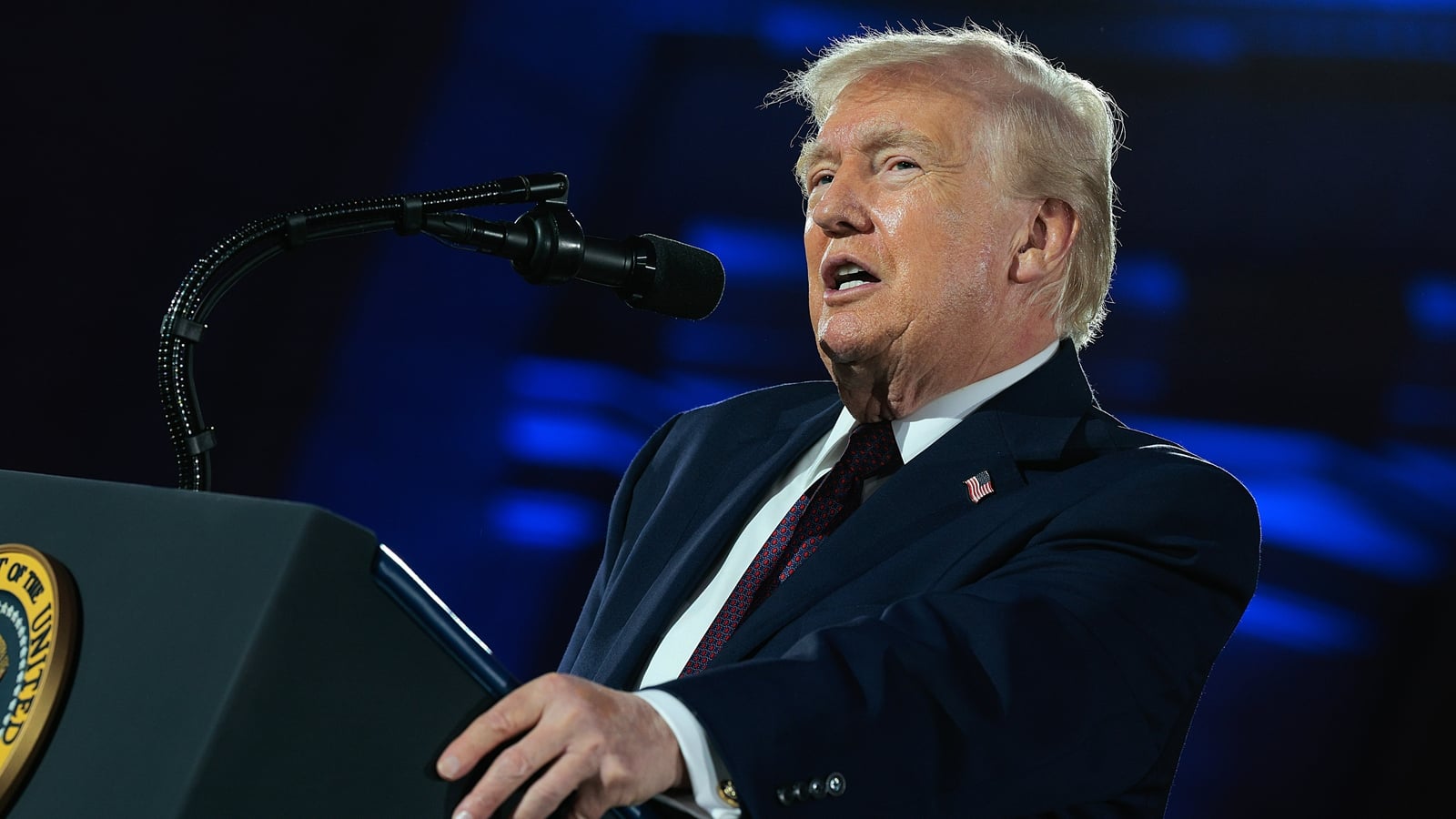
US President Donald Trump insisted that Iran was taking part in peace talks, suggesting Tehran's denials were because Iranian negotiators fear being killed by their own side.
"They are negotiating, by the way, and they want to make a deal so badly. But they're afraid to say it, because they figure they'll be killed by their own people," Mr Trump told a dinner for Republican members of Congress.
"They're also afraid they'll be killed by us."
The US leader's comments came after Iranian Foreign Minister Abbas Araghchi said that "we do not intend to negotiate".
Mr Trump repeated his assertion that Iran was being "decimated" in the conflict now in its fourth week, even though Tehran still maintains an effective stranglehold over the crucial Strait of Hormuz oil route.
Lashing out at his domestic opponents, Mr Trump also claimed Democrats were trying to "deflect from all of the tremendous success that we're having in this military operation."
In a mocking reference to calls from Democrats for him to seek the approval of Congress for the conflict, Mr Trump added:
"They don't like the word 'war,' because you're supposed to get approval, so I'll use the word military operation."
The White House said earlier that Mr Trump was ready to "unleash hell" if Iran did not admit defeat, while also insisting that Tehran is still taking part in talks.
Iranian state media had earlier cited an unidentified official as saying that the Islamic republic had responded "negatively" to a reported 15-point plan from Washington.
'Talks continue'
"If Iran fails to accept the reality of the current moment, if they fail to understand that they have been defeated militarily and will continue to be, President Trump will ensure they are hit harder than they have ever been hit before," Press Secretary Karoline Leavitt told reporters.
"President Trump does not bluff and he is prepared to unleash hell. Iran should not miscalculate again."
Asked if negotiations with Iran had stalled, Ms Leavitt replied:
"Talks continue. They are productive."
Ms Leavitt declined to say whom the US was dealing with in Tehran following the assassination of supreme leader Ali Khamenei, whose son and successor Mojtaba Khamenei has not been seen in public.
Reports have suggested the Trump administration's interlocutor is Mohammad Bagher Ghalibaf, Iran's speaker of parliament and one of its most prominent non-clerical figures.
The spokeswoman also declined to confirm reports that top US officials including Vice President JD Vance were set to hold talks with the Iranians in Pakistan, which has emerged as a key mediator.
Mr Trump is moving thousands of airborne troops and extra marines to the Gulf amid speculation that he might order a ground invasion to either seize Iranian oil assets in the Gulf or secure the Strait of Hormuz.
The White House meanwhile appeared to stick to the four to six-week timeline it had previously given for the war.
Mr Trump announced Wednesday that his visit to China to meet Xi Jinping had now been rescheduled for mid-May, having postponed it by six weeks to deal with the conflict.
"We've always estimated approximately four to six weeks (for the length of military operations against Iran), so you could do the math on that," Ms Leavitt added.
Read more:
ESRI warns higher energy prices due to Iran war will push up inflation
Bahá'í community calls for support for man held in Iran
Iran war energy shock may lead to 4% inflation - Central Bank
Facts Only
Actors: US President Donald Trump, Iranian Foreign Minister Abbas Araghchi, White House Press Secretary Karoline Leavitt
Events: Peace talks, assassination of Ali Khamenei, military operation against Iran
Dates: Ongoing since the article's publication date (no specific dates provided)
Locations: Not specified
Executive Summary
Full Take
Pattern Analysis and Deeper Implications:
* STEELMAN: The US is engaged in a military operation against Iran, with President Trump suggesting that Iranian negotiators are afraid to admit their desire for a deal due to fear of being killed by their own people or by the US.
* PATTERN SCAN: ARC-0043 Motte-and-Bailey (Trump suggests both peace talks and potential military escalation), ARC-0024 Ambiguity (unclear who is negotiating with the US following the assassination of Ali Khamenei)
* ROOT CAUSE: The conflict stems from long-standing political tensions between the US and Iran, exacerbated by Trump's withdrawal from the nuclear deal in 2018.
* IMPLICATIONS: This standoff has potential global implications, particularly for oil prices and regional stability in the Middle East. The threat of further escalation raises concerns about potential humanitarian impacts and international diplomacy.
* BRIDGE QUESTIONS: Who exactly is negotiating with the US? What are the long-term effects of this conflict on the relationship between the US and Iran? How might regional allies respond to potential military action against Iran?
Sentinel — Human
This article is likely human-written, displaying a unique writing style, emotional engagement, and no evident fabricated claims.