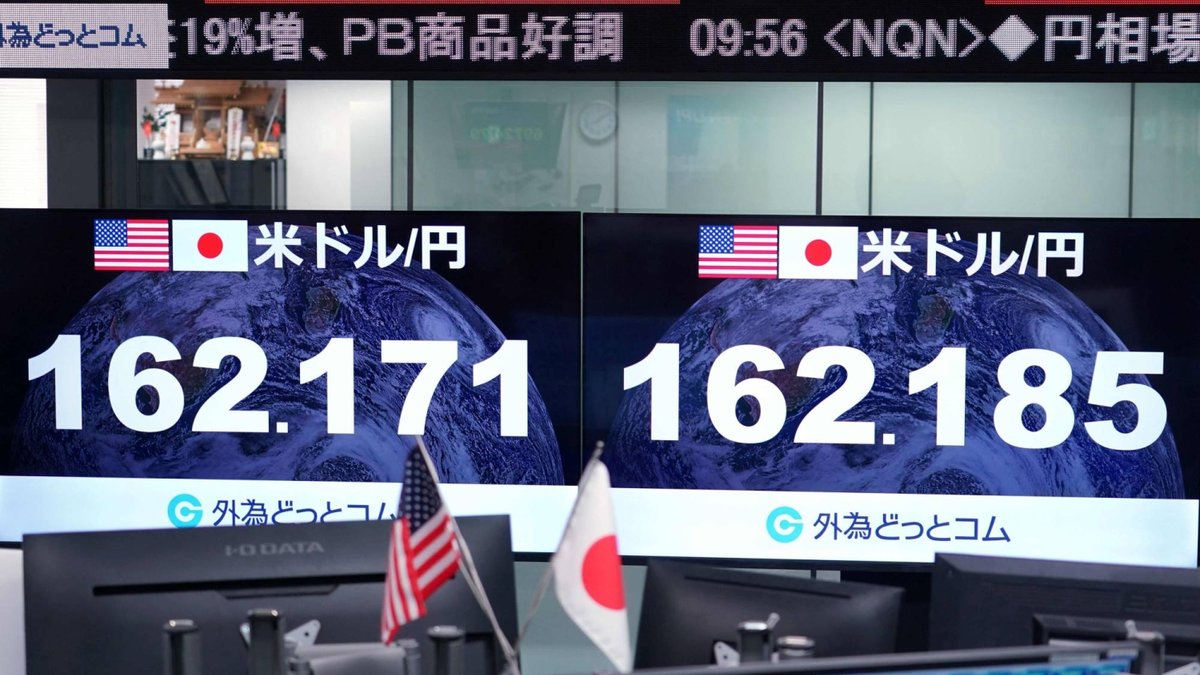
The yen continues to plumb new lows against the U.S. dollar in the contemporary era. The Japanese currency plunged to around ¥162 to the dollar this week, its lowest point in four decades. There are many explanations for this slide and none are susceptible to a quick and easy fix. The decrease in its value will continue. Japan must prepare.
The nation’s currency dropped to ¥162.41 to the dollar in trading in Tokyo Tuesday before recovering slightly, to ¥162.20. The yen had not been as weak since December 1986. In 2012, the currency was exceptionally strong, trading below ¥80 to the dollar. It has weakened ever since, pushed down in value by an underperforming economy, doubts about the geopolitical environment and questions about the Japanese government’s fiscal priorities and balances.
Before Russia’s invasion of Ukraine in February 2022, the yen was worth about ¥110 to the dollar. It plunged past ¥140 within six months and the government at first struggled to keep the currency at that level. By July 2024, the yen hit nearly ¥162 to the dollar, prompting government intervention — the first yen-buying operations in nearly a quarter century — to boost its value.
With your current subscription plan you can comment on stories. However, before writing your first comment, please create a display name in the Profile section of your subscriber account page.
Sentinel — Human
This text functions as a factual market summary with an assertive conclusion, showing characteristics consistent with human-authored commentary rather than pure AI generation.