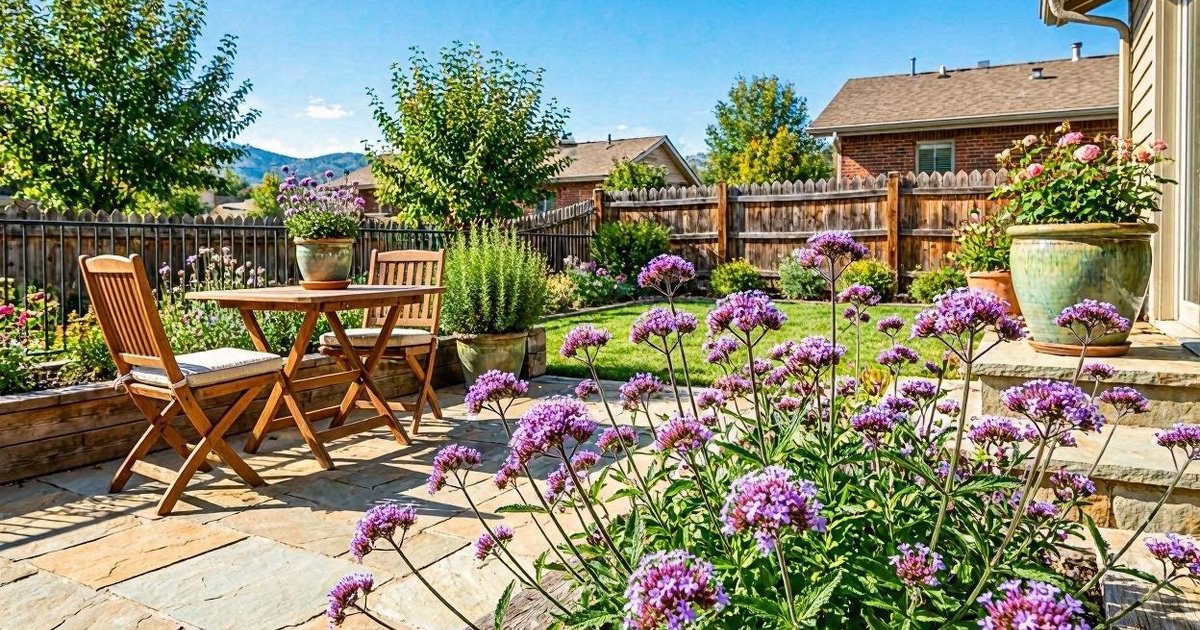
Upright verbena is one of the most quietly powerful performers in the summer garden. Unlike its trailing cousins that spill and spread, upright verbena builds height and structure, producing dense clusters of small flowers held above tidy foliage. In Fort Collins and across the Front Range, it has become a go-to annual for gardeners who want long-lasting color, strong pollinator activity, and a plant that holds its form through heat and wind.
It sits in that ideal middle ground: more structured than trailing verbena, more relaxed than formal bedding plants, and consistently reliable in Colorado’s intense summer conditions.
At [Plantorium.com](https://plantorium.com?utm_source=chatgpt.com upright verbena is often used in mixed containers and pollinator beds where sustained flowering and vertical rhythm are important design elements.
Why Upright Verbena Performs So Well in Northern Colorado
Upright verbena is well adapted to warm, open environments. It thrives in conditions that define the Front Range summer: bright sun, dry air, and fluctuating moisture levels.
It performs well because:
- It loves full sun and heat
- It tolerates drought once established
- It produces dense flower clusters over a long season
- It maintains a tidy, upright growth habit
Flower colors are typically rich and saturated, including:
- Purple
- Pink
- Red
- White
- Lavender
- Bi-color variations
The overall effect is a structured, airy bloom canopy that sits above the foliage, adding height without heaviness.
When to Plant Upright Verbena in Fort Collins
Upright verbena should be planted after the last frost date, typically mid-May in Fort Collins and surrounding areas.
Once soil temperatures warm, it establishes quickly and begins forming flower clusters by early summer. With consistent care, it continues blooming until the first frost.
Sunlight Requirements
Full sun is essential for best performance.
In Northern Colorado:
- Provide at least 6–8 hours of direct sunlight daily
- Ensure open spacing for airflow
- Avoid shaded areas that reduce flowering
In full sun, upright verbena becomes one of the most floriferous and resilient plants in the summer garden.
Soil and Growing Conditions
Upright verbena prefers well-draining soil and performs best in moderately lean conditions.
For best results:
- Amend clay soils with compost and improve drainage
- Use high-quality potting mix in containers
- Avoid heavy, compacted planting sites
Good drainage is especially important in Colorado, where brief summer storms can temporarily saturate soil.
Watering in a Front Range Climate
Once established, upright verbena is moderately drought tolerant.
Recommended watering approach:
- Water deeply during establishment
- Allow soil to dry slightly between waterings
- Avoid constant moisture or waterlogged conditions
- Increase watering during extended heat or wind events
In containers, more frequent watering may be needed during peak summer heat in Fort Collins.
Fertilizing for Continuous Bloom
Upright verbena benefits from light, regular feeding to sustain its long flowering period.
A balanced fertilizer every few weeks supports:
- Continuous flower production
- Strong upright growth
- Healthy foliage and branching
Excess nitrogen should be avoided, as it can lead to leafy growth with fewer blooms.
Garden Role and Design Use
Upright verbena is primarily used as a mid-height structural and color plant in garden design.
It works especially well in:
- Mixed container arrangements
- Sunny perennial-style beds
- Pollinator gardens
- Mass planting schemes
- Entryway and walkway plantings
In Fort Collins landscapes, it is often used to bridge the gap between low-growing spillers and taller structural plants.
Pollinator Value
Upright verbena is highly attractive to pollinators and plays an important ecological role in summer gardens.
It supports:
- Butterflies
- Bees
- Other beneficial insects
Its long bloom period makes it a reliable nectar source throughout the hottest part of the season.
Handling Colorado Weather
Upright verbena performs well in Front Range conditions when properly placed.
It tolerates:
- Heat
- Strong sunlight
- Dry air
- Wind exposure
It is sensitive to:
- Poor drainage
- Overwatering
- Frost (not cold hardy)
Even after weather stress, it often rebounds quickly with continued blooming.
Companion Planting
Upright verbena pairs well with both bold and soft-textured annuals.
Excellent companions include:
- Salvia
- Petunias
- Calibrachoa
- Rudbeckia
- Lantana
- Angelonia
- Ornamental grasses
Its airy flower clusters complement both structured and trailing plants.
A Reliable Vertical Bloomer for Summer Gardens
Upright verbena brings structure without rigidity, color without heaviness, and performance without constant attention. In Fort Collins and across the Front Range, it is valued for its ability to hold gardens together visually through the peak of summer heat.
For gardeners seeking a long-blooming, pollinator-friendly plant that thrives in sun and dry air, upright verbena remains one of the most dependable choices available.
Explore seasonal availability and additional annuals at [Plantorium.com’s full plant catalog](https://plantorium.com/all-plants/?utm_source=chatgpt.com
Facts Only
Upright verbena is an annual plant that grows vertically with dense flower clusters.
It is popular in Fort Collins and the Front Range for its heat and drought tolerance.
Flower colors include purple, pink, red, white, lavender, and bi-color variations.
Planting should occur after the last frost, typically mid-May in Fort Collins.
It requires full sun (6–8 hours daily) and well-draining soil.
Once established, it is moderately drought-tolerant but needs deep watering initially.
Light, regular fertilization supports continuous blooming.
It attracts pollinators like bees and butterflies.
Common companions include salvia, petunias, calibrachoa, and ornamental grasses.
It is sensitive to frost, poor drainage, and overwatering.
The plant is used in mixed containers, pollinator beds, and mid-height garden designs.
It is available for purchase through Plantorium.com.
Executive Summary
Upright verbena is a resilient, long-blooming annual that thrives in the challenging climate of Northern Colorado, particularly in Fort Collins and along the Front Range. It offers gardeners a structured yet airy plant that produces dense flower clusters in vibrant colors, attracting pollinators while maintaining its form through heat, wind, and dry conditions. Unlike trailing verbena, this variety grows upright, making it ideal for mixed containers, pollinator gardens, and mid-height plantings in sunny beds. It requires full sun, well-draining soil, and moderate watering once established, with light fertilization to sustain continuous blooms from early summer until frost. Its adaptability to local conditions—including drought tolerance and heat resilience—makes it a favorite among gardeners seeking low-maintenance, high-impact color. Additionally, its ecological value as a nectar source for bees and butterflies enhances its appeal in sustainable landscaping.
While upright verbena is not cold-hardy and struggles with poor drainage or overwatering, its ability to rebound after stress and its compatibility with companion plants like salvia, petunias, and ornamental grasses further solidify its role in regional garden design. The plant’s versatility bridges gaps between low-growing spillers and taller structural elements, providing both aesthetic and functional benefits in summer gardens.
Full Take
This article presents upright verbena as an ideal plant for Northern Colorado’s climate, emphasizing its resilience, pollinator benefits, and design versatility. The narrative is straightforward and practical, focusing on the plant’s adaptability to local conditions—heat, wind, and dry air—while offering clear cultivation guidelines. The strongest version of this argument highlights its role as a low-maintenance, high-impact plant that supports ecological and aesthetic goals.
However, the piece operates within a broader paradigm of gardening as a solution to environmental and aesthetic challenges, assuming that readers prioritize pollinator-friendly, drought-tolerant plants. The framing subtly reinforces the idea that "native-adjacent" or adaptable plants are inherently superior, without explicitly addressing potential trade-offs, such as water use in container gardening or the carbon footprint of annuals versus perennials. The article also leans on authority by referencing Plantorium.com, though the source appears to be a commercial entity, which may introduce bias toward promoting specific plants.
Patterns detected: none
Root cause: The narrative aligns with a growing trend in horticulture that values resilience, pollinator support, and low-water gardening—reflecting broader concerns about climate change and biodiversity loss. The unstated assumption is that gardeners should prioritize plants that perform well in extreme conditions, which may overlook other factors like soil health or long-term sustainability.
Implications: For gardeners, upright verbena offers a practical solution, but the emphasis on annuals over perennials could have long-term ecological costs. The commercial angle also raises questions about whether the plant’s popularity is driven by genuine suitability or marketing.
Bridge questions: How does the environmental impact of annuals compare to perennials in drought-prone regions? What role do commercial nurseries play in shaping gardening trends, and how might that influence biodiversity? Would a shift toward native perennials offer greater long-term benefits, even if they require more initial care?
Counterstrike scan: If this were part of a coordinated campaign, it might emphasize the urgency of climate-adaptive gardening while downplaying alternatives like native perennials. However, the content does not exhibit signs of manipulation—it remains a practical guide without overt persuasion tactics.
Sentinel — Human
The content is highly polished and logically structured, characteristic of high-quality instructional text, but exhibits patterns typical of AI-generated content optimized for clarity and SEO.