Introduction and Geopolitical Context
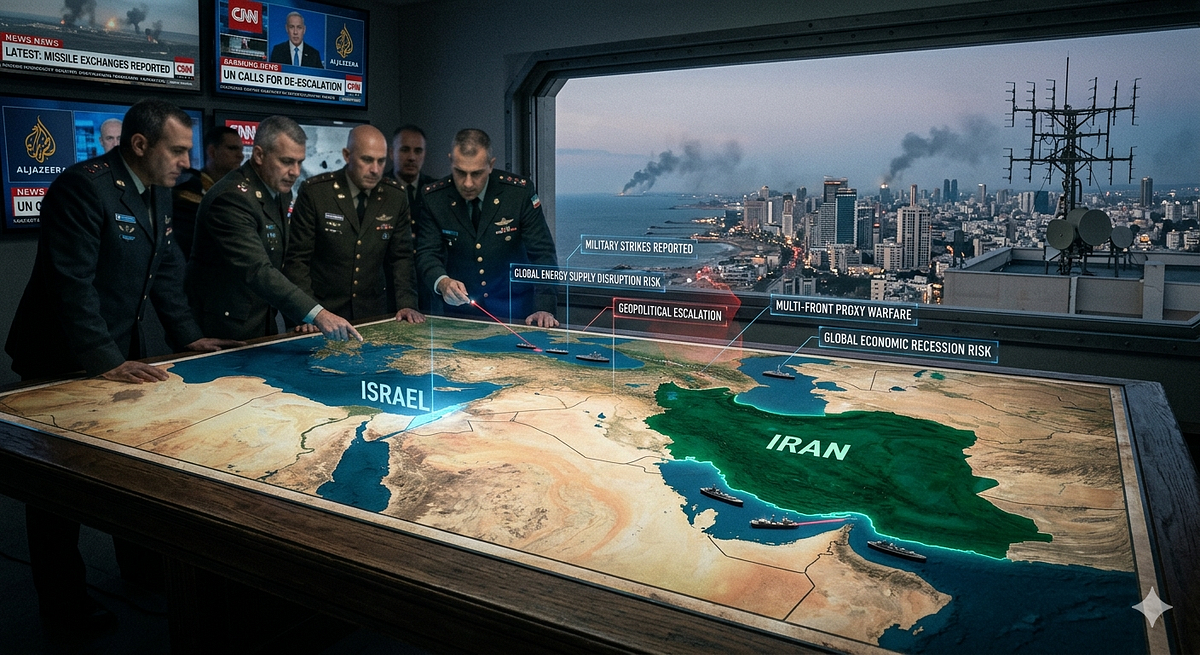
As of April 1, 2026, the Middle East finds itself embroiled in a confrontation of unprecedented scale. What began decades ago as a "shadow war" of assassinations and cyber-attacks has escalated into a direct, high-intensity kinetic conflict. The catalyst for the current state of affairs was the initiation of a massive joint military operation in late February, aimed at neutralizing strategic infrastructure. This shift from proxy warfare to direct engagement has fundamentally altered the security architecture of the region, leaving global powers struggling to contain a fire that threatens to spread far beyond the borders of the primary combatants.
Keyword: Geopolitical Escalation
Military Dynamics and Recent Strikes
Today, the tactical situation remains volatile with both nations exchanging heavy fire. Reports indicate that Iranian long-range ballistic units launched a coordinated strike targeting industrial zones in central Israel, causing significant structural damage and triggering mass emergency protocols. In retaliation, the Israeli Air Force (IAF) conducted a series of precision sorties against command-and-control centers in western Iran and southern Lebanon. These operations have utilized advanced autonomous systems and stealth technology, highlighting the evolution of modern warfare where the line between conventional and electronic combat is increasingly blurred.
Keyword: Precision Military Strikes
The Chokepoint: Global Energy Security
The economic repercussions of this conflict are being felt in every corner of the globe, primarily due to the strategic significance of the Strait of Hormuz. Iran’s naval maneuvers in this narrow waterway have effectively created a blockade, halting the passage of nearly 20% of the world’s daily oil supply. Consequently, Brent Crude prices have surged past record highs, sparking panic in international energy markets. European and Asian economies, heavily reliant on Middle Eastern LNG and crude, are now facing the grim reality of energy rationing as supply chains fracture under the pressure of the naval standoff.
Keyword: Energy Supply Chain Disruption
The Role of Regional Proxies
A defining characteristic of the 2026 conflict is the activation of the "Axis of Resistance." From the hills of southern Lebanon to the coastal regions of Yemen, non-state actors have intensified their involvement to stretch their opponent’s defensive capabilities. Hezbollah has opened a persistent northern front, forcing the mobilization of thousands of reservists, while Houthi forces have utilized loitering munitions to strike logistics hubs as far as the Persian Gulf. This multi-front reality ensures that even if a ceasefire were reached between the primary capitals, the regional skirmishes might continue indefinitely.
Keyword: Multi-Front Proxy Warfare
Humanitarian Consequences and Displacement
Beyond the strategic calculations, the human cost of the war is devastating. Major urban centers are grappling with the destruction of essential services, including power grids and water treatment facilities. In Lebanon and northern Israel, tens of thousands of civilians have been forced to flee their homes, creating a massive internal displacement crisis that is straining the resources of international NGOs. The psychological toll of constant aerial sirens and the loss of life among non-combatants have sparked a global outcry for the establishment of humanitarian corridors to protect the most vulnerable populations.
Keyword: Humanitarian Refugee Crisis
Diplomatic Stasis and the Future Outlook
International diplomacy currently remains at a standstill. While the United Nations Security Council has convened multiple emergency sessions, conflicting interests among the permanent members have prevented a unified resolution. The United States maintains a posture of "maximum pressure," while other global players call for immediate de-escalation to prevent a total economic collapse. The IMF has warned that a prolonged conflict could trigger a global recession similar to the 1970s energy crisis. As the world watches, the path to peace remains obscured by smoke and the rhetoric of total victory.
Keyword: Global Economic Recession Risk
Facts Only
Actors: Iran, Israel, Hezbollah, Houthi forces
Actions/Events: military operation, strikes, naval maneuvers
Dates: Late February 2026 - Present
Locations: Central Israel, western Iran, southern Lebanon, Persian Gulf
Executive Summary
Full Take
In analyzing the article, it is crucial to recognize that this conflict does not occur in a vacuum. Historical and geopolitical context play significant roles in shaping these events. For instance, the Strait of Hormuz has always been a strategic chokepoint for global energy supply chains due to its proximity to major oil-producing nations like Iran and Saudi Arabia. Moreover, regional tensions between Iran and Israel have long roots, dating back to the 1940s and the establishment of the state of Israel.
The article also highlights the increasingly blurred line between conventional and electronic combat in modern warfare. Autonomous systems and stealth technology have been utilized in these precision strikes, reflecting a trend towards digitalization in military operations. The use of non-state actors as proxies by both Iran and Israel is another pattern that echoes previous conflicts in the region, such as Syria and Yemen.
In terms of implications, this conflict poses significant risks to global energy security, economic stability, and humanitarian welfare. The disruption of oil supplies could lead to further escalations and potential retaliation from other regional powers. Moreover, the displacement of civilians highlights the need for robust humanitarian responses to mitigate the suffering caused by these conflicts.
Finally, it is essential to consider the role of external actors in this conflict. The United States maintains a posture of "maximum pressure" while other global players call for immediate de-escalation. Understanding the motivations and strategies of these players will be crucial in determining potential resolutions to the current crisis.
Bridge Questions: What role do external actors play in this conflict? How can global powers effectively address the humanitarian refugee crisis? What long-term solutions might help prevent future conflicts in the Middle East?
Sentinel — Human
The article appears to be written by a human journalist, showcasing idiosyncratic emphasis, personal voice, and varied sentence structure, while avoiding template patterns and clear signs of AI manipulation.