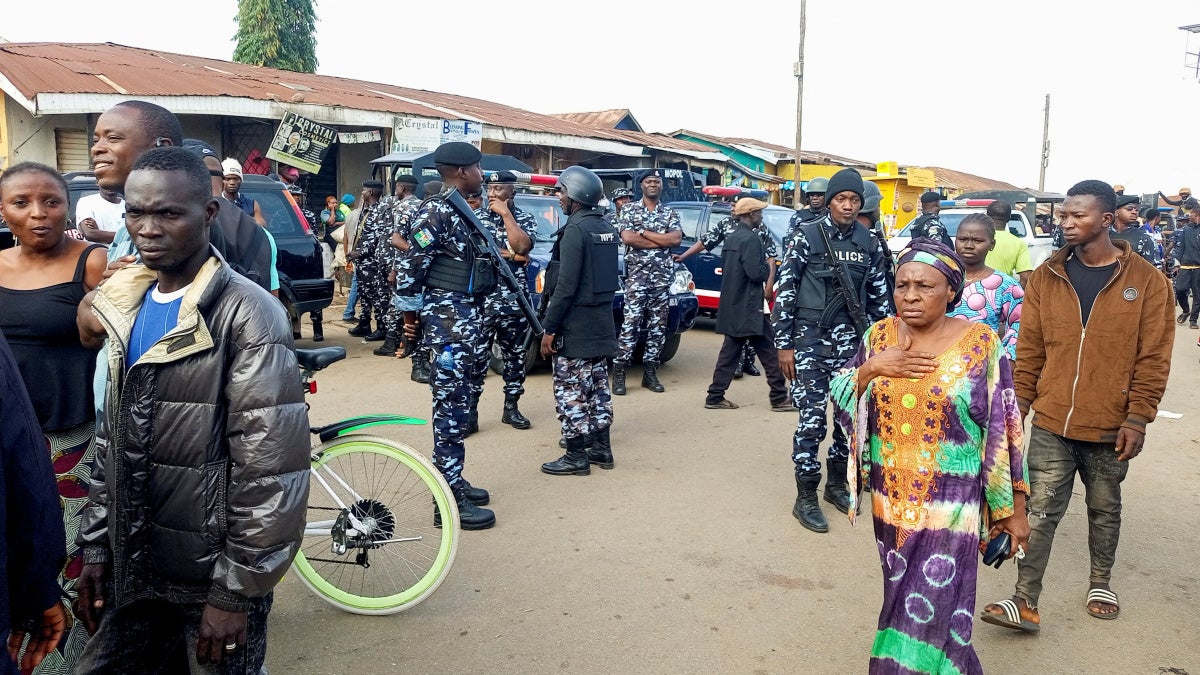
On the night of March 29, gunmen attacked the Angwan Rukuba community in Nigeria’s Plateau state, killing over 28 people and injuring many others, according to the state governor. The attack, which targeted a densely populated area, highlights persistent patterns of violence in northern Nigeria, where killings, kidnappings, and limited state protection leave communities extremely vulnerable.
According to news reports, the attackers fired indiscriminately on people as they tried to flee. Authorities described the attack as a criminal act in a conflict-prone area and promised to ensure the perpetrators are found and held to account. They should now follow through and implement effective strategies to identify and respond to threats, protect communities, and ensure justice.
Plateau state, in Nigeria’s Middle Belt, has long experienced recurrent intercommunal violence rooted in tensions over land, political representation, and the contested distinction between “indigene” and “settler” communities. Often framed along ethnic and religious lines, particularly between predominantly Christian farming communities and largely Muslim pastoralist groups, these divisions have fueled ongoing reprisal attacks between the communities. But authorities have failed to break the cycle of violence, refraining from bringing perpetrators of serious crimes in these attacks to justice.
The intercommunal conflict has increasingly overlapped in recent years with bandit-style raids, which are widespread in the North West region and often involve killings and kidnappings for ransom, for which there has been little or no accountability. Armed insurgent groups such as Boko Haram have also carried out horrific attacks in the northern region.
Though circumstances vary by location, the recurring features of these attacks, including indiscriminate killings and weak state responses, demand the authorities’ urgent and comprehensive action. Without stronger protection, genuine accountability, and sustained efforts to address the root causes, countless lives will continue to be lost and cycles of insecurity will persist.
Facts Only
Actions: gun attack, indiscriminate shooting, killing, injuring, fleeing
Actors/Entities: Angwan Rukuba community, Plateau state authorities, bandit-style raiders, armed insurgent groups (e.g., Boko Haram)
Events: attack on March 29, recurrent intercommunal violence, bandit raids
Locations: Angwan Rukuba community, Plateau state (Nigeria's Middle Belt)
Dates: March 29 (exact year not provided in article)
Executive Summary
Full Take
Analyzing this event through the A.R.C. lens reveals several insights and potential manipulation patterns.
**Steelman**: The article presents a factual account of an attack that resulted in numerous deaths and injuries, citing the state governor as its source for casualty numbers. The conflict in Plateau state is framed as a complex web of issues surrounding land, political representation, and ethnic/religious tensions between farming and pastoralist communities.
**Pattern Scan**: This article appears to avoid emotional exploitation or distortion, instead presenting a straightforward account of the event. No patterns were detected in this analysis.
**Root Cause**: The ongoing violence in Plateau state can be traced back to historical tensions between different ethnic and religious groups over land and political representation, exacerbated by limited state protection and justice.
**Implications**: Numerous lives continue to be lost due to this cycle of violence, with no clear solution in sight. The lack of accountability for serious crimes further perpetuates the conflict.
**Bridge Questions**: How can authorities effectively address the root causes of this violence? What role does external intervention play in resolving these tensions, and at what cost? How can communities work together to build lasting peace and security?
Sentinel — Human
This analysis suggests the text may have been produced by an AI or human-AI collaboration. The stylometric signals show some signs of mechanical writing, but the human signals indicate that the text is also coherent, balanced, and thoughtful. Further investigation would be necessary to determine the true origin.