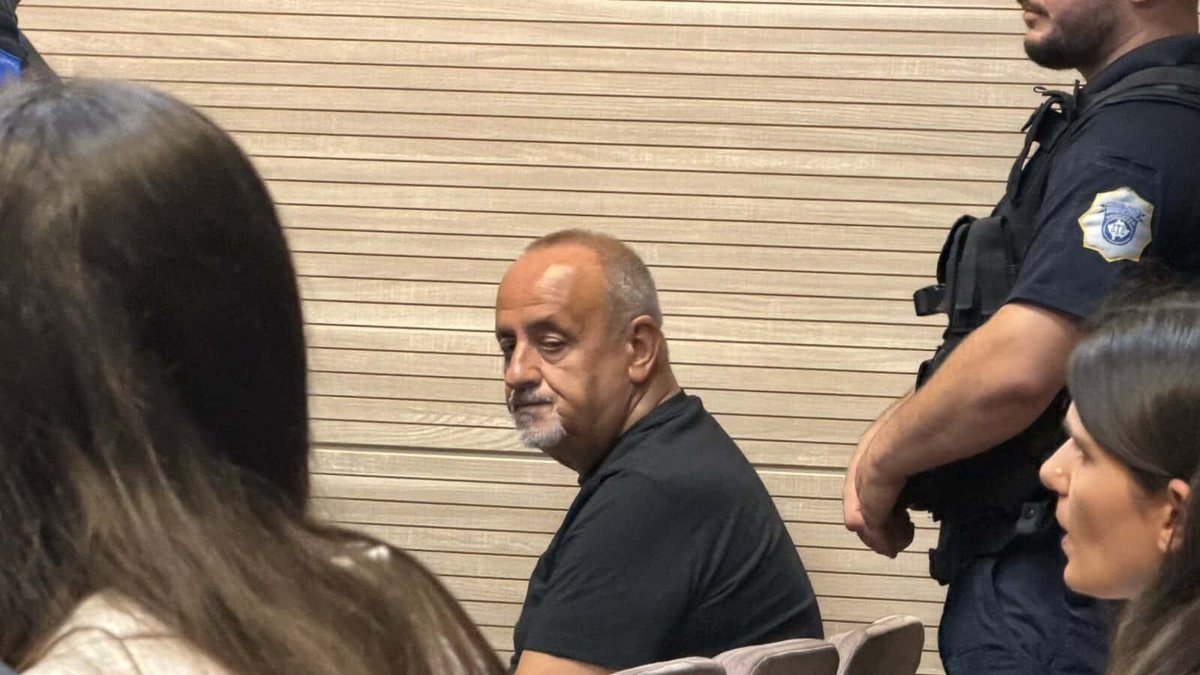
Ekrem Bajrovic in court on July 3, 2026. Photo: BIRN.
Ekrem Bajrovic, a member of Serbian forces during the Kosovo war in 1998-99, was found guilty of war crimes in a retrial before the Pristina Basic Court on Friday for beating, torturing and killing ethnic Albanian civilians in the municipality of Istog/Istok in May 1999.
The ethnic Bosniak from Kosovo was sentenced to 12 years’ imprisonment with credit due to time spent already in custody from October 19, 2022, as the court upheld the same verdict it issued in July 2024. Bajrovic had pleaded not guilty to the charges.
He is also obliged to pay 300 euros for the judicial proceedings and 100 euros to the victims’ fund.
The retrial verdict may be appealed.
The court heard that Serbian police and military forces including Bajrovic stopped a column of ethnic Albanian civilians in the village of Saradran/Staradan on May 8, 1999 as they headed towards Albania, seeking refuge.
The men were separated from the others and had their money and other valuables taken from them. They were then placed in the yard of a house and lined up, facing a wall. Serbian forces then beat and assaulted them, asking: “Where is NATO?” and “Where is the KLA [Kosovo Liberation Army]?” the court heard. At least 16 of them were shot dead in the house. Only one survived.
The day before, on May 7, 1999, in the same village, Bajrovic had participated in the arrest, kidnapping and mistreatment of another 84 civilians. They were initially separated from a column of fleeing ethnic Albanians and also had all their money and valuables taken, the court found.
They were taken to the village of Gurakoc/Djurakovac and tortured. Bajrovic led the violence, the court heard, hitting one of the victims with the butt of a machine gun. The men were then transferred to the local police station where they were threatened with death and suffered serious bodily injuries and trauma, the charges said.
In May 2025, the Court of Appeals upheld the Basic Court’s initial guilty verdict. But in December 2025, it then sent the case for retrial, calling for several witness testimonies previously provided to the UN interim administration in Kosovo, UNMIK, and later to the EU rule-of-law mission in Kosovo, EULEX, to be examined in court alongside the other evidence.
Sentinel — Human
This text functions as a high-fidelity summary of a complex court retrial, characterized by precise legal structure and factual density typical of professional reporting.