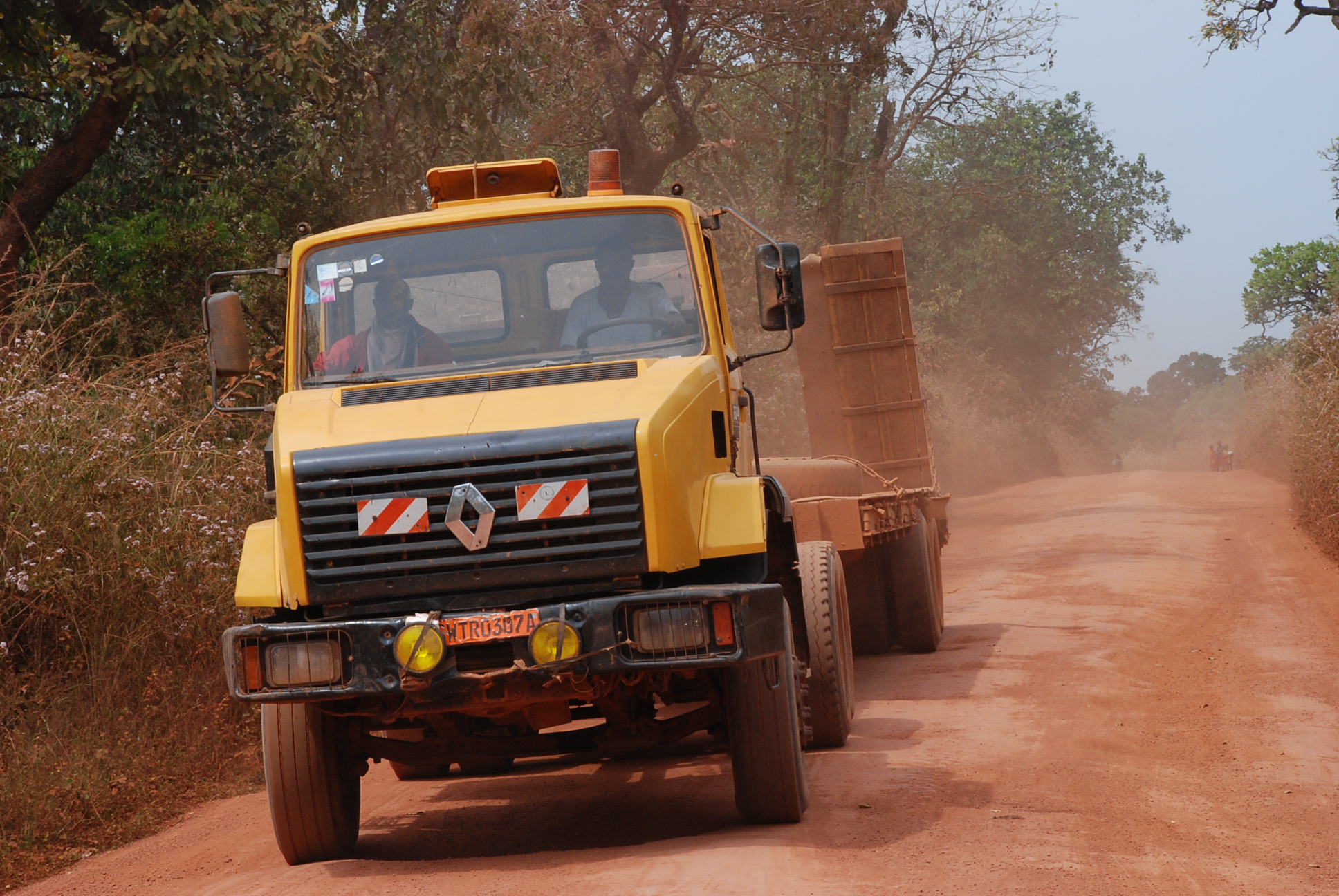
The African Development Bank (AfDB) has lent Cameroon €310m for a 156km-long stretch of road in the country’s east.
The funding will finance the first phase of AfDB’s “Programme for the Opening-up and Connectivity of Cross-Border Economic Basins in the Eastern Region”, enabling the development and paving of the Ngoura II to Yokadouma road on a longer route running south to the Republic of the Congo.
The goal is to boost connection between the two countries to improve socioeconomic inclusion and private-sector investment. It will create 2,500 direct and indirect jobs.
Cameroon’s eastern region is the country’s largest, with a 6.25% paved surface rate and road density of 0.7km per 1,000 inhabitants.
The AfDB says more all-year roads will cut transport costs and improve sustainability and economic conditions.
Léandre Bassolé, the AfDB’s director general in Central Africa, said: “By improving the connectivity of the eastern region and its integration with border corridors, we are helping to unlock productive potential and strengthen regional integration in Central Africa.”
- Subscribe to our newsletter here to receive construction news and insights from around the world straight to your inbox
Further Reading:
Facts Only
The African Development Bank (AfDB) has lent Cameroon €310 million.
The loan finances the first phase of a road development program in Cameroon’s eastern region.
The project involves constructing and paving a 156km road from Ngoura II to Yokadouma.
This road is part of a longer route connecting Cameroon to the Republic of the Congo.
The program is titled "Programme for the Opening-up and Connectivity of Cross-Border Economic Basins in the Eastern Region."
The project aims to boost socioeconomic inclusion and private-sector investment.
It is expected to create 2,500 direct and indirect jobs.
Cameroon’s eastern region has a paved surface rate of 6.25% and a road density of 0.7km per 1,000 inhabitants.
The AfDB states that improved roads will reduce transport costs and enhance economic conditions.
Léandre Bassolé, AfDB’s director general for Central Africa, emphasized the project’s role in regional integration.
The project is part of a broader effort to improve connectivity in Central Africa.
Executive Summary
Full Take
The strongest version of this narrative presents the AfDB’s loan as a strategic investment in regional connectivity, framing it as a catalyst for economic growth, job creation, and cross-border integration. The emphasis on socioeconomic inclusion and private-sector investment aligns with broader development goals, and the project’s focus on Cameroon’s underdeveloped eastern region addresses a clear infrastructure gap. However, the narrative leans heavily on the assumed benefits of road construction without critically examining potential risks, such as environmental impact, displacement of local communities, or the long-term sustainability of the investment. The framing also assumes that improved connectivity will automatically translate into economic gains, which may overlook systemic challenges like governance, corruption, or market access barriers.
Patterns detected: none
At its core, this narrative reflects a paradigm of infrastructure-led development, where physical connectivity is positioned as the primary driver of economic progress. This assumption, while common in development discourse, often sidesteps questions about who truly benefits from such projects. Large-scale infrastructure initiatives can disproportionately advantage multinational corporations or urban elites, while local communities may bear the costs of displacement or environmental degradation. The historical pattern of colonial-era infrastructure projects, which prioritized resource extraction over local needs, looms in the background—though this project’s stated goals are more inclusive, the power dynamics remain worth scrutinizing.
For human agency and dignity, the implications are mixed. On one hand, better roads could empower rural communities by improving access to markets and services. On the other, top-down development projects can marginalize local voices, especially if decision-making lacks transparency. Second-order consequences might include increased deforestation, strain on local resources, or even heightened cross-border tensions if economic benefits are unevenly distributed.
Bridge questions: What mechanisms are in place to ensure local communities have a meaningful say in the project’s design and implementation? How will the AfDB measure success beyond economic metrics, such as improvements in quality of life for residents? What safeguards exist to prevent this project from becoming a vehicle for elite capture or environmental harm?
If this narrative were part of a coordinated influence campaign, the playbook might involve emphasizing the project’s economic benefits while downplaying risks, using development jargon to obscure potential downsides, and framing opposition as anti-progress. However, the actual content does not exhibit these manipulative patterns. It presents a straightforward account of the project’s goals and rationale, though it could benefit from deeper critical engagement with its assumptions.