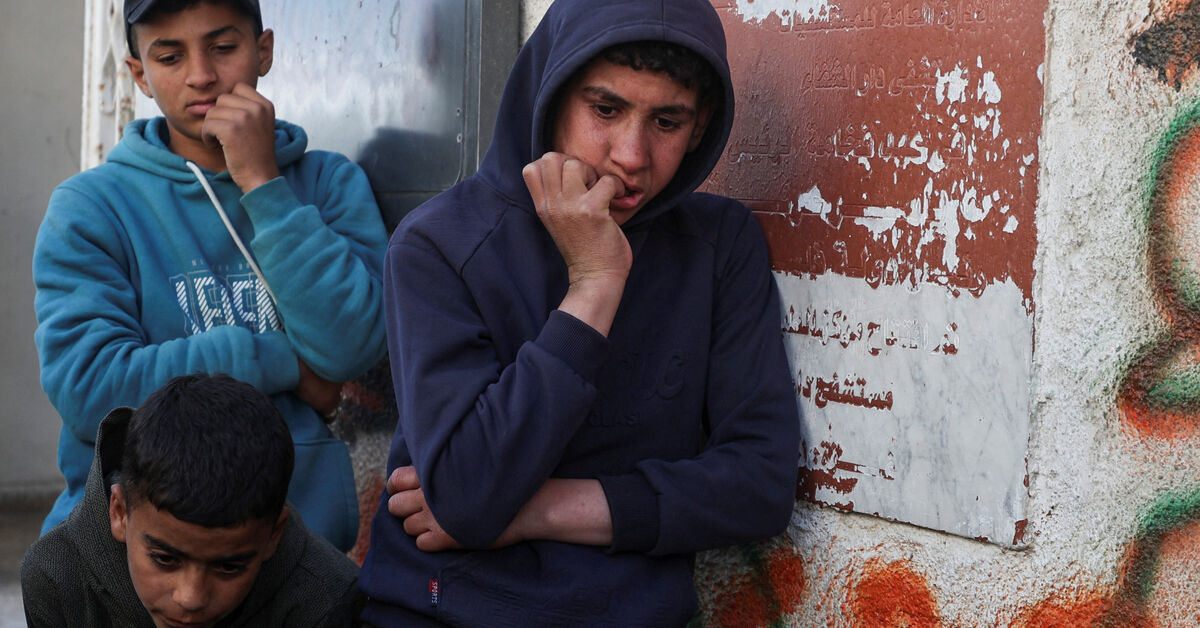
March 28 (Reuters) - The Israeli military killed three Palestinian men in Gaza on Saturday in two separate air strikes, local health officials and medics said, the latest round of deadly violence despite a U.S.-brokered ceasefire that is now more than five months old.
Palestinian health officials said one man was killed in an air strike on a car in the Khan Younis area in southern Gaza, while medics said two adult brothers were killed in Shujiaya, a neighbourhood east of Gaza City.
The Israeli military did not immediately respond to a request for comment on the two air strikes.
The military has killed more than 680 Palestinians in Gaza since a ceasefire with Hamas came into effect in November, local health officials say. More than 72,000 have been killed since the war started in October 2023.
Israel is now also waging a war alongside the U.S. against Iran, and is carrying out a new campaign against Hezbollah where Israeli forces have invaded southern Lebanon.
The Hamas-affiliated Shehab News Agency said the brothers were killed in an air strike by the Israeli military after an Israeli-backed Palestinian militia in Gaza had tried to abduct them.
Neither Hamas nor any other militant group has identified the brothers as members.
Witnesses told Reuters the two brothers, armed with guns, clashed with the militia and that they were later targeted by drones. The witnesses also reported Israeli tanks opening fire.
Violence in Gaza has persisted despite the ceasefire and amid Israel's war with Iran. Health officials in the territory say at least 40 Palestinians have been killed by Israeli forces since the Iran conflict began a month ago.
(Reporting by Nidal al Mughrabi; Writing by Alexander Cornwell; Editing by Jan Harvey)
Facts Only
Israeli military conducted two separate air strikes in Gaza on March 28.
One Palestinian man was killed in an air strike on a car in Khan Younis, southern Gaza.
Two adult brothers were killed in Shujiaya, a neighborhood east of Gaza City.
Local health officials and medics reported the deaths.
The Israeli military did not immediately respond to requests for comment.
Over 680 Palestinians have been killed in Gaza since a ceasefire with Hamas began in November.
More than 72,000 Palestinians have been killed since the war started in October 2023.
Israel is engaged in conflicts with Iran and Hezbollah, including an invasion of southern Lebanon.
Witnesses reported the two brothers were armed and clashed with an Israeli-backed Palestinian militia before being targeted by drones and Israeli tanks.
The Hamas-affiliated Shehab News Agency stated the brothers were killed after the militia attempted to abduct them.
No militant group has identified the brothers as members.
At least 40 Palestinians have been killed by Israeli forces since the Iran conflict began a month ago.
Executive Summary
Full Take
The strongest version of this narrative highlights the persistent violence in Gaza despite a ceasefire, framing it as part of a broader pattern of Israeli military actions with significant humanitarian consequences. The report provides specific details about the incidents, including witness accounts and statements from health officials, which lend credibility to the claims. However, the lack of immediate comment from the Israeli military leaves a critical gap in the narrative, raising questions about the context and justification for the strikes.
Patterns detected: ARC-0024 Ambiguity (lack of Israeli military response), ARC-0043 Motte-and-Bailey (ceasefire framed as ineffective without broader context).
The paradigm driving this narrative is one of ongoing conflict and humanitarian crisis, with unstated assumptions about the effectiveness of ceasefires and the role of external actors like the U.S. in brokering peace. Historically, this echoes patterns of cyclical violence in the region, where temporary truces fail to address underlying tensions. The implications for human agency and dignity are profound, as civilians continue to bear the brunt of the conflict, with limited avenues for recourse or protection.
Bridge questions: What are the specific terms of the ceasefire, and how have they been violated? How do the broader conflicts with Iran and Hezbollah influence the dynamics in Gaza? What perspectives from Israeli military or government sources would provide a more complete picture?
Counterstrike scan: If this narrative were part of a coordinated influence campaign, the playbook might involve emphasizing civilian casualties to undermine Israeli military actions and portray the ceasefire as a failure. The actual content aligns with this pattern to some extent, as it focuses on the deaths and lacks Israeli commentary, but it does not appear to be overtly manipulative. The inclusion of witness accounts and specific details suggests a genuine reporting effort rather than a coordinated attack.