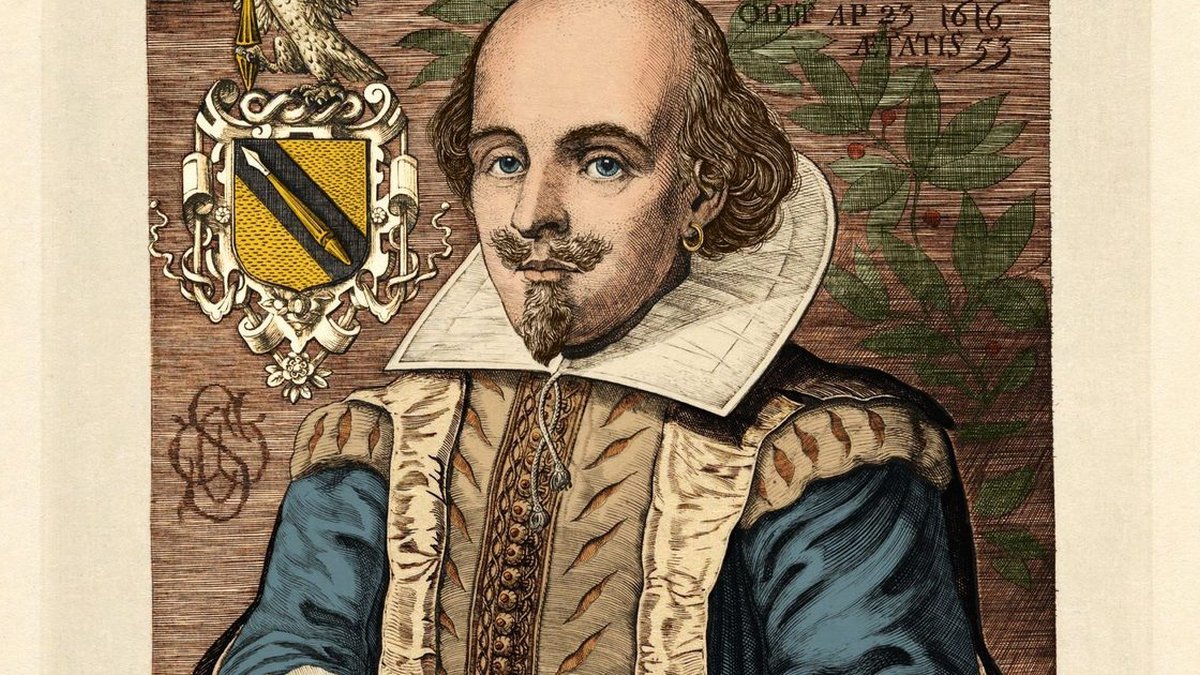
The playwright smuggled a radical political message supporting the controversial Earl of Essex into one of his most famous plays, according to new research
When the budding playwright William Shakespeare arrived in London around 1590, he was stepping into a theatrical world which was exciting, experimental – and incredibly dangerous.
The Tudor authorities operated a brutal regime of censorship designed to stamp out political disobedience, supported by spies, violent interrogation and torture.
Queen Elizabeth I – a monarch who employed her own spymasters – was particularly anxious about the potential power of plays, which drew thousands of spectators to the city’s playhouses and could influence ambitious courtiers during performances at the royal court. Many went on to become printed bestsellers.
- Read more | Elizabeth I’s shadowy spy network was tasked with uncovering secret conspiracies. Here’s what it found
She ordered that all dramatic performances be approved by the Master of the Revels before they could be staged. Any material questioning the Crown’s political authority or its religious agenda would be strongly repressed. This did not prevent political ideas from reaching the stage, but it forced playwrights to communicate indirectly, through historical parallels, allegory and double entendre.
Playwrights who flouted this censorship were arrested, interrogated, fined and sometimes imprisoned. Ben Jonson, for example, was locked up in 1597 and all copies of his “slanderous” play The Isle of Dogs were destroyed, while co-writer Thomas Nashe had his home raided.
Scholars have long believed that Shakespeare disguised his criticisms of the Elizabethan court by setting many of his plays in foreign countries, where he was free to critique courtiers and even monarchs.
But new research argues that the Bard was a daring political rebel who used one of his most famous plays to express support for a radical court faction shortly before it mounted a rebellion against the Queen.
Shakespeare’s As You Like It and the Essex Rebellion
Shakespeare experts Dr Chris Laoutaris and Dr Yasmin Arshad have uncovered cryptic ties between a mysterious portrait, Shakespeare’s comedy As You Like It and Robert Devereux, the Earl of Essex – a disgraced nobleman who led an unsuccessful rebellion against Elizabeth in 1601 and was subsequently beheaded.
These connections suggest not only that the playwright may have been sympathetic to the Earl, but that Essex’s supporters saw Shakespeare and his acting company, the Lord Chamberlain’s Men, as allies who could help them launch a popular revolt against the Crown.
In one scene in Shakespeare’s As You Like It, written in 1599, the sight of a wounded stag – languishing and “weeping” at the edge of a stream – greatly upsets a character.
The arrow-struck animal is described as “innocent” and a herd of deer that refuse to help it are criticised as “greasy citizens”.
On its own, the episode can be read as a broader satire on human selfishness. Laoutaris and Arshad argue, however, that contemporary audiences may also have recognised a more specific political reference. They suggest this expression of pity for a mistreated animal was a coded message of support for the Earl of Essex, who would go on to lead his doomed uprising only two years later.
This could also explain why As You Like It was temporarily banned from being printed in 1600, an act of censorship which historians have long puzzled over.
And it would suggest Shakespeare held dangerous political allegiances for which others had been imprisoned or even lost their heads.
The key clue is a portrait known as the Persian Lady, painted in the 1590s by Tudor court artist Marcus Gheeraerts the Younger. It depicts a woman dressed in opulent, oriental clothing, who is crowning a teary-eyed stag with a garland of pansies.
A riddling sonnet below laments the sitter’s “restless mind”, musing that “With pensive thoughts my weeping stag I crown/whose melancholy tears my cares express”.
Laoutaris and Arshad have pinpointed Lady Penelope Rich as the glamorous woman, whose identity has baffled art historians for centuries.
The poetic verses, they say, allude to another Penelope: Odysseus’ wife from The Odyssey, whose mind is also presented as restless – and to whom the beautiful Lady Rich was often compared by the many poets, artists and musicians she inspired. The Earl of Essex was Lady Rich’s brother. A dashing courtier, he was once a cherished favourite of the aging Elizabeth.
In their new study, published in the Times Literary Supplement, the researchers point out that Essex’s coat of arms featured a stag, meaning he may be the weeping deer Lady Rich is comforting in the portrait.
The portrait and the play emerged as Essex’s relationship with the Queen was deteriorating, although the full rebellion still lay ahead. At the time of the portrait’s composition, Essex was disgraced and under arrest for agreeing an unauthorised truce with rebels in Ireland, whose uprising he had been unable to put down by force, before illegally returning to England. This caused a rift between the leading courtly factions.
To support their cause, Essex’s supporters had circulated scandalous libels accusing his enemies at court of corruption, which the researchers say also alluded to the image of a stag.
Is everything we thought we knew about Shakespeare’s politics wrong?
If this research is correct that Shakespeare’s “weeping” stag was a message of support for the controversial Earl, it could upend academics’ view of the Bard’s willingness to publicly take political sides.
“The stag in As You Like It could only have been regarded with suspicion by the Elizabethan censors,” explains Laoutaris of the University of Birmingham’s Shakespeare Institute, who says it accompanied “an avalanche of libels from Essex’s supporters, as well as from Essex and Lady Rich themselves”.
The description of Shakespeare’s deer as a “poor and broken bankrupt” reflected Essex’s precarious finances. Even after being liberated in August 1600, he was stripped of his public offices and never regained his lucrative sweet wine monopoly.
Laoutaris adds that the animal is described as “sequestered”, which could be a reference to Essex’s arrest, and was also the term for the legal process by which someone’s “land and property were forcibly confiscated after engaging in illegal or subversive activity”.
The argument becomes more consequential when the play is considered alongside a better-known encounter between Essex’s followers and Shakespeare’s company, with the findings shedding new light on the Essex faction’s decision to commission a performance of Shakespeare’s Richard II at the Globe by the Chamberlain’s Men on 7 February 1601 – just a day before the Earl assembled about 300 supporters and marched into London.
In the play, King Richard II is deposed as England’s monarch. It’s usually thought that Shakespeare’s troupe was in the wrong place at the wrong time and had nothing to do with the short-lived coup, which lasted a single day.
The new research may suggest that Essex’s men turned to the players because they knew Shakespeare was sympathetic to their cause – and hoped a rousing performance could encourage London’s public to rise up in support of the Earl.
Six Wives: A HistoryExtra podcast series
Member exclusive | In this six-part podcast series, we’ll be peeling back the layers of mythmaking to take another look at these fascinating women, who shaped the course of Henry’s reign – and the history of England.Listen to all episodes now
Arshad says: “Shakespeare uses language and imagery that is provocative, tipping humour over into satire, and that would have been deemed potentially libellous by the authorities.”
As You Like It was among three Shakespeare plays to be temporarily restricted from publication in August 1600, she notes. Another was Henry V, which includes a chorus “praising Essex to the skies” for his military action in Ireland, written before he had fallen out of favour.
Arshad explains: “All the plays that were ‘staied’ were published shortly afterwards, except As You Like It, which wasn’t issued until after Shakespeare’s death, in the First Folio of 1623. Henry V was published initially without the chorus that championed the Earl of Essex.”
This new research suggests this delay in publication may be related to the politically radical message Shakespeare had smuggled into the play – offering sympathetic support for a spurned former favourite of Elizabeth’s only a couple of years before he mounted an ambitious, if unsuccessful, rebellion.
Authors
Piers is a journalist with a BA in History from the University of Exeter and a master’s degree in Early Modern History from the University of Oxford.
Sentinel — Human
The article presents a complex argument synthesizing existing historical knowledge with new scholarly interpretations regarding Shakespeare's political allegiances, suggesting a high degree of human-driven analytical synthesis.