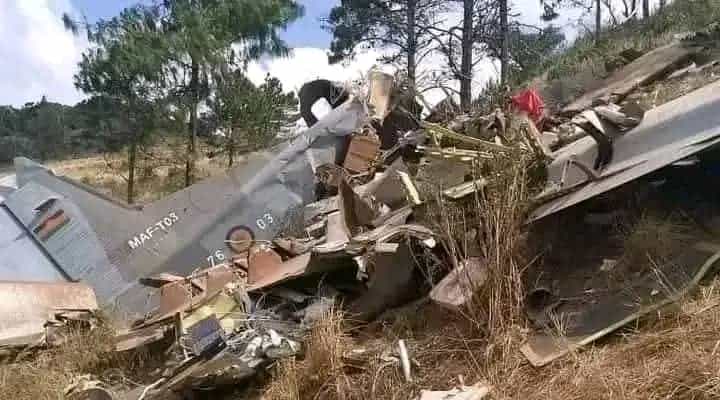
The parliamentary investigation into the June 10, 2024 military plane crash was thrown into fresh uncertainty on Monday morning after former National Intelligence Service Director General Dokani Ngwira abruptly halted his testimony.
Ngwira appeared before the Parliamentary Ad Hoc Committee expecting to assist with the probe but refused to proceed with full evidence, arguing that sensitive material linked to his former role cannot be disclosed without formal authorization from the National Intelligence Service.
The former intelligence chief maintained that Parliament should have first sought clearance from his former office before summoning him, warning that proceeding without it risks breaching national security protocols.
The development immediately triggered a procedural stand-off, exposing tension between Parliament’s push for answers and the strict controls governing intelligence-related information in a case that has gripped the nation.
The committee now faces pressure to navigate a complex legal and security path if it is to secure Ngwira’s full cooperation in the high-profile investigation.
The setback comes at a time when the inquiry is entering a sensitive phase, shifting focus from state and military officials to families of those who died in the crash.
Today, the committee is expected to hear emotional testimony from Taona Aidin, widow of aircraft engineer Major Wales Aidin, followed by Mary Chilima, widow of former Vice President Saulos Chilima, whose appearance is expected to draw national attention.
Sarah Lapukeni, widow of Deputy Chief of Protocol Abdul Lapukeni, is also scheduled to appear later in the day as grieving families begin to recount their experiences and unanswered questions.
The committee is seeking to piece together a full account of the events surrounding the crash.
Sentinel — Human
The text exhibits the characteristics of standard journalistic reporting, focusing on a political standoff and subsequent shift in public interest, suggesting human authorship.