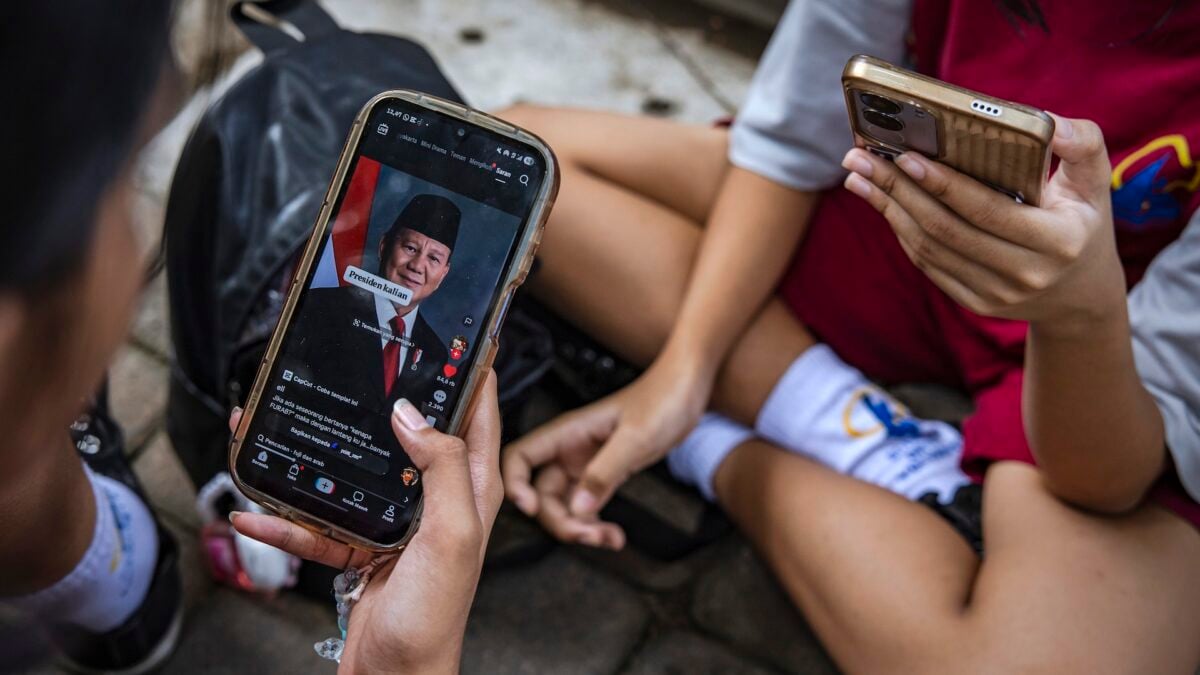
On Saturday, Indonesia started enforcing a sweeping ban on social media for kids under 16. According to the Associated Press, the law is expressly aimed at preventing youths from encountering “pornography, cyberbullying, online scams and addiction” online. The affected platforms are Roblox, YouTube, TikTok, Facebook, Instagram, Threads, X, and a video chat platform used in Southeast Asia called Bigo Live, the AP says.
It’s not a stretch to say this is far and away the most consequential ban of its type so far.
Indonesia, the fourth most populous country in the world, has an estimated 288 million people—and about 250 million of those are “mobile internet users” according to Statistia. If one fourth of the country is under 16 (and that’s a conservative estimate since about one fourth of the country was under 14 as of 2023), this law would directly impact 72 million people—which would be about 0.89% of the global population. Australia, famous for being the first country to pass a similar ban, has an estimated total population of 27.5 million across all ages.
Indonesia had already signaled that this ban was coming, announcing it at the beginning of this month. The government of Indonesia says it’s being phased in, rather than enforced wholesale all at once, the AP notes. However, Indonesian Minister of Digital Affairs Meutya Hafid told the AP, “There will be no compromise on compliance, and every business entity operating in Indonesia is required to comply with Indonesian law.”
At a press conference, Hafid said in Indonesian (translated by Gizmodo with YouTube’s auto-translation feature) that there would be a one-year transition period before failure to comply would be penalized.
Just last month, Indonesia lifted a nationwide ban on Grok, the chatbot from xAI, which is attached to Elon Musk’s X social media platform and was in the midst of a scandal after it created deepfake photos of non-consenting underage people with near-nudity or other sexual content. In January, Hafid explained the ban this way: “The government views the practice of non-consensual sexual deepfakes as a serious violation of human rights, dignity and the security of citizens in the digital space.”
The AP quoted Hafid yesterday as saying the rollout of a sweeping ban “is certainly a task. But we must take steps to save our children,” adding, “It’s not easy. Nevertheless, we must see it through.”
Facts Only
Indonesia enacted a ban on social media for users under 16 on Saturday.
The ban targets Roblox, YouTube, TikTok, Facebook, Instagram, Threads, X, and Bigo Live.
The stated goal is to prevent exposure to pornography, cyberbullying, online scams, and addiction.
Indonesia is the fourth most populous country, with 288 million people.
Approximately 250 million Indonesians are mobile internet users.
An estimated 72 million Indonesians are under 16.
The ban was announced at the beginning of the month and is being phased in.
Indonesian Minister of Digital Affairs Meutya Hafid stated there will be no compromise on compliance.
A one-year transition period is in place before penalties for non-compliance begin.
Indonesia recently lifted a ban on Grok, an AI chatbot from xAI, after it generated deepfake images of minors.
The Grok ban was justified as a response to non-consensual sexual deepfakes violating human rights.
Hafid described the social media ban as a difficult but necessary task to protect children.
Executive Summary
Indonesia has implemented a sweeping ban on social media access for children under 16, targeting platforms like Roblox, YouTube, TikTok, Facebook, Instagram, Threads, X, and Bigo Live. The measure aims to shield youths from online harms such as pornography, cyberbullying, scams, and addiction. With a population of 288 million—including an estimated 72 million under 16—the ban affects nearly 1% of the global population, making it the most consequential of its kind to date. The government has signaled a phased rollout, with a one-year transition period before penalties for non-compliance take effect. This follows Indonesia’s recent lifting of a ban on Grok, an AI chatbot linked to X, which had faced scrutiny for generating non-consensual deepfake imagery of minors. Officials frame the social media ban as a necessary step to protect children, despite acknowledging its challenges.
The policy reflects growing global concerns about youth online safety, though its scale and enforcement mechanisms remain untested. While Indonesia’s digital minister emphasizes strict compliance, the practicalities of age verification and platform cooperation are unclear. The ban also raises questions about digital rights, parental autonomy, and the balance between protection and censorship in a rapidly evolving online landscape.
Full Take
**Steelman:** Indonesia’s ban represents a bold attempt to address legitimate concerns about youth online safety. The government’s framing—protecting minors from exploitation, harassment, and addiction—aligns with global debates about digital harms. The phased enforcement and transition period suggest a measured approach, acknowledging the complexity of implementation. The recent Grok ban also demonstrates consistency in addressing digital rights violations, reinforcing the narrative of safeguarding vulnerable populations.
**Pattern Scan:** The narrative leans on moral urgency ("save our children") and invokes systemic threats (pornography, cyberbullying) to justify sweeping intervention. While not inherently manipulative, the framing risks amplifying fear appeals (ARC-0012 Fear Exploitation) by presenting online spaces as uniformly dangerous. The lack of detail on enforcement mechanisms or alternative protections (e.g., parental controls) could imply a false binary (ARC-0043 Motte-and-Bailey): either total bans or unchecked harm. The comparison to Australia’s smaller-scale ban may serve as borrowed credibility (ARC-0031 Authority Games), though the contexts differ vastly.
**Root Cause:** The paradigm assumes top-down regulation is the most effective solution to digital harms, reflecting a paternalistic view of governance. Unstated assumptions include the feasibility of age verification at scale and the homogeneity of online risks across platforms. Historically, this echoes broader tensions between state control and digital freedoms, reminiscent of China’s internet policies but framed as child protection rather than censorship.
**Implications:** For human agency, the ban restricts youth access to global communication tools, potentially limiting educational and social opportunities. The costs fall disproportionately on younger Indonesians, while platforms may face compliance burdens. Second-order effects could include increased use of VPNs, underground digital markets, or shifts to less-moderated platforms. The policy may also set a precedent for other nations, normalizing age-based digital restrictions.
**Bridge Questions:** How might this ban interact with existing digital literacy programs in Indonesia? What evidence would demonstrate its effectiveness—or unintended consequences? How do cultural attitudes toward authority and technology shape the debate?
**Counterstrike Scan:** A coordinated influence campaign might exploit parental fears to justify overreach, using emotional language ("save our children") while obscuring enforcement challenges. The actual content aligns partially with this playbook but lacks overt distortion or bad faith. The focus on compliance over nuanced solutions could reflect genuine policy priorities rather than manipulation.
Patterns detected: ARC-0012 Fear Exploitation, ARC-0043 Motte-and-Bailey, ARC-0031 Authority Games