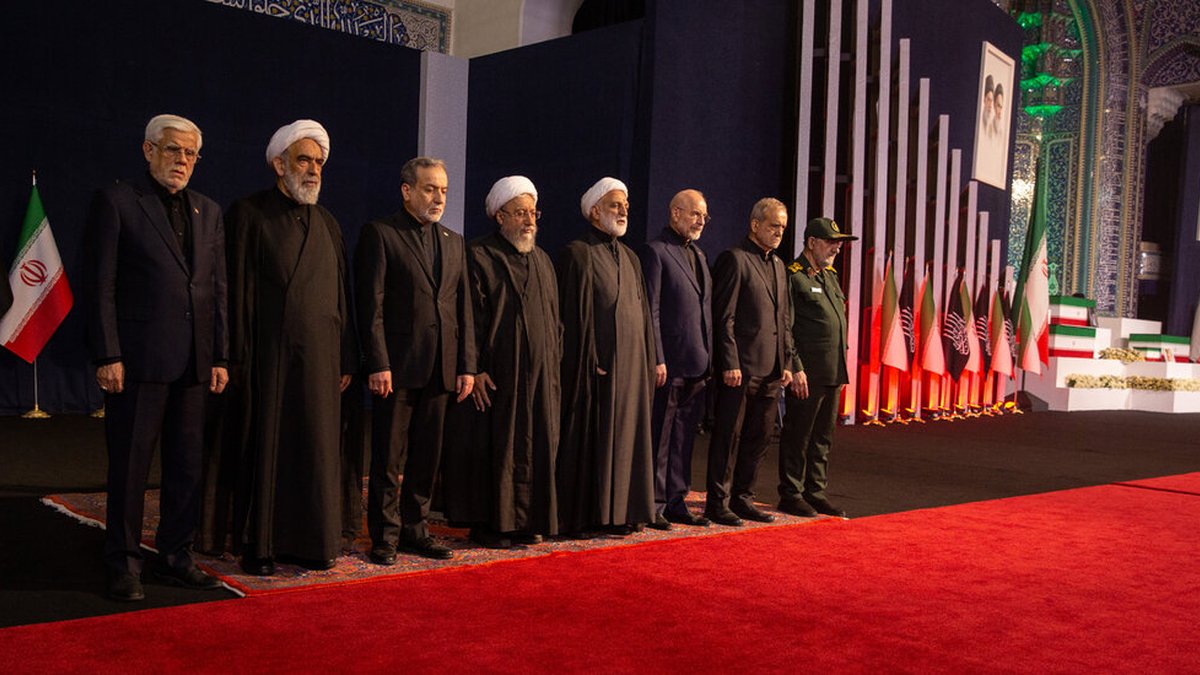
Ayatollah Mojtaba Khamenei’s absence has raised questions inside Iranian political circles about who is really running the country and allowed open divisions to fester.
When Iran’s leaders and senior military commanders paid tribute to the slain supreme leader, Ayatollah Ali Khamenei, in the elaborate, weeklong funeral that began on Friday, it was supposed to be a display of strength, endurance and unity after war with the United States and Israel.
A military band played an anthem. Officials who had not appeared together in public since the war began months ago walked side by side: the president, the speaker of Parliament, the head of the judiciary, and top generals in the Revolutionary Guards Corps.
Missing, notably, was Ayatollah Mojtaba Khamenei, who succeeded his father as the new supreme leader and who has not been seen in public since his appointment in March.
The moment offered a respite from the weeks and days leading to the funeral, when senior Iranian officials and prominent political figures fought openly and viciously over negotiations with the United States. They traded accusations of delusion, treason, coup plotting, and disobeying and manipulating the new supreme leader.
“I spit on this era where they kill our leader and then we speak of peace with the United States,” a prominent hard-line strategist, Hassan Rahimpour-Azghadi, recently declared at a rally in the capital, Tehran. Instead of negotiations, he called for revenge.
Related Content
Advertisement
Sentinel — Human
This text reads like grounded political reporting, effectively framing public ceremony against underlying political tension using specific historical and quoted context.