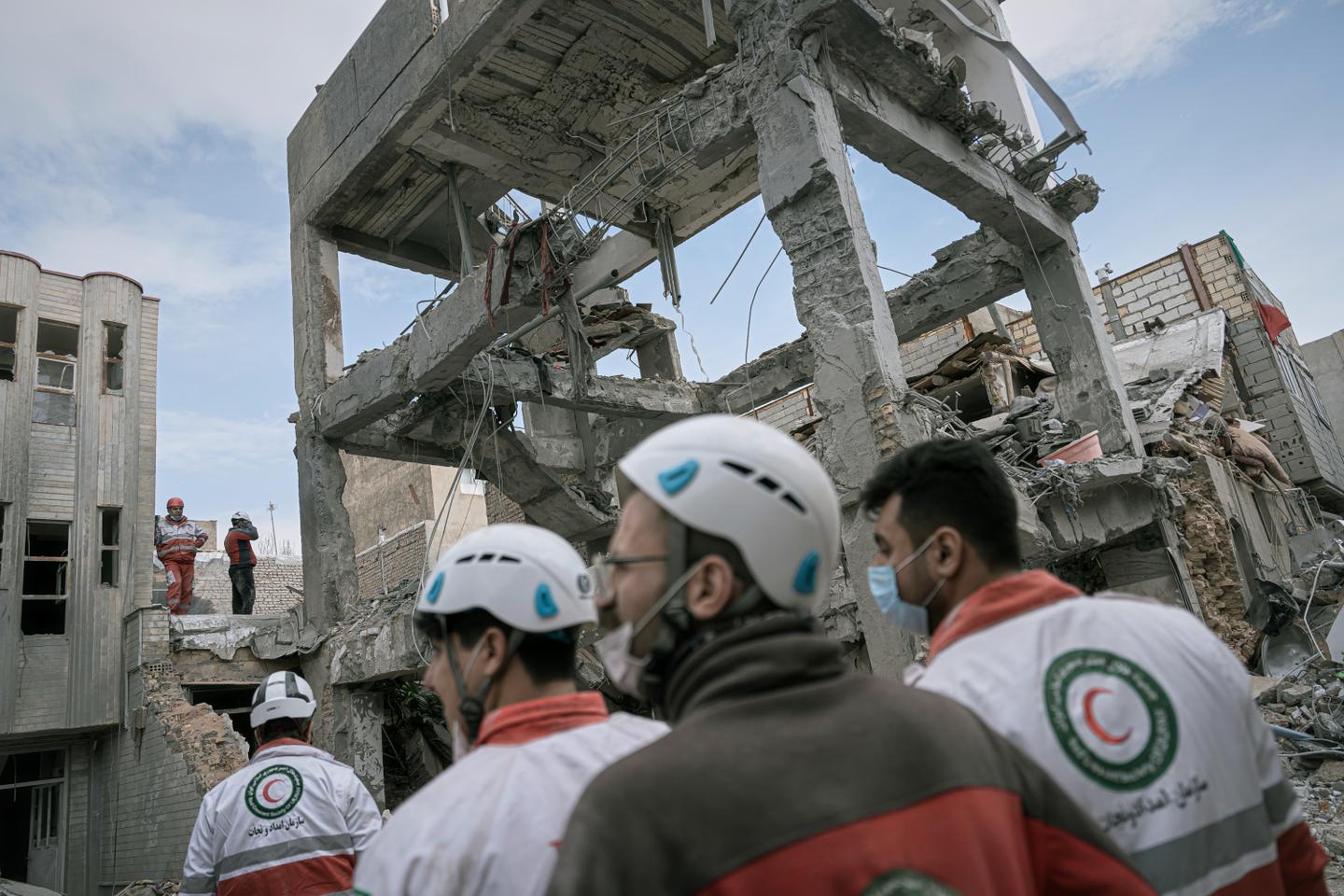
United States President Donald Trump warned Iran on Thursday, March 26, to engage in talks to end the Middle East war "before it is too late," after Tehran publicly spurned US overtures to resolve the nearly four-week conflict.
Hopes for a negotiated end to the US-Israeli war with Iran – which has mushroomed to engulf much of the Middle East – had previously risen after the US was said to have put a 15-point peace plan to Tehran, only for the Islamic Republic of Iran to deny the sides were speaking.
"They better get serious soon, before it is too late, because once that happens, there is NO TURNING BACK, and it won't be pretty!" Trump warned on social media, saying Iran had been "militarily obliterated, with zero chance of a comeback."
'US-Iran indirect talks'
Late on Wednesday, the Islamic Republic of Iran's top diplomat had flatly denied that any "negotiations" were being conducted with President Trump's administration – conceding only that messages were being exchanged through "friendly countries." "At present, our policy is the continuation of resistance," Foreign Minister Abbas Araghchi said on state TV, adding: "We do not intend to negotiate – so far, no negotiations have taken place."
Meanwhile, Pakistan's top diplomat confirmed, on Thursday, that Islamabad was indeed facilitating "US-Iran indirect talks" by relaying messages – and that a 15-point American plan was being "deliberated upon" by Tehran. Islamabad has been touted as a go-between given its longstanding ties with both neighbouring Iran and the United States, as well as its network of regional contacts.
Posting on X, Pakistan's Foreign Minister Ishaq Dar said "brotherly countries" Turkey, Egypt and others, were also supporting the process – while the Gulf Cooperation Council said it wanted to be involved in any talks.
'Wide-scale' strikes
Trump's warning came as Israel said it had killed the commander of the Iranian Revolutionary Guards' navy, calling him "directly responsible" for throttling the vital Strait of Hormuz shipping lane since the war's outbreak.
Under near-daily bombardment since February 28, Iran was hit by a new wave of Israeli strikes on Thursday – one of which Israel said had killed the Guards' navy commander, Alireza Tangsiri, and several senior officers. Defence Minister Israel Katz called Tangsiri "directly responsible for the terrorist operation of mining and blocking the Strait of Hormuz to shipping."
Elsewhere, the Israeli army was conducting what it called "wide-scale" strikes targeting Iranian infrastructure. Local media reported attacks in the central cities of Isfahan and Shiraz, in Bandar Abbas in the south and Tabriz in the northwest – but also Mashhad and Birjand, towards the Afghan border in an area that had largely been spared until now.
Iran, in turn, kept up its retaliatory attacks on Israel, where medics said six people were lightly wounded by missile attacks in the country's center.
Fresh violence also flared in the Gulf, with two people killed by debris from an Iranian ballistic missile intercepted near Abu Dhabi, while Saudi Arabia said it shot down at least 18 drones, and Kuwait reported a new missile and drone attack.
Iran has targeted Gulf nations it accuses of serving as launchpads for US strikes, notably with hits on energy sites that have sent markets into a tailspin, threatening lasting damage to the global economy.
World Trade Organization chief Ngozi Okonjo-Iweala warned, on Thursday, that the global trading system was experiencing the "worst disruptions in the past 80 years." "We cannot deny the scale of the problems confronting the world today," she told the WTO's ministerial conference.
Rival conditions
Crude oil prices have fallen since last week, as Trump appears to step back from the goal of regime change. Yet the divergent messages on talks and de-escalation saw oil prices rise on Thursday and equities remain mixed, as the closure of the Strait of Hormuz – through which 20% of the world's oil and gas passes – continued to cast a shadow on markets.
Tehran has largely blocked the vital strait in retaliation for the US-Israeli attacks – with "maritime routes" being a key element of the US proposal to end the fighting, according to The New York Times, along with Iran's nuclear and missile programmes. Details of the purported 15-point plan emerged via Pakistan, where two officials said Islamabad had passed it on to Tehran.
Yet Iran's state-controlled Press TV outlet cited an unidentified official as saying Tehran had "responded negatively," and instead put forward its own five conditions for hostilities to end. These include guarantees that the US and Israel will not resume the war and compensation for damages.
Trump insisted, at a dinner with lawmakers on Wednesday night, that Tehran wanted to "make a deal" but was covering up ongoing talks out of fear. "They're afraid to say it, because they figure they'll be killed by their own people," he told lawmakers at dinner. "They're also afraid they'll be killed by us."
The White House has declined to identify its negotiating partner in Tehran, following the assassination of supreme leader Ali Khamenei. The late leader's son and successor, Mojtaba Khamenei, has not been seen since ascending to the role.
No 'surrender' in Lebanon
The Lebanese pro-Iran group Hezbollah began firing rockets into Israel on March 2 to avenge Khamenei's killing, drawing Lebanon into the war.
The militant group said its fighters launched more than 80 attacks against Israel on Wednesday, the largest daily number in the current war, and attacked Israeli forces in nine border towns.
As the fighting showed little sign of stopping, Israeli Prime Minister Benjamin Netanyahu said the military had "created a genuine security zone" in southern Lebanon, where an Israeli soldier was killed in the fighting on Thursday.
Hezbollah meanwhile launched a new volley of missiles early Thursday at military sites in central Israel, after its chief Naim Qassem said negotiations with Israel would amount to "surrender."
Facts Only
Actors: United States, Israel, Iran
Events: Ongoing conflict, strikes against Iranian targets, retaliatory attacks, violence in the Gulf
Dates: February 28 - March 26
Locations: Middle East, Strait of Hormuz
Executive Summary
Full Take
The pattern of analysis in this article can be seen as a form of strategic framing, with different actors presenting conflicting narratives about ongoing negotiations and de-escalation efforts. Trump's warning to Iran to engage in talks implies a desire for diplomacy, while Iran's denial of negotiations suggests resistance. The article also reveals a competitive narrative between the US and Iran, each making bold claims about their military capabilities and the outcomes of the conflict.
It is worth considering the motivations behind these different narratives. Are they driven by a genuine desire for peace or a strategic attempt to gain an advantage in the ongoing conflict? Additionally, it's important to question the accuracy of the information presented, particularly given the potential for misinformation and manipulation in such a contentious situation.
Patterns detected: ARC-0043 Motte-and-Bailey, ARC-0024 Ambiguity
Sentinel — Human
This text shows low signs of synthetic or AI generation. It is likely to have been written by a human.