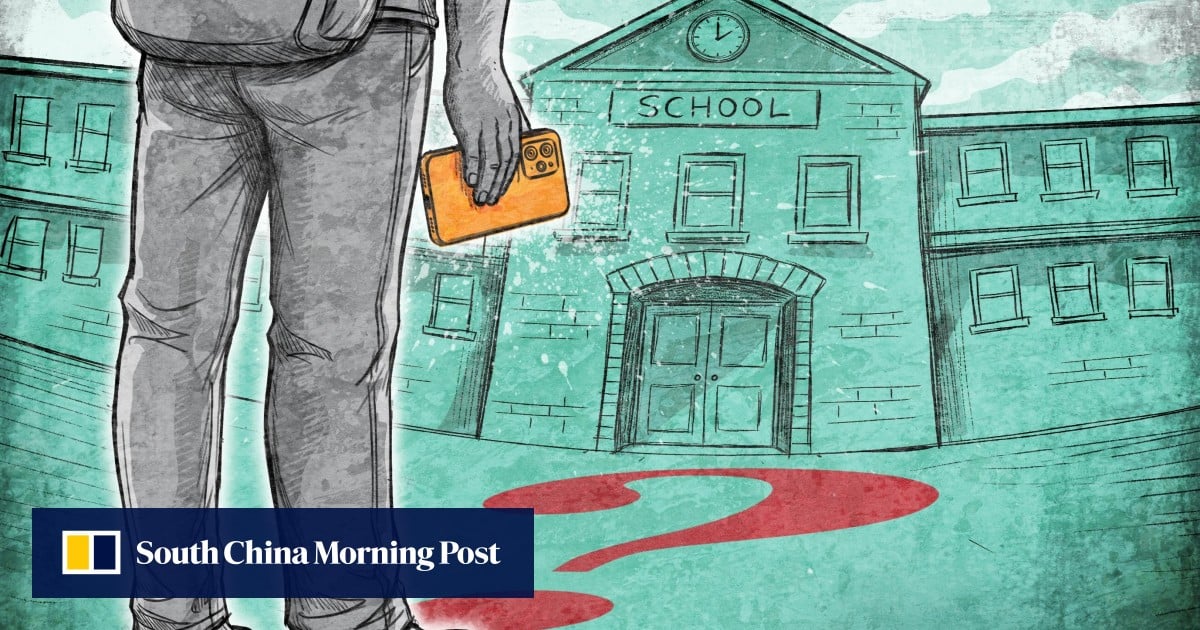
No consensus exists among educators and parents in Hong Kong on whether there should be a blanket ban on gadgets, as seen in some countries
When Kwun Tong Maryknoll College in Hong Kong announced that it would tighten its mobile phone rules on campus, some pupils reacted so strongly that the Catholic boys’ school was forced to put the changes on hold.
The secondary school, which currently only bans pupils from using their mobile phones on campus, had planned to require devices to be stored in designated lockers on each floor. Gaming near the school entrance was also to be banned, with rule-breakers facing four demerits.
Form Five student James Chan* was among those who launched a petition against what they described as a “heavy-handed” policy. He said forcing more than 120 students in one grade to retrieve their phones from a single locker area at lunchtime would create daily chaos. He added that many pupils relied on their phones to order and pay for lunch online.
Chan said it would be unfair to tighten the rules because some students broke them more often than others. Chan, however, admitted that he and his classmates did scroll through their phones during lessons.
“Some lessons are boring … so we choose to scroll on our phones to kill time,” he said, adding that they had also used their phones to socialise during recess, such as creating reels on social media platforms together.
He said he spent six hours on his phone on weekdays and up to eight hours on weekends, averaging five hours on WhatsApp calls with friends. His parents do not restrict his usage. But pupils knew where to draw the line, he said.
Sentinel — Human
The text exhibits characteristics of grounded journalistic reporting, anchored by specific local events and individual accounts, making its human origin highly probable.