Skip to content
Chimera readability score 59 out of 100, Graduate reading level.

Cúcuta, Colombia – A frantic search is under way for people trapped beneath the rubble after two powerful earthquakes struck Venezuela on Wednesday, leaving scores dead and hundreds injured.
At least 164 people have been killed, although the U.S. Geological Survey (USGS) predicts the toll could rise significantly as rescue teams continue to search collapsed buildings.
Venezuela’s acting president, Delcy Rodríguez, has declared a state of emergency and appealed to the international community for assistance.
In an early morning post on Thursday, U.S. Secretary of State Marco Rubio said the United States was “immediately deploying search and rescue teams, medical resources, and humanitarian assistance to Venezuela”.
Other countries, including Spain, Ecuador, France, Panama and Qatar, have also offered assistance.
Videos circulating on social media show collapsed buildings, residents in shock, injured people and others shouting for help.
“I could see the buildings shaking and moving. It was like the walls were exploding and you could see inside the apartments,” said Tulio Perez, a resident in Caracas. “It was completely crazy.”
Others who were inside buildings struggled at first to register what was going on.
“The fish tank started shaking violently, and one of the lamps was swinging extremely hard. Everything, absolutely everything, started moving,” said Billy Erbin, who lives in Caracas.
He spent the night in his car, after authorities warned residents not to go back inside buildings.
The first earthquake measured 7.2 and was centred near San Felipe in the state of Yaracuy. It was followed 39 seconds later by a stronger 7.5-magnitude quake, according to the USGS.
The earthquakes were the most powerful to strike Venezuela since 1900 and were followed by around 30 aftershocks.
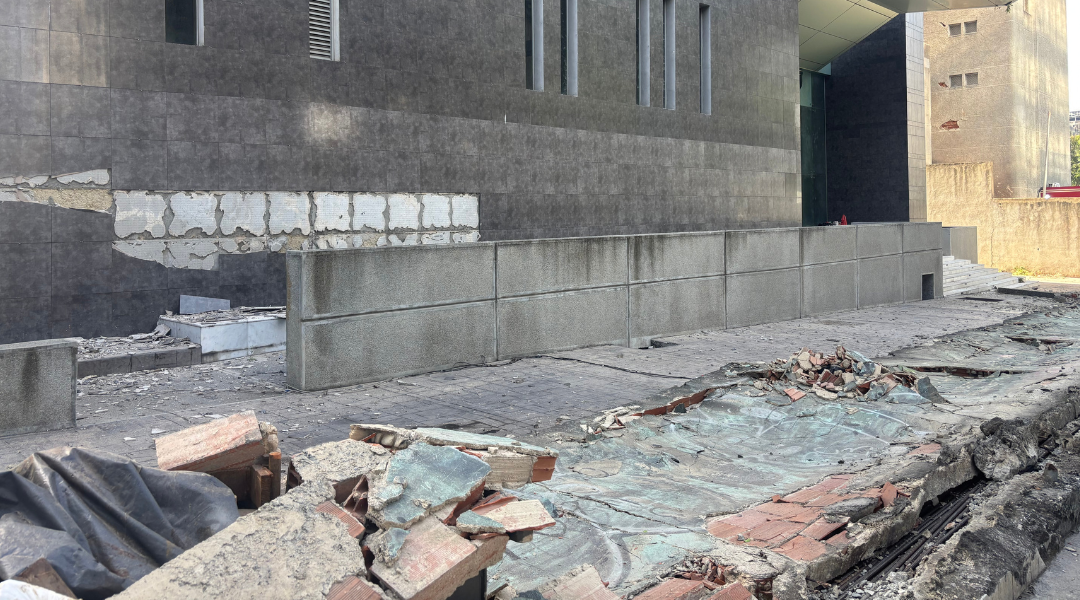
The worst damage has been reported in parts of Caracas and La Guaira, where apartment blocks, homes and commercial buildings collapsed. Rescue workers, soldiers and volunteers worked through the night searching for survivors, while relatives gathered nearby waiting for news of loved ones.
Many residents spent the night in the streets, parks and their cars after being warned not to return to damaged buildings. Some said they were too frightened to go back indoors because of the risk of aftershocks.
Officials said people were still believed to be trapped beneath collapsed structures in several locations, raising fears that the death toll could continue to climb in the coming days.
Power and phone services were disrupted in many areas, leaving people struggling to reach relatives and friends. As communications gradually resumed, desperate efforts began to share information and photographs of those still missing.
Across WhatsApp and social media, images of missing loved ones circulated alongside appeals for information from families who had not heard from them since the earthquakes struck.
Some internet providers have also lifted a block on the social media website, X, which was banned in the country after protests in 2024.
Schools have been closed and are being used as temporary rescue centres, while authorities assess damage to roads, public buildings and other infrastructure.
Featured image description: A damaged building in Caracas following the earthquake.
Featured image credit: Julio Blanca.

Facts Only

164 people have been killed following two earthquakes that struck Venezuela on Wednesday. The U.S. Geological Survey predicts the death toll may rise further as search teams operate. The first earthquake measured 7.2 magnitude and was centered near San Felipe, Yaracuy state. A subsequent quake of 7.5 magnitude followed 39 seconds later. Damage reports focus on collapsed apartment blocks, homes, and commercial buildings in Caracas and La Guaira. Venezuela’s acting president declared a state of emergency. The U.S. deployed search and rescue teams, medical resources, and humanitarian assistance to the region. Power and phone services were disrupted in many areas. Schools have been used as temporary rescue centers.

Executive Summary

Two powerful earthquakes struck Venezuela on Wednesday, resulting in widespread destruction and an ongoing search for survivors. At least 164 people have been killed, with projections suggesting the death toll may increase as rescue operations continue. The acting president declared a state of emergency and appealed for international assistance. The U.S. Secretary of State announced the immediate deployment of search and rescue teams, medical resources, and humanitarian aid to Venezuela, with other nations offering support. Damage is most severe in Caracas and La Guaira, where residential and commercial buildings have collapsed. Residents were warned not to return to damaged areas and spent the night in public spaces or their vehicles due to fears of aftershocks. Despite communication disruptions, efforts are underway to share information regarding missing persons via social media platforms.

Full Take

Catastrophe reporting immediately shifts focus from objective fact to moral urgency, driven by the stark visualization of suffering circulating across social media. The framework of international aid mobilization (U.S., Spain, France, etc.) functions not merely as humanitarian response but as a projection of global power and responsibility; this external involvement reinforces the narrative that localized disasters require global intervention, thereby defining agency and burden. The pattern involves leveraging fear—the immediate shock of structural collapse followed by prolonged uncertainty regarding missing persons—to mobilize collective action (appeals for information, aid). Furthermore, the disruption of communication services and the reliance on social media platforms to disseminate evidence of missing individuals reveals a systemic vulnerability where official channels are insufficient during acute crises, forcing communities to create alternative systems for truth-telling. The focus on aftershocks and subsequent fear serves to perpetuate a state of siege, maintaining high anxiety among survivors who are simultaneously expected to act as information conduits while facing immense personal loss and the systemic delays inherent in large-scale recovery efforts. What assumptions underpin the rapid mobilization of external aid versus local capacity? How does the amplification of distress by media directly impact the cognitive sovereignty of those affected?

Sentinel — Human

Confidence

The text exhibits the characteristics of professional journalistic reporting, blending verifiable statistics with specific anecdotal evidence, making it highly likely to be human-written wire copy or beat reporting.

Signals Detected
low severity: Moderate sentence length variance; natural flow interrupted by direct quotes and statistics.
low severity: Presence of specific, emotionally resonant eyewitness accounts (quotes) breaking the purely factual tone.
low severity: Standard journalistic structure; use of multiple verifiable sources (USGS, government statements); no obvious template matching across an external corpus.
low severity: Quotes are specific and situational; factual data points (earthquake magnitudes, dates) align with typical reporting patterns.
Human Indicators
The inclusion of direct, anecdotal quotes from residents (Tulio Perez, Billy Erbin) introduces a distinct personal voice and sensory detail not typically found in pure synthetic generation.
The flow transitions naturally between official reports, public statements, and chaotic social media circulation, mimicking real-time crisis reporting.