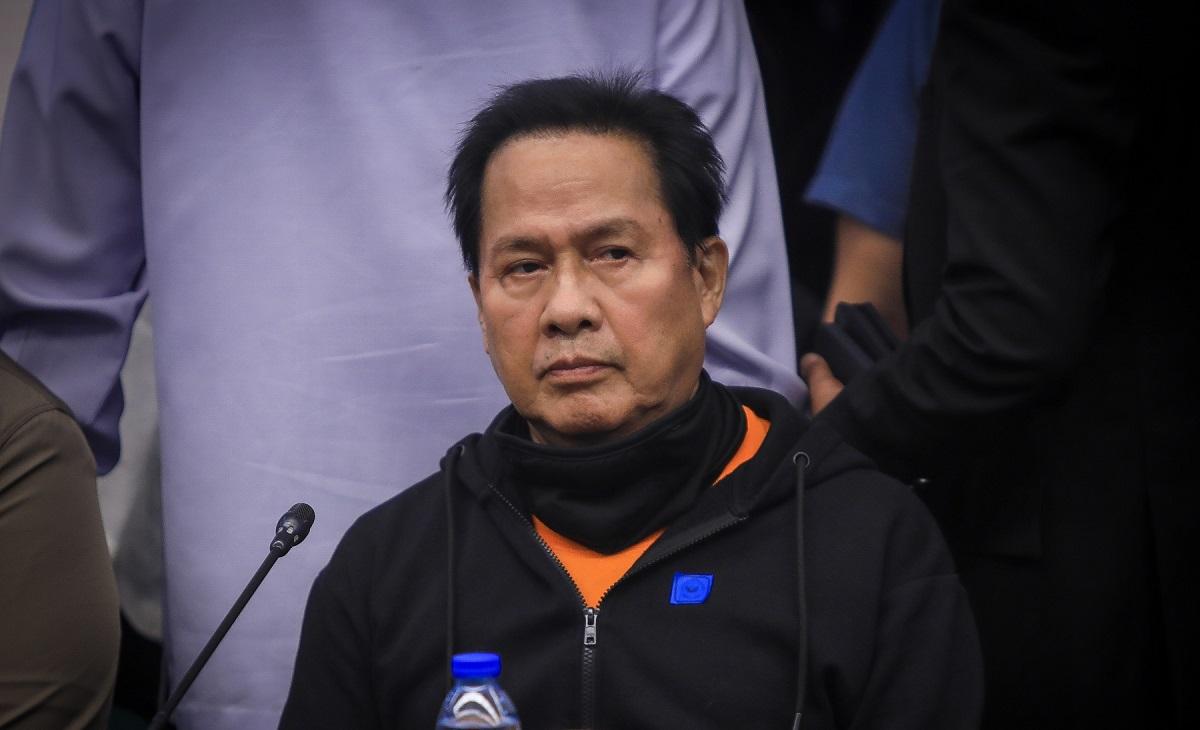
The camp of preacher Apollo Quiboloy will appeal the Pasig court's order directing ocular inspections of Kingdom of Jesus Christ (KOJC) properties in relation to his qualified trafficking case.
In a message on Saturday, defense lawyer Israelito Torreon said, "We will file a most respectful motion for reconsideration."
Torreon's comment comes a day after the Pasig Regional Trial Court (RTC) Branch 159 granted the motion of the prosecution and ordered the ocular inspections of KOJC properties in Davao, Quezon City, and Pasig City to gain a clearer understanding of the premises identified in the case against Quiboloy and his co-accused.
The complainant in the case sketched relevant areas in the KOJC compound, but the court noted that this remains limited to her recollection.
The ocular inspections of the Pasig and Quezon City properties are scheduled on April 27, while the Davao properties will be checked on May 18.
Defense and prosecution teams were required to be present during the inspections.
Prosecutors asked the court to conduct the inspections so it could better appreciate the evidence in Quiboloy's qualified trafficking case on sexual exploitation and labor trafficking.
The tribunal said the inspections would help in clearing a doubt, reaching a conclusion, or finding the truth. It added that these were not the main trial, and should not exclude presentation of other evidence from either party.
The following sites are up for inspection:
- Local congregation of the KOJC in Pasig City, where the private complainant was allegedly recruited at 12 years old and engaged in activities involving remittance of tithes and participation in organized activities
- KOJC Sauyo compound in Quezon City, where she was allegedly baptized as a member of the KOJC
- KOJC compound in Davao City, where the private complainant allegedly stayed for three years and allegedly participated in religious obligations, solicitation and fundraising, physical labor, selling food products, collecting offerings, and performance of household chores under the guise of religious service
- Jose Maria College in Davao City, where the complainant pursued her studies
- KOJC dormitory in Davao City, where the private complainant resided during her stay at the KOJC compound
- KOJC Bible school building in Davao City, where she claimed the acts of sexual abuse by Quiboloy occurred
Quiboloy is also facing charges under Section 5(b) and Section 10(a) of Republic Act 7610 or the Special Protection of Children Against Abuse, Exploitation, and Discrimination Act. — VDV, GMA Integrated News
Facts Only
Actor: Preacher Apollo Quiboloy, Kingdom of Jesus Christ (KOJC)
Action: Appealing against ocular inspections of KOJC properties
Event: Order by Pasig court for ocular inspections of KOJC properties in relation to qualified trafficking case
Date(s): Not specified (scheduled on April 27 and May 18)
Locations: Local congregation of the KOJC in Pasig City, KOJC Sauyo compound in Quezon City, KOJC compound in Davao City, Jose Maria College in Davao City, KOJC dormitory in Davao City, KOJC Bible school building in Davao City
Institutions: Pasig Regional Trial Court (RTC) Branch 159, Republic of the Philippines
Executive Summary
Full Take
This article presents a complex narrative surrounding allegations of trafficking against Apollo Quiboloy and his organization, the Kingdom of Jesus Christ. The narrative is constructed around the Pasig court's order for ocular inspections of KOJC properties to gather evidence for the case.
The Steelman interpretation would involve acknowledging that the court has ordered inspections to investigate potential crimes related to trafficking. However, the defense team plans to appeal this decision.
Patterns detected: ARC-0024 Ambiguity (the article does not specify the exact reasons behind the defense's intention to appeal), ARC-0043 Motte-and-Bailey (the defense is presenting a partial argument against ocular inspections while potentially accepting other forms of evidence).
The root cause analysis reveals that the narrative revolves around power dynamics within religious organizations and the legal process surrounding allegations of abuse. The implications are significant for both human agency and dignity, as they highlight the need to address power imbalances within religious institutions and ensure justice for victims of trafficking.
Bridge questions: What motivates the defense team's decision to appeal against the ocular inspections? What other forms of evidence might be presented in this case? How can we better protect vulnerable individuals within religious organizations from exploitation and abuse?