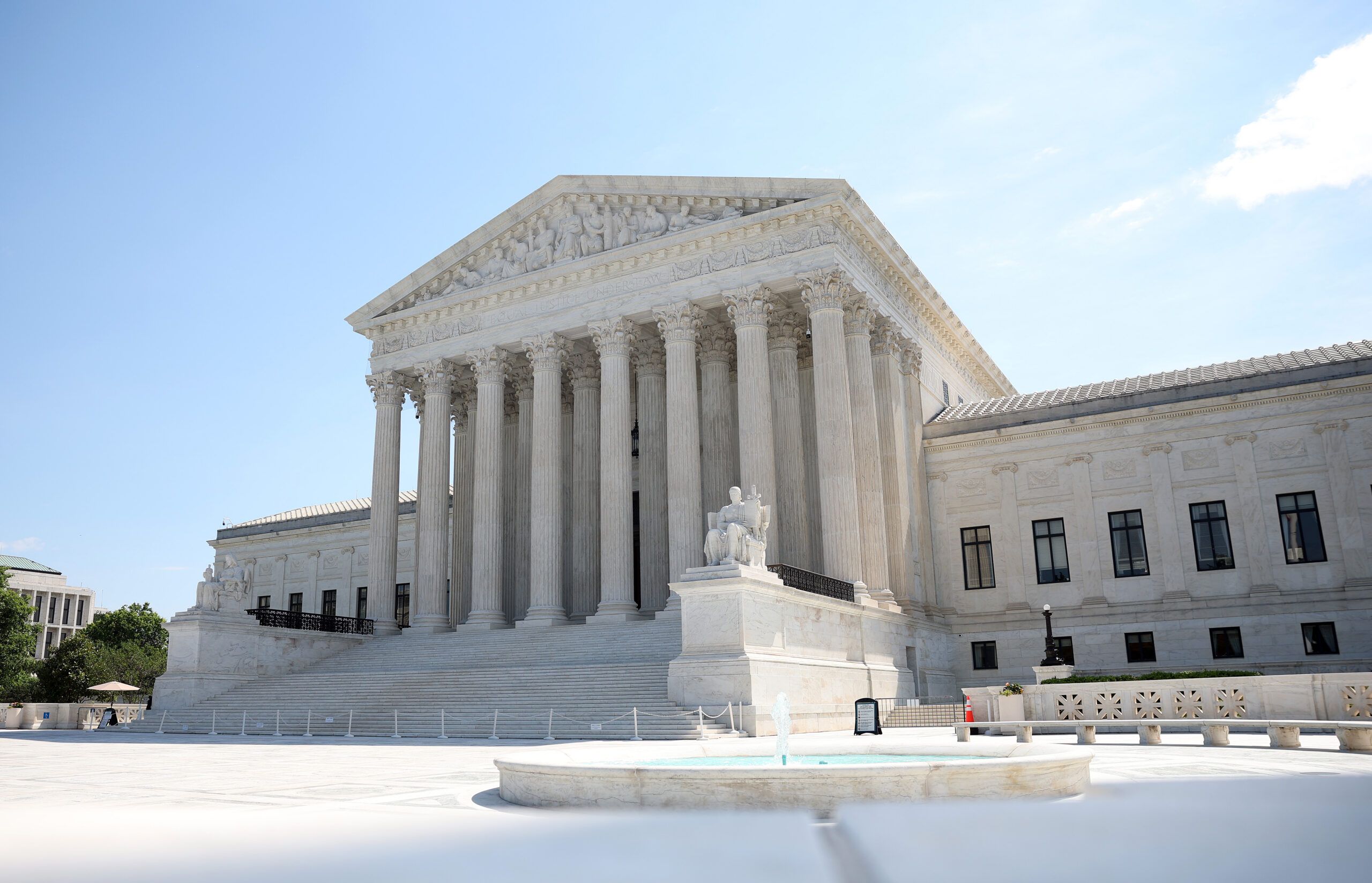
The Supreme Court issued rulings Monday morning in three high-profile cases as it approaches the end of its current term, siding against the Trump administration in two of the decisions.
The court ruled 5–4 in Watson v. Republican National Committee that Mississippi’s grace period for mail-in ballots postmarked by election day but received within five days afterwards will be allowed to stand through at least the midterm elections. The Trump administration had challenged the law, passed by Mississippi's GOP-controlled legislature. The court found that the Constitution places election regulations in the hands of states rather than the federal government.
Subscribe Today
Get daily emails in your inbox
It also blocked the Trump administration’s attempt to remove Federal Reserve Board member Lisa Cook prior to the conclusion of litigation challenging the dismissal. The Trump administration has alleged that Cook committed mortgage fraud, and the president cited this allegation as cause for firing her. In an opinion written for the 5–4 majority by Chief Justice John Roberts, the court found that the Trump administration’s position “would in effect transform the Federal Reserve’s for-cause protection into at-will employment—an interpretive leap out of step with the statute Congress enacted and our Nation’s tradition of central banking protected from political interference.”
However, the court did rule 6–3 in the Trump administration’s favor in one of the cases, striking down a federal law that prevented the president’s removal of Federal Trade Commission officials except “for cause.” The ruling—a major win for advocates of the “unitary executive” theory—overturns a prior Supreme Court decision that had insulated dozens of independent agencies from executive control.
Rulings on birthright citizenship, transgender athletes, and campaign finance are expected on Tuesday.
Sentinel — Human
This text reads like standard, factual news reporting. It exhibits strong coherence and specificity consistent with human journalism but lacks any distinctive stylistic fingerprint indicating synthetic generation.