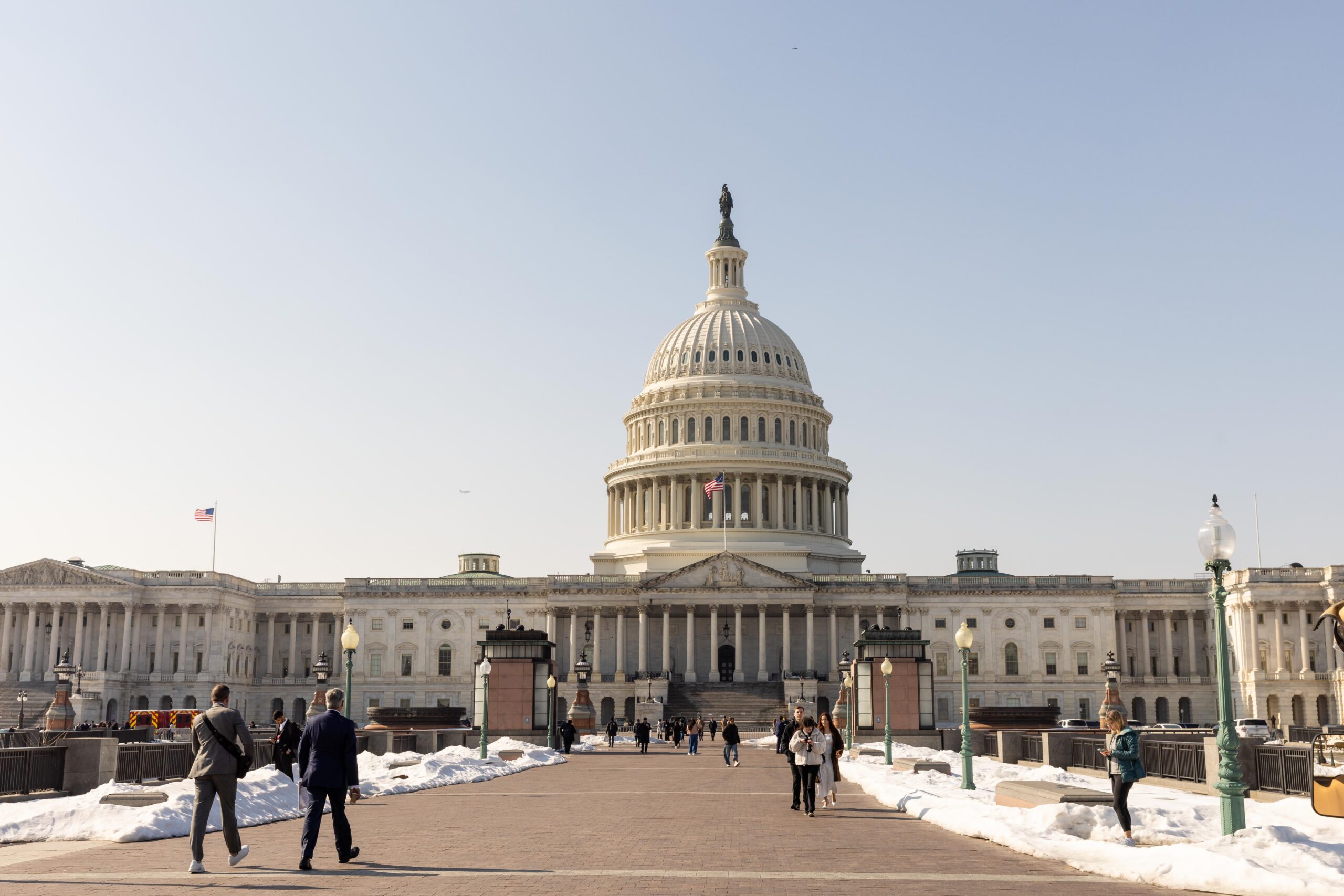
On Friday, February 13, House Agriculture Committee Chairman Glenn “GT” Thompson (R-PA-15) released the Farm, Food, and National Security Act of 2026 (FFNSA).
The introduction of the bill comes amidst an historic moment in federal food and agriculture policy. More than seven years removed from the enactment of the 2018 Farm Bill, farmers and ranchers are in a moment of crisis, with countless farms on the brink of foreclosure. The past year has also brought unprecedented instability in federal partnerships: farmers have experienced unexpected contract cuts and unpredictable, abrupt trade policy shifts, and the impact of a severely reduced federal workforce. In January 2025, the US Department of Agriculture (USDA) began freezing and even terminating the lawfully held contracts of farmers and farmer-serving organizations, disrupting planning for the 2025 planting season. The past year also included a budget reconciliation bill that slashed hundreds of billions of dollars from nutrition assistance for seniors, children, and veterans and directly reinvested $50 billion of that to further increase farm subsidies, abandoning the decades-long bipartisan farm bill coalition in the process. FFNSA should not and cannot be viewed outside of this context – to do so would be a rejection of reality.
The National Sustainable Agriculture Coalition (NSAC) appreciates the inclusion of improvements to local and regional food systems and the removal of a particularly harmful provision that would have fundamentally altered the Conservation Reserve Program for the worse. Yet in the context of propelling American agriculture forward – and when considering everything farmers and ranchers have endured for the past year – FFNSA falls woefully short.
FFNSA does nothing to stabilize USDA. It does not prevent the USDA reorganization from undermining services for farmers; it does not reverse USDA’s shameful ongoing attack on programs that seek to increase opportunity across the food system; and it does not appear to meaningfully support staffing levels so that farmers can access federal programs. Furthermore, in the shadow of a budget reconciliation bill that managed to provide guaranteed funding for tens of billions in new farm subsidies, FFNSA refuses to cobble together guaranteed funding for vital programs or to increase funding for programs that have been at the same level since 2018. Any program in FFNSA that receives flat funding is effectively cut by roughly 20% due to seven years of inflation.
The following are select provisions based on NSAC’s initial analysis of the full text of the Farm, Food, and National Security Act of 2026.
Title 1 – Commodities
While many of the Title I programs – including the Price Loss Coverage and Agriculture Risk Coverage programs – were addressed in the One Big Beautiful Bill Act (OBBB, P.L. 119-21), FFNSA includes a few notable changes for specialty crop support and disaster relief programs. First, the bill establishes a permanent framework for future emergency assistance that is specifically designed to support specialty crop producers based on adverse events, including economic crises or market disruptions. The program – which shares some similarities with the Marketing Assistance for Speciality Crops programs, but is not identical – would calculate payments based on sales from the previous market year, and establish a consistent mechanism and methodology framework to distribute emergency aid for specialty crop producers (Section 1003).
While it is vital to ensure specialty crop producers receive necessary aid during an emergency, this provision, as written, does not ensure specialty crop producers of all sizes receive adequate support. The bill includes high payment limits of no less than $900,000 for those deriving at least 75% of their income from farming activities, potentially concentrating any limited funds made available to a smaller number of large producers. The proposed program also fails to provide support to new producers who were impacted by an adverse event but had no recorded sales in the year prior.
FFNSA also gives USDA the authority to administer future disaster programs through state block grants (Section 1004). State administered programs have the potential to offer more tailored support for a state’s unique experience with a disaster. However, in practice, these programs often face significant delays in getting funds into farmers’ hands, establish inconsistent standards across states, and reduce USDA’s ability to ensure compliance across programs and reduce duplicative payments. As written, FFNSA provides few protections to ensure these issues do not hinder relief efforts when administered through state block grants.
Disaster relief programs are often necessary to effectively respond to an unusually damaging event. However, creating additional permanent disaster programs to distribute future ad hoc spending is not a sustainable solution to an insufficient farm safety net. Without proper investments to expand access to and improve risk management tools for the majority of producers, which are absent from FFNSA, farmers and ranchers will continue to struggle with an inadequate farm safety net.
Title 2 – Conservation
FFNSA’s conservation title presents a decidedly mixed bag, with several modest positive policy changes alongside some provisions that act as barriers for farmers trying to access popular federal conservation programs.
The bill codifies a minimum Conservation Stewardship Program (CSP) payment of $4,000, guaranteeing that producers of all sizes receive a solid baseline level of support when enrolling in CSP (Section 2301). This is an improvement over the $2,500 minimum payment proposed in the last House Farm Bill and in line with NSAC priorities for CSP.
However, FFNSA also siphons off CSP’s limited – and consistently oversubscribed – funding for a new grant program supporting states and Tribes administering soil health programs (Section 2302). While NSAC has championed providing federal support for state and tribal soil health programs, pulling funds from a popular, effective conservation program and thereby limiting farmer access is a non-starter. Currently, only 30% of farmers applying to CSP can secure contracts. It makes little sense to stretch limited resources within such a popular program across new purposes and subprograms. Doing so would only ensure that farmers interested in CSP continue to get left behind. Placing a state and tribal soil health assistance program in CSP makes even less sense, given that other conservation programs, such as the Regional Conservation Partnership Program (RCPP), are already designed to provide federal support for conservation work led by non-federal partners. NSAC opposes using CSP as the home for this new grant program and encourages Congress to see the wisdom of funding state and tribal soil health programs through RCPP instead.
Across both the Environmental Quality Incentives Program (EQIP) and CSP, the FFNSA significantly increases support for precision agriculture technologies. NSAC recognizes that precision agriculture has demonstrable benefits for some operations; however, it remains a relatively high-cost conservation solution that does not serve all farmers. Conservation program funding is limited, and providing overly robust support for practices unsuitable for all operations leads to a small set of farms consuming an outsized portion of program resources. This is an irresponsible use of limited public funding, especially when there are size- and scale-neutral management alternatives that serve far more farmers and deliver greater environmental benefits per dollar spent. We were pleased to see Congress recognize the high conservation potential of perennial production systems by including them in the Conservation Innovation Grants program, and these systems, which provide holistic conservation outcomes and are more accessible to a wider range of producers, deserve just as much attention and investment (Section 2204). NSAC calls on Congress to consider a fairer and more balanced approach to supporting precision agriculture in this farm bill.
As a positive change to the cost share offered at the Natural Resources Conservation Service (NRCS), the FFNSA adds greenhouse gas reduction as a purpose to EQIP’s top ten priority practices authority. This authority allows states to select 10 priority practices that receive 90% cost share, as opposed to the standard 75%, focusing more resources on those practices that both work in that state and address the most pressing environmental challenges producers are facing. Adding greenhouse gas reduction as a purpose that these practices can address makes it clear that states can choose to focus EQIP resources on addressing climate change and provide increased support to the producers eager to do that work within their operation.
The FFNSA appears to cut $1.055 billion dollars from EQIPs first five fiscal years of the 10 year budget window. Although the total baseline for the program should remain the same long term, this means that EQIP – and the farmers who depend on it – will lose money in the near term, hampering access to funds that support viability, resilience, and the ability to reduce input costs. Some of these EQIP funds are clearly redistributed to smaller conservation programs, including the Conservation Reserve Programs Transition Incentives Program; however, it is not clear at the time of publishing where all of the funds removed from EQIP have gone, or if they remain part of Title II’s budget authority.
The bill meets the standard, bare minimum of reauthorizing five year payment limits in both EQIP and CSP, at $450,000 and $200,000, respectively. This is a necessary update that has been ignored in recent Farm Bill extensions. NSAC is relieved to see its inclusion here, as payment limits are one of the key tools that help ensure finite program resources are spread around to a larger number of farms, especially smaller and mid-sized operations. However, FFNSA fails to eliminate the separate and lower payment limit in EQIP for producers accessing the Organic Initiative. While it raises the limit from $140,000 to $200,000, continuing to maintain a significantly lower limit for organic perpetuates an unnecessary institutional bias against organic producers. NSAC opposes this separate and lower limit, as organic production has inherent conservation value, and EQIP should not penalize the efforts of producers seeking certification.
FFNSA provides a long overdue, full reauthorization of the Conservation Reserve Program (CRP), including new funding for the Transition Incentives Program (TIP). The flagship conservation program of the Farm Service Agency (FSA), CRP, has not received the same attention as other conservation programs in major legislation in recent years, leading to uncertainty and programmatic delays. NSAC strongly supports fully reauthorizing CRP and providing funding for TIP, ensuring these tools are available to producers each year. Further, the FFNSA strips problematic reforms to CRP’s eligibility requirements proposed in the previous version of the bill.
Title 4 – Nutrition
Growing bipartisan support for the Local Farmers Feeding our Communities Act embodies the historical collaboration of agricultural committees responding to the needs of both the farm and food coalition. FFNSA draws from this bipartisan proposal to authorize a new food assistance program that builds upon the success of the previous Local Food Purchase Assistance (LFPA) program. Its primary focus remains on building reliable markets for small, mid-sized, beginning, and veteran farmers and strengthening local and regional food systems. It accomplishes this by investing directly into states, Tribes, and territories, and it makes improvements to LFPA by directing explicit technical support to producers to obtain food safety training and certification.
Codification of this program could catalyze long term growth in local and regional markets; however, the success of the program is severely at risk with an authorization of appropriations set only at $200 million. Recent history has demonstrated a limited capacity to sufficiently fund programs such as these through the annual appropriations process, making this provision more mirage than reality. The success of LFPA in providing economic opportunity for small and mid-sized farmers cannot be understated, and has demonstrated sufficient proof of concept to warrant mandatory funding as laid out in the Local Farmers Feeding our Communities Act.
Title 5 – Credit
FFNSA includes limited improvements to the farm loan programs and access to credit, but leaves out many important changes to protect borrowers and includes detrimental regulatory changes that would inhibit transparency in agricultural lending.
FFNSA would problematically provide sole authority to the Farm Credit Administration to regulate the Farm Credit System (FCS). This provision would remove any regulatory authority from other entities, including the Consumer Financial Protection Bureau (CFPB), and further erode the CFPB’s demographic reporting requirements in Rule 1071 for loans administered through FCS.
However, FFNSA also includes several provisions that would help producers access capital, including: authorization for USDA to restructure guaranteed loan debt; a reduced experience requirement; a pre-approval pilot for farm ownership loans; an expedited approval process for loans under $1 million; and shifting the burden of proof from farmers onto USDA when appealing a loan denial. It also increases the limits for direct operating, farm ownership, and microloans. It does not, however, raise the total funding authorization that would create room for USDA to make and guarantee these bigger loans, nor does it place guardrails on lending to protect farmers and ranchers from over-collateralization or prevent concentration of funds among fewer large operations.
Title 6 – Rural Development
FFNSA authorizes a new grant program, the New, Mobile, and Expanded Meat Processing and Rendering Grant Program, which is, in broad purposes, similar to the Processing Resilience Grant Program within the bipartisan Strengthening Local Processing Act. However, FFNSA’s version of the program provides very limited funding – only $3 million in appropriations authorization – for those grants, smaller than many state budget allocations for a similar purpose (Section 6304). The already limited funding is made even less accessible by including state departments of agriculture and public land grant universities as eligible entities, despite these entities often already having these facilities or the budgetary capacity to pursue them.
FFNSA authorizes the Food Supply Chain Guaranteed Loan Program, a valuable resource for needed investments in aggregation, processing, storage, and distribution (Section 6303). Yet, without defined priorities or target recipients, the program may inevitably lend itself to financing large-scale operations rather than serve as a new capital product for small, scaling, or new local operations.
Finally, FFNSA includes a standard, bare minimum reauthorization of longstanding rural business development programs, such as the Rural Microentrepreneur Assistance Program (RMAP), Appropriate Technology Transfer for Rural Areas (ATTRA), Rural Business Development Grants, and Rural Cooperative Development Grants. The bill also expands the focus of ATTRA to provide tailored assistance to veterans and improves loan options within RMAP. It falls short by not increasing program funding.
Title 7 – Research
In the past year, farmers and stakeholders alike experienced significant disruptions in research, education, and extension under USDA, including grant terminations in the Beginning Farmer and Rancher Development Program (BFRDP) and the Organic Agriculture Research and Extension Initiative (OREI); significantly delayed funding for the Sustainable Agriculture Research and Education (SARE) program; no Request for Applications (RFA) for widely popular USDA National Institute of Food and Agriculture (NIFA) competitive grants programs like OREI, BFRDP, 2501, the Food Safety Outreach Program (FSOP); and several memorandums from US Secretary of Agriculture Brooke Rollins that have significantly impeded agriculture research at colleges and universities nationwide. While farmers, ranchers, and researchers across the country continue to face uncertainty and disruptions at USDA, FFNSA offers no solutions to get American agricultural research back on track.
The Food Safety Outreach Program (FSOP), of critical importance to providing training to small and diversified growers constantly contending with new food safety regulations, receives a reauthorization, though without an increase in authorization level; this flat funding ultimately represents a decrease every passing year due to inflation.
While FFNSA meets the low bar of reauthorizing popular sustainable and organic research programs like the SARE program and OREI, FFNSA does not include additional funding or improvements for either program. Strong investments in research underpin growth in any sector, as all farmers – sustainable, organic, conventional, or otherwise – rely on cutting-edge research to maintain robust and thriving operations.
It is also concerning that the focus on precision agriculture, digital agriculture, and automation across the research title detracts from much needed investments in farmer-led, scale-appropriate research. As noted above, precision agriculture benefits only a limited number of farmers.
A few bright spots in the research title include:
- Meaningful investments in 1890 land grant universities. The bill increases the authorization of appropriations for extension at 1890 institutions from 20% to an amount not less than 40% of appropriations for the Smith Lever Act and increases the authorization of appropriations for agricultural research at 1890 institutions from 30% to an amount not less than 40% of appropriations for the Hatch Act of 1887. FFNSA also applies some oversight to state governments regarding their matching funds requirement to 1890 institutions.
- Updated Agriculture and Food Research Initiative (AFRI) priority areas to include language around regionally adapted cultivars and breeding for environmental resilience.
Ultimately, the research title underwhelms, failing to provide the kinds of research investments that farmers need to build viable businesses that can withstand disruption of all kinds.
Title 9 – Energy
Agrivoltaic systems, where land is used simultaneously for agriculture and solar energy production, offer an important opportunity to reduce farm energy costs while generating additional on-farm benefits. FFNSA directs USDA to study the effects of solar on farmland, including best practices for shared solar and agricultural production, which could provide key insights for advancing agrivoltaic projects. Sections in this bill, however, also limit USDA funding for solar projects that convert prime farmland with narrow exceptions for smaller acreage and prohibit USDA funding for solar components from foreign countries of concern, similar to Secretary Rollins’ August 2025 memo on changes to the Rural Energy for America Program. At a time of high energy costs, these restrictions, as written, may further limit farmers and ranchers’ ability to access solutions that can protect farmland and work for their operations.
Title 10 – Horticulture
Under an Administration where a number of NSAC priorities have been threatened by program termination or significant changes, the new and improved programs set forth in this title of FFNSA are not insignificant.
In particular, the bill is responsive to the programmatic needs of stakeholders regarding the Local Agriculture Market Program. The turnkey grant opportunities have been extremely popular since their implementation in 2023; however, they have not been available for popular and unmet needs, such as farmers market manager staff time or special purpose equipment. FFNSA creates permanent turnkey grants and expands the allowed activities, yet falls short of eliminating barriers for participation, such as the match requirements.
FFNSA takes modest steps in strengthening the Office of Urban Agriculture and Innovative Production by directing additional support to producers and tailoring technical assistance for urban production. However, it does not include mandatory funding for the Office, which has been a key NSAC priority in the previous few years, given the challenges of sustaining, let alone increasing, funding for this popular program through the appropriations process. The bill’s most significant support for urban agriculture is directing the Farm Service Agency to permanently implement urban county committees beyond their pilot status from the 2018 farm bill, which ensures USDA services and representation in urban areas.
The bill directs USDA to examine the ways USDA purchases food for nutrition programs to understand barriers for farmers and businesses selling nontraditional, culturally relevant, or local and regional products directly to USDA, and make administrative, regulatory, and legislative recommendations to address barriers. This level of formal assessment is long overdue and a welcome element to the bill.
With the early sunsetting of the Transition to Organic Partnership Program (TOPP), this bill is inadequate overall for organic agriculture, despite some elements of TOPP being included. Giving the National Organic Program (NOP) the authority to provide technical assistance to support transition with no additional funding for TA will increase the burden on an already underfunded program. Additional funding to provide technical assistance, education, and outreach to certified organic farmers and farmers transitioning to organic certification is critical for the continued growth of organic systems that emphasize soil health.
Title 11 – Crop Insurance
Unfortunately, FFNSA fails to meet the moment with any meaningful reforms that would alleviate bureaucratic red tape and streamline access to crop insurance for the small, diversified, and direct-to-consumer farmers and ranchers who are left behind. It requires an annual review of challenges to access Whole-Farm Revenue Protection, but those barriers and corresponding solutions are already well-documented. The bill amends the eligibility definitions for the additional crop insurance premium discounts passed in the One Big Beautiful Bill Act (OBBB, P.L. 119-21), including veteran producers for the additional premium discounts. While this is an important investment for beginning and veteran producers, it will have minimal impact if it is not paired with more foundational reforms to streamline paperwork and address the disincentive that agents experience to sell insurance to small and diversified farms.
FFNSA also directs several research initiatives to explore new insurance products, including limited weather based index policies, but few that would benefit producers currently unable to effectively or affordably insure their operations. While failing to address barriers or reduce the costs of crop insurance for many uninsured operations, the bill provides for increased reimbursement rates for administrative and operating costs for private Approved Insurance Providers (AIPs).
Title 12 – Miscellaneous
The Miscellaneous Title includes a wide range of provisions; here, we focus on several pertinent to expanding meat processing resources and capacity.
With the decline of avenues for small and very small plants to offer feedback to the Administration and receive guidance (for example, due to a decision to disband the National Advisory Committee on Meat and Poultry Inspection (NACMPI)), the inclusion of statutory requirements for further resources in the form of model Hazard Analysis and Critical Control Point (HACCP) plans and validation studies for these processors is welcome (Section 12112).
While FFNSA does provide for further outreach to state departments of agriculture regarding the Cooperative Interstate Shipping Program, it does not change the federal cost share for that program or the state meat and poultry inspection programs – both of which are key changes needed for the federal food safety regulations to better work with and regulate small and very small meat processors. It also includes a reporting requirement to Congress (Section 12113)
FFNSA also opens new, potentially anti-competitive methods of ownership that might directly counteract the benefits of other investments in the bill. For example, including the A-Plus Act (Section 12111) would likely create more vertically integrated markets, where the stockyard is also the only meat processing operation in an area.
Leave a Reply
Facts Only
House Agriculture Committee Chairman Glenn “GT” Thompson (R-PA-15) introduced the Farm, Food, and National Security Act of 2026 (FFNSA) on Friday, February 13.
The bill follows over seven years since the 2018 Farm Bill, with farmers facing foreclosure risks, contract cuts, and trade policy instability.
In January 2025, the USDA began freezing or terminating contracts, disrupting planning for the 2025 planting season.
A budget reconciliation bill in 2024 cut nutrition assistance by hundreds of billions while reinvesting $50 billion into farm subsidies.
The FFNSA establishes a permanent disaster relief framework for specialty crops, with payments based on prior-year sales.
The bill sets a $900,000 payment limit for disaster aid, potentially concentrating funds among larger producers.
It authorizes state-administered disaster block grants, which may cause delays and inconsistent standards.
The Conservation Stewardship Program (CSP) minimum payment is codified at $4,000, up from $2,500.
FFNSA diverts CSP funds to a new state and tribal soil health grant program.
The bill reauthorizes the Conservation Reserve Program (CRP) and funds the Transition Incentives Program (TIP).
It includes a new food assistance program based on the Local Food Purchase Assistance (LFPA) but with only $200 million in authorized funding.
The bill provides limited improvements to farm credit programs but does not increase total funding authorization.
It authorizes a $3 million grant program for meat processing but restricts funding to smaller projects.
The FFNSA reauthorizes research programs like SARE and OREI without funding increases.
It directs USDA to study agrivoltaic systems but limits funding for solar projects on prime farmland.
The bill includes provisions to support urban agriculture but does not provide mandatory funding for the Office of Urban Agriculture.
It requires USDA to examine barriers for farmers selling nontraditional or local products to nutrition programs.
The bill fails to address systemic issues in crop insurance access for small and diversified farms.
It includes a reporting requirement for meat processing regulations but does not change federal cost-sharing for state inspection programs.
Executive Summary
The Farm, Food, and National Security Act of 2026 (FFNSA), introduced by House Agriculture Committee Chairman Glenn “GT” Thompson (R-PA-15), aims to address critical issues in U.S. agriculture amid a period of significant instability. The bill comes at a time when farmers face foreclosure risks, unpredictable federal partnerships, and reduced USDA workforce capacity. While the FFNSA includes some positive provisions—such as improvements to local food systems, a permanent disaster relief framework for specialty crops, and reauthorization of key conservation programs—it falls short in several areas. Critics argue it fails to stabilize USDA operations, does not reverse recent cuts to nutrition assistance, and lacks guaranteed funding for vital programs. The bill also introduces controversial measures, such as state-administered disaster block grants and increased support for precision agriculture, which may disproportionately benefit larger operations. Additionally, it reauthorizes but does not expand funding for critical research and rural development programs, leaving many stakeholders concerned about its long-term impact on small and mid-sized farmers.
The National Sustainable Agriculture Coalition (NSAC) highlights both strengths and weaknesses in the FFNSA. For instance, the bill codifies a minimum payment for the Conservation Stewardship Program (CSP) but diverts funds from CSP to a new soil health grant program, potentially limiting farmer access. It also includes modest improvements to farm credit and rural development but fails to address systemic issues like over-collateralization in lending. While the bill authorizes new programs for meat processing and local food systems, funding levels are often insufficient or reliant on uncertain appropriations. Overall, the FFNSA reflects a tension between addressing immediate agricultural crises and implementing sustainable, long-term solutions that support a diverse range of producers.
Full Take
The strongest version of this narrative acknowledges the FFNSA as a necessary but flawed attempt to address a farming sector in crisis. The bill does include some meaningful reforms—such as disaster relief for specialty crops, reauthorization of conservation programs, and support for local food systems—that could provide stability if properly funded. However, the critique from groups like the National Sustainable Agriculture Coalition (NSAC) reveals a deeper pattern: the bill often prioritizes large-scale operations and existing power structures over small and mid-sized farmers. For example, disaster aid payment limits favor larger producers, while state block grants risk inefficiency and inconsistency. The diversion of CSP funds to a new soil health program, despite CSP’s oversubscription, suggests a misalignment between policy goals and farmer needs. Similarly, the emphasis on precision agriculture—an expensive, scale-dependent solution—over more accessible conservation practices reflects a bias toward industrial agriculture.
Patterns detected: ARC-0024 Ambiguity (vague funding mechanisms), ARC-0043 Motte-and-Bailey (broad claims of support for farmers with narrow implementation)
The root cause appears to be a tension between short-term political priorities and long-term systemic resilience. The bill’s reliance on appropriations rather than mandatory funding for critical programs leaves small farmers vulnerable to budgetary whims. The lack of guardrails in lending and crop insurance perpetuates a system where larger operations consolidate resources, while the failure to address USDA instability undermines the very infrastructure meant to support farmers. This echoes historical patterns of agricultural policy favoring industrial efficiency over equitable access.
The implications for human agency are significant. Small and mid-sized farmers, already struggling with inflation and market volatility, may find themselves further marginalized. The bill’s focus on precision agriculture and large-scale processing could accelerate the decline of diverse, localized food systems. Meanwhile, the lack of funding for research and technical assistance stifles innovation for sustainable farming practices.
Bridge questions: What would a farm bill look like if designed primarily by small and mid-sized farmers? How might the FFNSA’s provisions on disaster relief and conservation be restructured to ensure equitable access? What trade-offs exist between efficiency-driven agriculture and resilience-driven agriculture, and how should policy balance them?
Counterstrike scan: A coordinated influence campaign pushing this narrative might frame the FFNSA as a bold solution while downplaying its funding gaps and structural biases. The actual content, however, includes legitimate critiques from agricultural advocates, suggesting a more nuanced debate rather than a manufactured consensus. The bill’s weaknesses appear to stem from political constraints rather than deliberate manipulation.
Sentinel — Human
The article exhibits strong human authorship signals, including policy-specific advocacy, stylistic idiosyncrasies, and detailed legislative analysis. No significant synthetic indicators detected.