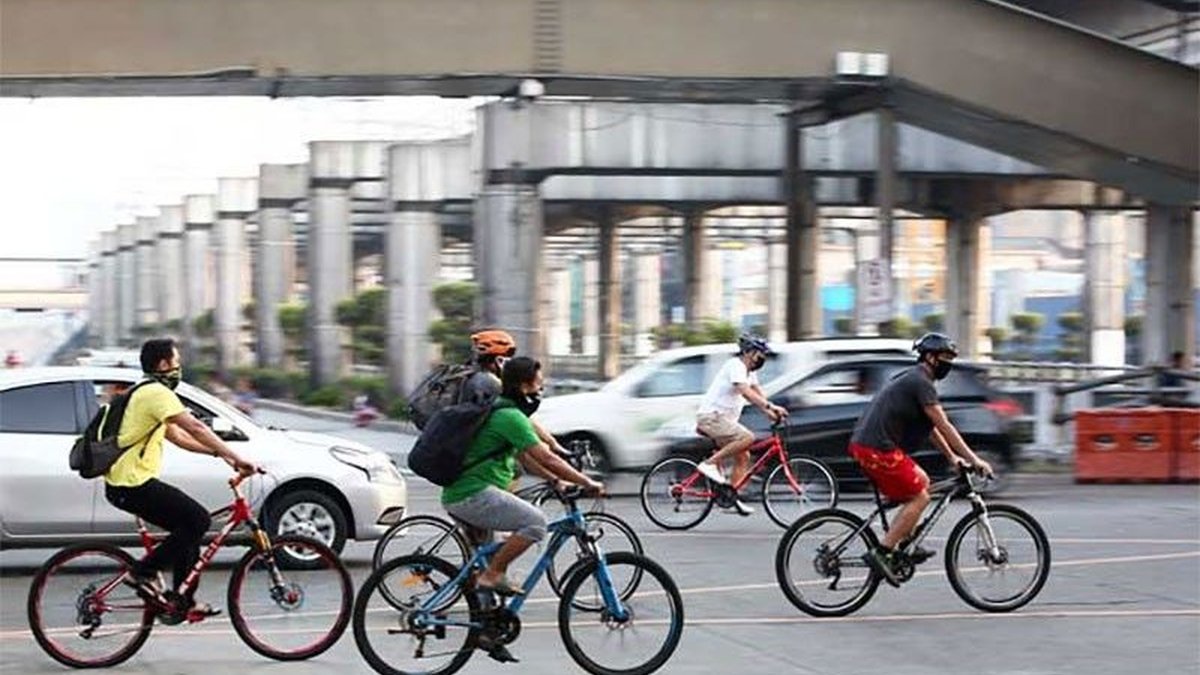
MANILA, Philippines — An overwhelming majority of Filipinos reportedly want more bike lanes and pedestrian walkways, placing pressure on legislators to increase the active transport budget to at least P1 billion.
Citing a Pulse Asia survey, Mobility Awards – an award-giving body that recognizes efforts of active transport pioneers, led by the Institute for Climate and Sustainable Cities – said 94 percent of Filipinos agree with proposals to invest more on active transport infrastructure to support cyclists and pedestrians.
The survey, conducted in May, also reported that 93 percent want public transport lanes, similar to the EDSA busway, expanded to speed up commuter travel.
Further, the survey said 82 percent demand the government boost transport subsidies.
Mobility Awards national coordinator Amber Garma appealed to policymakers to view the results as a call to hike the active transport budget to at least P1 billion.
“The 94 percent carless majority has spoken, and our leaders must step up to protect them. First, the President must declare active transport an economic and labor priority in his upcoming State of the Nation Address,” Garma said.
“Second, Congress must reverse years of fiscal neglect and lock in a minimum of P1 billion as a budget for active transport for 2027,” she added.
Garma lamented the declining capital for active transport in the pandemic aftermath, from a high of P2 billion in 2022, to just P105.38 million in 2026.
She also pressed local government units to assign funds for their own bike lanes and pedestrian walkways in response to the ballooning demand for active transport infrastructure.
Garma reminded policymakers that for most Filipinos, the shift to biking and walking was never just a lifestyle choice. She said they are forced to save money in a challenging economy.
In an earlier interview with reporters, Transportation Undersecretary Mark Steven Pastor said the Department of Transportation is seeking an active transport budget of up to P1 billion for 2027.
The government aims to develop a bike lane network of 2,400 kilometers, but the DOTr has delivered just 1,100 kilometers to date.
- Latest
- Trending
Facts Only
* Ninety-four percent of Filipinos agree with proposals to invest more on active transport infrastructure to support cyclists and pedestrians.
* Ninety-three percent want public transport lanes, similar to the EDSA busway, expanded to speed up commuter travel.
* Eighty-two percent demand the government boost transport subsidies.
* The Mobility Awards national coordinator appealed for the active transport budget to be increased to at least P1 billion for 2027.
* The Department of Transportation seeks an active transport budget of up to P1 billion for 2027.
* The Department of Transportation aims to develop a bike lane network of 2,400 kilometers.
* The Department of Transportation has delivered one thousand one hundred kilometers of bike lanes to date.
* Capital for active transport declined from P2 billion in 2022 to P105.38 million in 2026.