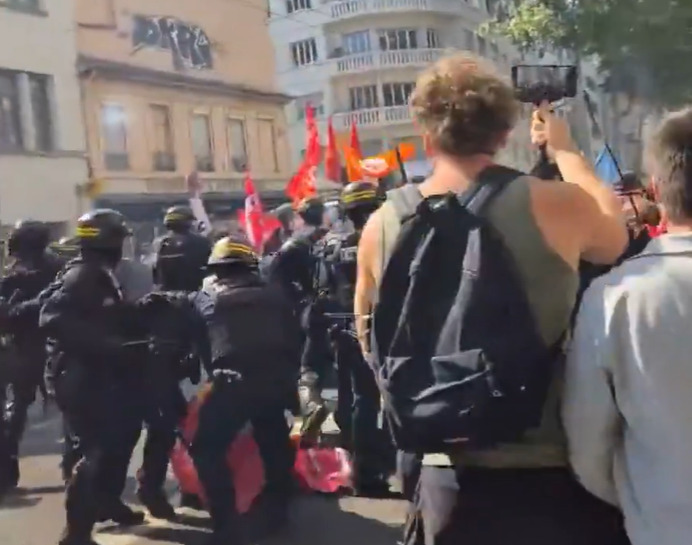
Работниците и синдикатите ширум светот денес го одбележаа Меѓународниот ден на трудот, 1 мај, со организирање протести и демонстрации, додека во некои градови протестите ескалираа во судири меѓу демонстрантите и полицијата.
Во Франција, демонстрации се одржаа во неколку градови, вклучувајќи ги Бордо, Париз, Ница, Лил, Лион и Марсеј, а според информациите од BFM TV, во протестите учествувале и бројни синдикати. Според извештаите, четири лица се уапсени во Лион за време на маршот на кој учествувале повеќе од 6.500 учесници.
🇫🇷 Earlier today, police fired tear gas and used water cannons to break up a Labour Day protest in Lyon as tensions escalated on the streets.
The march was organised by unions and political groups calling for unity “against the far-right,” and lower gas prices.
Follow: @euopa pic.twitter.com/x3LpdgmkV9
— Europa.com (@europa) May 1, 2026
Неколку десетици членови на „црниот блок“ фрлија огномет кон полицијата, која одговори со солзавец. Во Марсеј, 3.400 луѓе учествуваа во протестите без инциденти, додека во Нант, каде што имаше 4.000 демонстранти, се појавија тензии кога маскирани лица фрлија проектили и огномет кон полицијата.
Во Белгија, околу 30 делегати на синдикатите протестираа пред продавницата Хема во Брисел поради нејзиното отворање на 1 мај, тврдејќи дека компанијата не ги почитува белгиските закони за труд, додека во исто време во центарот на градот се одржа митинг на кој присуствуваа илјадници граѓани.
Во Италија, синдикатите организираа протести во Венеција, Торино и Неапол, според извештаите на агенцијата Анса. Во Торино, група демонстранти се судрија со полицијата, користејќи палки, спрејови и фрлајќи шишиња. Полицијата одговори со водени топови и солзавец.
#Italy — Turin, clashes are taking place between police and demonstrators in front of Askatasuna following the May Day march.
Antifascist youth are very brave.pic.twitter.com/z9jjndtAp3
— Antifa_Ultras (@ultras_antifaa) May 1, 2026
Во Шпанија, најголемите синдикати UGT и CCOO организираа марш во Малага, барајќи прифатливи услови за домување, зголемување на платите и заштита на демократијата и јавните услуги, објави RTVE.
Во Германија, повеќе од 366.000 луѓе учествуваа во 413 настани низ целата земја, а синдикатите протестираа под слоганот: „Нашите работни места пред вашиот профит“, објави Welt.
Во Грција, протести се одржаа во неколку градови, вклучувајќи ја и Атина, каде што демонстрантите ги истакнаа инфлацијата, кризата со домувањето и потребата од повисоки плати преку секторски договори, објавува ЕРТ.
Во Соединетите Американски Држави, каде што Први мај не е федерален празник, низ целата земја се одржаа повеќе од 3.500 настани под слоганот „работниците пред милијардерите“.
Клучните организатори на протестот се, како што пишува Гардијан, синдикати, студентски групи и заедници кои бараат повисоки плати и подобра социјална заштита.
„Треба да се фокусираме на работниците, а не на милијардерите“, рече претседателката на Американската национална образовна асоцијација (НЕА), Беки Прингл.
Активистите бараат повисоки даноци за богатите и крај на строгата имиграциска политика на американскиот претседател Доналд Трамп.
Во Манила, главниот град на Филипините, голем број демонстранти маршираа со барања за повисоки плати и пониски даноци, додека некои протестираа и против улогата на Соединетите Американски Држави во војната во Иран. Некои од демонстрантите носеа транспаренти со пораки како „без војници, без бази, без воени вежби, да се спротивставиме на војните под водство на САД“, објавува АП.
Во Индонезија, претседателот Прабово Субианто се придружи на протестот во Џакарта, каде што поздрави десетици илјади луѓе во услови на силно полициско и воено присуство. Според Ал Џезира, работниците побараа посилна заштита од владата поради зголемувањето на цените и проблемите во снабдувањето на индустријата со суровини.
Во Јужна Америка, најголемите протести се одржаа во Чиле, Боливија и Венецуела. Во Аргентина, работниците протестираа против неодамнешната реформа на трудовото право на аргентинскиот претседател Хавиер Милај. Општата конфедерација на трудот (CGT), најголемиот синдикат во Аргентина, маршираше до седиштето на владата во Буенос Аирес за да ја „одбрани пристојната работа“ против промените на Милај во трудовото законодавство, кои од 1974 година обезбедија значителна заштита за работниците, но исто така ги зголемија трошоците за водење бизнис, што ги намали странските инвестиции.
„Сакаме да ѝ кажеме на оваа влада дека доста е! Нашето трпение е истечено“, им рече лидерот на CGT, Октавио Аргуело, на собраните работници.
Facts Only
Workers and unions globally observed May 1, International Workers' Day, with protests and demonstrations.
In France, protests occurred in Bordeaux, Paris, Nice, Lille, Lyon, and Marseille, with four arrests in Lyon.
Police in Lyon used tear gas and water cannons against demonstrators, who included union and political groups opposing the far-right and high gas prices.
In Marseille, 3,400 people protested without incidents, while in Nantes, 4,000 demonstrators clashed with police after masked individuals threw projectiles and fireworks.
In Belgium, 30 union delegates protested outside a Hema store in Brussels for opening on May 1, violating labor laws, while thousands attended a separate rally in the city center.
In Italy, protests took place in Venice, Turin, and Naples, with clashes in Turin involving police and demonstrators using sticks, spray, and bottles; police responded with water cannons and tear gas.
Spain's largest unions, UGT and CCOO, organized a march in Malaga demanding affordable housing, wage increases, and protection of democracy and public services.
In Germany, over 366,000 people participated in 413 events under the slogan "Our jobs before your profits."
In Greece, protests in Athens and other cities focused on inflation, housing crises, and the need for higher wages through sectoral agreements.
In the U.S., over 3,500 events were held under the slogan "workers before billionaires," with demands for higher taxes on the wealthy and an end to strict immigration policies.
In the Philippines, protesters in Manila demanded higher wages, lower taxes, and opposed U.S. military involvement in Iran.
In Indonesia, President Prabowo Subianto joined a protest in Jakarta, where workers called for stronger government protection against rising prices and supply chain issues.
In South America, major protests occurred in Chile, Bolivia, and Venezuela, while in Argentina, the CGT union marched against President Javier Milei's labor reforms, defending workers' rights established since 1974.
Executive Summary
Workers and unions worldwide marked International Workers' Day on May 1 with protests and demonstrations, some of which escalated into clashes with police. In France, protests occurred in multiple cities, including Paris, Lyon, and Marseille, with four arrests in Lyon amid tensions involving masked demonstrators and police using tear gas and water cannons. In Belgium, unions protested outside a Hema store in Brussels for violating labor laws by opening on May 1, while thousands attended a separate rally. Italy saw clashes in Turin between police and demonstrators, with officers deploying water cannons and tear gas. Spain's largest unions marched in Malaga, demanding better housing, higher wages, and protection of public services. Germany saw over 366,000 participants across 413 events under the slogan "Our jobs before your profits." In Greece, protesters highlighted inflation and housing crises, while in the U.S., over 3,500 events were held under the banner "workers before billionaires," with demands for higher taxes on the wealthy and immigration reform. Protests in the Philippines and Indonesia focused on wage increases and opposition to U.S. military involvement, while in South America, Argentina's largest union marched against labor reforms by President Javier Milei, calling for the defense of workers' rights.
The demonstrations reflected a mix of economic grievances, political opposition, and calls for social justice, with varying degrees of confrontation depending on local contexts. While some protests remained peaceful, others saw escalations, particularly where far-right opposition or labor law violations were central issues.
Full Take
The global May Day protests reveal a pattern of economic discontent intertwined with political opposition, particularly against far-right policies, austerity measures, and perceived corporate or governmental overreach. The strongest version of this narrative highlights legitimate worker grievances—rising inflation, stagnant wages, housing crises, and labor law rollbacks—as drivers of mobilization. The protests also reflect broader anxieties about democratic erosion, as seen in Argentina's opposition to Milei's reforms or Spain's calls to protect public services. However, the escalation into violence in some cases, particularly where masked groups or "black bloc" tactics were employed, risks overshadowing the core demands and could be exploited to discredit the movements.
Patterns detected: ARC-0024 Ambiguity (in the framing of "far-right" opposition without clear policy linkages), ARC-0043 Motte-and-Bailey (broad demands like "workers before billionaires" that could range from reasonable wage hikes to radical wealth redistribution).
The root cause appears to be a paradigm of neoliberal economic policies clashing with resurgent labor movements, amplified by post-pandemic inflation and cost-of-living crises. The protests echo historical labor struggles but are now layered with digital-age coordination and transnational solidarity. The implications for human agency are significant: workers are reclaiming collective bargaining power, but the risk of co-optation by extremist factions or state repression remains. Second-order consequences may include policy shifts in some countries (e.g., wage increases or labor law revisions) or further polarization where protests turn violent.
Bridge questions: How might these protests reshape labor policies in countries with upcoming elections? What role do social media and transnational networks play in amplifying or distorting these movements? Would the inclusion of employer or government perspectives in reporting change the narrative's balance?
Counterstrike scan: A coordinated influence campaign might amplify violent clashes to discredit labor movements or frame protests as "radical" to justify crackdowns. However, the article's focus on diverse, locally rooted demands—rather than a unified ideological push—suggests organic mobilization rather than a top-down operation. The presence of both peaceful marches and isolated violence aligns with typical protest dynamics, not a manufactured narrative.
Sentinel — Human
This text is a compilation of real-world protest reports, characterized by journalistic aggregation of facts and varying local perspectives, suggesting a human-sourced or heavily edited journalistic origin.