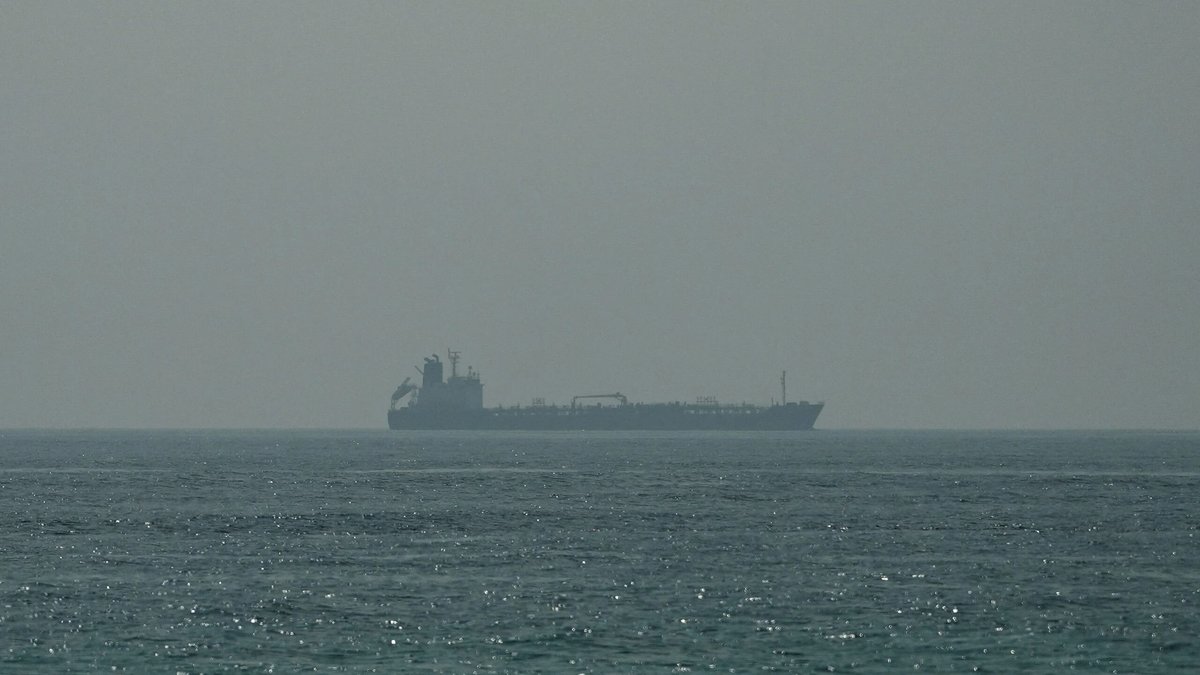
LONDON, July 9 (Reuters) – Oil tanker traffic through the Strait of Hormuz was at a near standstill on Thursday, according to data and sources, as shipping risks escalated after the U.S. renewed airstrikes on Iran, triggering retaliation by Tehran in the Gulf.
Just two tankers had so far sailed through the strait in the early hours of Thursday. They included the crude supertanker Berg 1, which had loaded at Iran’s Kharg Island and is subject to U.S. sanctions, according to analysis from Kpler.
The Marshall Islands-flagged chemical tanker Well Sail, also transited the strait, Kpler analysis showed. Its previous loading destination was near Sharjah in the United Arab Emirates, according to LSEG ship tracking data.
Shipping industry sources said vessels were increasingly switching off their public AIS tracking transponders, making it harder to see all of the ships crossing.
“Tanker traffic through the Strait of Hormuz has essentially stopped, which tells you more about risk perception right now than any statement from Washington or Tehran,” Jorge Leon, head of geopolitical analysis at Rystad Energy, wrote in a report.
LATEST FLARE-UP LEAVES U.S.-IRAN TRUCE TEETERING
Iranian armed forces launched attacks on U.S. military infrastructure in neighboring Gulf states on Thursday in response to U.S. strikes on Iran’s southern coastal and eastern provinces, putting further strain on a three-week-old truce.
The latest flare-up in the four-month conflict began earlier this week with attacks on three tankers in the strait that the U.S. blamed on Tehran.
Iran’s Revolutionary Guards Navy said on Thursday that U.S. attacks on Iran and intervention in redirecting shipping were disrupting the strait’s gradual reopening, warning that any further U.S. intervention would draw a “crushing response.”
The Strait of Hormuz handled about a fifth of global oil supplies before the war erupted on February 28 with U.S. and Israeli strikes against Iran.
Daily traffic in the past two weeks had risen to its highest levels since the war’s outbreak, averaging 40 ships transiting the strait, which was still far off the pre-conflict average of 125 to 140 daily sailings.
LNG TANKER ATTACK EXPOSES RISK TO HIGH-VALUE VESSELS
Some war underwriters have advised shipping companies to pause voyages through the strait while others are reviewing their policy terms after the renewed vessel attacks, insurance industry sources told Reuters.
“The Hormuz reopening story looks more fragile after the latest escalation,” ship broker Clarksons said in a report.
One of the three vessels hit this week, the Marshall Islands-flagged Qatari LNG tanker Al Rekayyat, remains stranded and awaiting salvage operations off Oman after a projectile strike late on Tuesday sparked a fire in its engine room.
Despite earlier fears of an explosion, industry sources said that risk was low for now and its cargo of liquefied natural gas appeared secure.
The ship registry of the Marshall Islands, one of the world’s top flag states, told Reuters there were no reported injuries or environmental impacts as a result of the incident involving the Al Rekayyat.
“As recent incidents have shown, the (marine war) market is now facing the prospect of potentially severe losses involving vessels of substantial value,” said one marine war underwriter, who asked not to be named due to the sensitivity of the situation.
(Reporting by Jonathan Saul, additional reporting by Florence Tan; Editing by Joe Bavier)
(c) Copyright Thomson Reuters 2026.
Editorial Standards · Corrections · About gCaptain
This article contains reporting from Reuters, published under license.
Facts Only
* Oil tanker traffic through the Strait of Hormuz was at a near standstill on Thursday.
* Two tankers sailed through the strait in the early hours of Thursday.
* One vessel included the crude supertanker Berg 1, which is subject to U.S. sanctions.
* A chemical tanker named Well Sail, flagged in the Marshall Islands, also transited the strait.
* Shipping vessels were reportedly switching off public AIS tracking transponders.
* Iranian armed forces launched attacks on U.S. military infrastructure in neighboring Gulf states on Thursday.
* These attacks occurred in response to U.S. strikes on Iran's southern coastal and eastern provinces.
* Iran’s Revolutionary Guards Navy warned that U.S. actions disrupted the strait’s reopening.
* The Strait of Hormuz handles about a fifth of global oil supplies.
* Daily traffic in the past two weeks averaged 40 ships transiting the strait.
* One Qatari LNG tanker, Al Rekayyat, was hit by a projectile strike that caused an engine room fire.
Executive Summary
Oil tanker traffic through the Strait of Hormuz nearly halted on Thursday due to escalating shipping risks following renewed U.S. airstrikes on Iran and subsequent retaliation by Tehran in the Gulf. Only two tankers, including a sanctioned supertanker from Iran, had passed through the strait in the early hours of Thursday. Additionally, a chemical tanker from the Marshall Islands also transited the area. Shipping sources noted that vessels are reducing public AIS tracking to obscure their movements. Analysts suggest that the stoppage in traffic offers more insight into risk perception than official statements from Washington or Tehran.
The situation is complicated by recent flare-ups, including Iranian attacks on U.S. military infrastructure in neighboring Gulf states, which strained an existing truce. The Strait of Hormuz is vital as it handles approximately one-fifth of global oil supplies. While daily traffic had recently risen to its highest levels since the war began, current activity remains significantly below pre-conflict averages. Furthermore, incidents involving high-value vessels, such as a Qatari LNG tanker that suffered an engine room fire, highlight ongoing insurance and security concerns related to transit through the waterway.
Full Take
The narrative surrounding the Strait of Hormuz reveals a clear tension between geopolitical conflict and critical global logistics. The near standstill in shipping traffic acts as a tangible measure of perceived risk, suggesting that instability directly translates into operational hesitation, regardless of official diplomatic pronouncements from the involved powers. The shift away from public tracking highlights an underlying desire for operational security among maritime actors navigating heightened tensions.
A key pattern emerging is the asymmetry between stated political objectives and physical realities. While the focus is on a "reopening" narrative, the actual flow of essential resources—oil transit—is choked by conflict-induced risk. This suggests that the viability of any reopening hinges less on diplomatic agreements and more on immediate security assurances for commercial navigation. The subsequent incidents involving high-value vessels, like the LNG tanker attack, demonstrate that systemic geopolitical risk is immediately operationalized into direct physical threats against commercial assets.
This dynamic implies a self-fulfilling prophecy where conflict exacerbates supply chain vulnerability, forcing an economic reality onto a geopolitical contest. The real implication is that the security of global commerce operates on a layer independent of high-level political maneuvering; it is fundamentally governed by immediate threat perception and risk management among commercial entities. What factors truly determine the stability of transit lanes beyond state actions versus commercial self-interest?
Sentinel — Human
The text functions as standard geopolitical reporting by synthesizing multiple data points and expert opinions regarding shipping risks in the Strait of Hormuz following regional conflict.