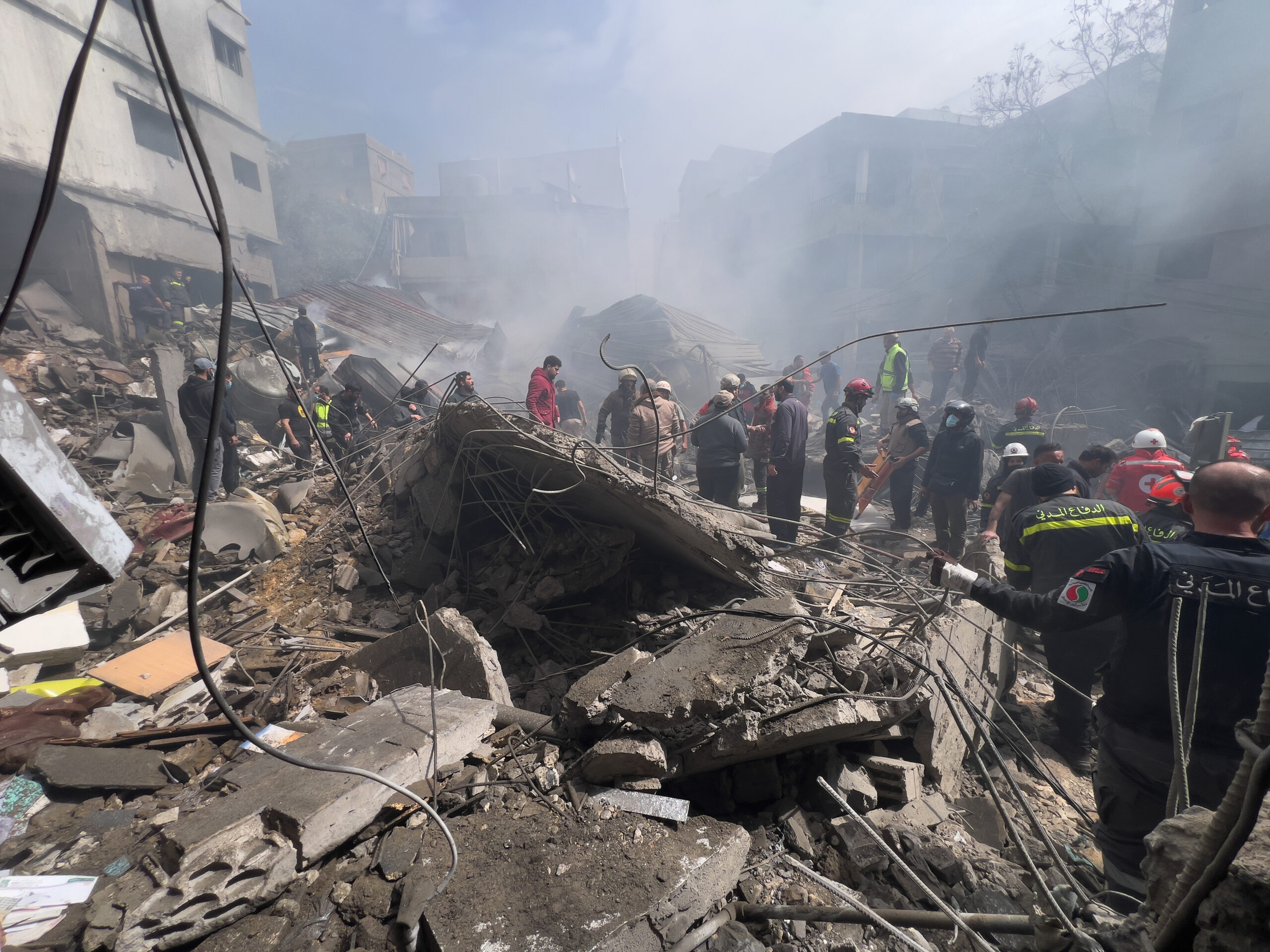
The United States and Iran on Monday were weighing the framework of a plan to end their five‑week-old conflict, even as Tehran pushed back against pressure to swiftly reopen the Strait of Hormuz on the eve of a new ultimatum set by President Donald Trump.
The U.S. leader has threatened to rain “hell” on Tehran if it did not make a deal by the end of Tuesday that would allow traffic to start moving again through the vital route for global energy supplies.
Iran responded to U.S. and Israeli attacks in February by effectively closing Hormuz, a conduit for about a fifth of the world’s oil and natural gas supply. The waterway’s stranglehold on the global economy has proved a powerful Iranian bargaining chip and on Monday it showed reluctance to relinquish it too easily.
A senior Iranian official told Reuters that Iran will not reopen the Strait as part of a temporary ceasefire, nor would it accept deadlines or pressure to reach a deal. Washington was not ready for a permanent ceasefire, the official said.
The Pakistani-brokered plan emerged from intense overnight contacts and proposes an immediate ceasefire, followed by talks on a broader peace settlement to be concluded within 15 to 20 days, a source aware of the proposals said on Monday.
Pakistan’s army chief, Field Marshal Asim Munir, was in contact “all night long” with U.S. Vice President JD Vance, special envoy Steve Witkoff and Iranian Foreign Minister Abbas Araqchi, the source said.
Iran’s foreign ministry spokesperson Esmaeil Baghaei said on Monday Tehran had formulated positions and demands based on its interests and communicated them through intermediaries.
Baghaei told a press conference details of the response would be announced in due time, but added negotiations were “incompatible with ultimatums and threats to commit war crimes.”
Iran’s demands “should not be interpreted as a sign of compromise, but rather as a reflection of its confidence in defending its positions,” Baghaei said, adding that earlier U.S. demands, such as a 15-point plan, were rejected as “excessive.”
Ceasefire Proposal ‘One of Many Ideas’
Trump will speak about the ceasefire proposal at a press conference at 1 p.m. ET (1800 GMT), a White House official told Reuters.
“This is one of many ideas, and (Trump) has not signed off on it. Operation Epic Fury continues,” they said, referring to the U.S. name for the operation against Iran.
Brent crude futures had fallen by 36 cents to $108.67 a barrel by 1222 GMT as investors assessed ceasefire prospects.
In a post laden with expletives on his Truth Social platform on Sunday, Trump threatened further strikes on Iranian energy and transport infrastructure if Iran failed to make a deal and reopen the Strait by Tuesday. In a follow-up post he gave a more precise deadline: “Tuesday, 8:00 P.M. Eastern Time! (Wednesday 0000 GMT)”
Anwar Gargash, an adviser to the president of the United Arab Emirates, said any settlement must guarantee access through Hormuz. He warned that a deal that failed to rein in Iran’s nuclear program and its missiles and drones would pave the way for “a more dangerous, more volatile Middle East”.
Fresh aerial strikes were reported across the region on Monday, more than five weeks since the U.S. and Israel began pounding Iran in a war that has killed thousands and damaged economies by sending oil prices surging.
Iranian state media said the Revolutionary Guards’ intelligence chief, Majid Khademi, has died. Israel on Monday claimed responsibility for his death.
A U.S.-Israeli attack hit the data center at Sharif University of Technology in Tehran, damaging infrastructure underpinning the country’s national artificial intelligence platform and thousands of other services, Fars News Agency said on Sunday.
Israel Vows to Destroy Iran’s Infrastructure
Israeli Defence Minister Israel Katz in a statement issued on Monday threatened to destroy Iran’s infrastructure and hunt down its leaders “one by one.”
Iran said on Monday two of its petrochemical complexes were attacked.
Emergency and firefighting teams brought a blaze under control at the South Pars complex in Asaluyeh, Iran’s National Petrochemical Company said. No casualties were reported.
The complex’s power supply was cut off after two companies supplying it with electricity, water and oxygen were attacked, Tasnim news agency said.
An Israeli attack in mid-March on the South Pars gas field that Iran shares with Qatar prompted an escalation in the war, with Iran striking energy targets across the Middle East.
A fire at the Marvdasht petrochemical complex was controlled after an attack by the U.S. and Israel, state media said.
Trump has repeatedly warned Iran he could expand U.S. strikes to include civilian infrastructure, such as power plants and bridges.
Experts say such attacks could constitute war crimes, but the International Criminal Court lacks jurisdiction because the countries involved are not members of the court.
The Geneva Conventions say that parties involved in military conflict must distinguish between “civilian objects and military objectives,” and that attacks on civilian objects are forbidden.
Iran Continues to Fight Back
Iranian weekend strikes on petrochemical facilities and an Israeli-linked vessel in Kuwait, Bahrain and the UAE underscored the country’s ability to fight back despite Trump’s repeated claims to have knocked out its missile and drone capabilities.
About 3,540 people have been killed in Iran in the war, including at least 244 children, said U.S.-based rights group HRANA.
At least four Israelis were killed in a missile attack on a residential building in Haifa in northern Israel overnight, Israeli emergency service MDA said on Monday, bringing the total number of Israeli civilian fatalities from Iranian and Hezbollah attacks to 23.
Israel has also invaded southern Lebanon and struck Beirut in a fight against Iran-backed Hezbollah militants that has become the most violent spillover of the war on Iran.
Lebanon’s heavy casualties include 1,461 killed, including at least 124 children, Lebanese authorities say.
Thirteen U.S. service members have died and hundreds of others have been wounded.
Topics USA
Was this article valuable?
Here are more articles you may enjoy.
Facts Only
The U.S. and Iran are negotiating to end a five-week conflict involving the closure of the Strait of Hormuz.
President Donald Trump has set a deadline of Tuesday, 8:00 P.M. Eastern Time, for Iran to reopen the strait or face severe consequences.
Iran closed the Strait of Hormuz in February in response to U.S. and Israeli attacks, disrupting about 20% of global oil and natural gas supply.
A senior Iranian official stated Iran will not reopen the strait as part of a temporary ceasefire or accept deadlines.
Pakistan’s army chief, Field Marshal Asim Munir, facilitated overnight discussions between U.S. and Iranian officials, proposing a ceasefire followed by broader peace talks within 15-20 days.
Iran’s foreign ministry spokesperson, Esmaeil Baghaei, stated negotiations are incompatible with ultimatums and threats.
Iran rejected a U.S. 15-point plan as excessive and framed its demands as non-negotiable.
Fresh airstrikes were reported on Monday, including attacks on Iranian petrochemical complexes and Israeli-linked vessels in Kuwait, Bahrain, and the UAE.
Iranian Revolutionary Guards’ intelligence chief Majid Khademi was killed, with Israel claiming responsibility.
Israeli Defence Minister Israel Katz threatened to destroy Iran’s infrastructure and hunt its leaders.
At least 3,540 people have been killed in Iran, including 244 children, and 23 Israeli civilians have died from Iranian and Hezbollah attacks.
Lebanon has reported 1,461 casualties, including 124 children, due to Israeli strikes against Hezbollah.
Thirteen U.S. service members have died in the conflict.
Executive Summary
Full Take
The strongest version of this narrative frames the conflict as a high-stakes geopolitical standoff where Iran’s control over the Strait of Hormuz serves as a powerful bargaining chip against U.S. and Israeli military pressure. The article credibly presents the escalating tensions, the human cost, and the diplomatic efforts to de-escalate, while acknowledging the complexity of the situation. However, the framing leans toward a U.S.-centric perspective, emphasizing Trump’s ultimatum and Iran’s defiance, which could subtly reinforce a binary "good vs. evil" dynamic. The inclusion of casualty figures and regional spillover effects adds necessary context, but the lack of deeper historical or geopolitical analysis risks oversimplifying the conflict’s roots.
Patterns detected: ARC-0024 Ambiguity (e.g., vague references to "U.S. and Israeli attacks" without specifying prior provocations), ARC-0043 Motte-and-Bailey (Iran’s insistence on negotiations without pressure while maintaining military leverage).
The root cause of this narrative is the long-standing U.S.-Iran rivalry, exacerbated by regional proxy conflicts and competing interests in energy security. The unstated assumption is that military pressure can force Iran into compliance, a paradigm that echoes Cold War-era brinkmanship. The implications for human agency are dire: civilians bear the brunt of the conflict, while leaders engage in high-stakes negotiations with little accountability. The second-order consequences include further destabilization of the Middle East, potential energy market shocks, and the normalization of attacks on civilian infrastructure.
Bridge questions: How might Iran’s domestic politics influence its negotiating stance? What role do regional actors like Pakistan and the UAE play in mediating or escalating the conflict? Would a ceasefire address the underlying grievances, or merely delay further violence?
Counterstrike scan: A coordinated influence campaign would amplify Trump’s ultimatum as a show of strength while portraying Iran as an irrational aggressor. The article partially aligns with this pattern by emphasizing Iran’s defiance and the U.S. military operation’s name ("Operation Epic Fury"). However, the inclusion of Iranian perspectives and casualty figures mitigates outright propaganda, suggesting a more balanced, if still U.S.-leaning, narrative.
Sentinel — Human
The analyzed article appears to be written by a human journalist, as indicated by its stylistic features, coherence, and the absence of coordinated synthetic production signals.