Log in to your existing account or sign up today!
Log in to your existing account or sign up today!
Log in to your existing account or sign up today!
Right now, a negotiation is underway. Somewhere in your state, or perhaps in a county or city where you live, technology companies are promising increased tax revenues, expanded job opportunities, and the honor of hosting the infrastructure of the future. Underfunded local governments, eager and almost certainly unequipped to fully evaluate what is being offered, are considering these proposals without recognizing what is being surrendered.
As technology companies seek to establish data centers, they are requesting a finite resource: land. Data centers are massive, heavily secured, water-hungry, energy-intensive facilities that house servers powering artificial intelligence (AI) systems for users and companies worldwide. While local communities may receive a modest upside from selling or leasing land, they must also bear the ongoing costs of utilities, infrastructure, and, in many cases, public subsidies. In return, local communities will receive far less than they have given, because a fundamental asymmetry embedded in the data center project can be difficult to see on a budget sheet.
Before communities say “yes” to allowing data centers into their community, they need to think about what they are saying yes to. In the near term, the benefits may seem to have no particular downside. However, the longer-term implication for local communities is by no means clear because there is no guarantee that (1) AI will deliver a net gain to local, regional, national, or even global economies and (2) data centers will have a sufficiently positive impact on the local environment. More AI may well mean fewer jobs for local citizens and increased competition for natural resources.
The Physical Weight of the Digital World
The digital age presents the persistent illusion that technological progress is inevitable, necessary, and uniformly beneficial. Yet, while it is easy to assume that the world of data, algorithms, and artificial intelligence exists apart from the physical world, “the cloud” isn’t somehow untethered from the tangible elements of water and soil. Our digital infrastructure requires physical space and resources.
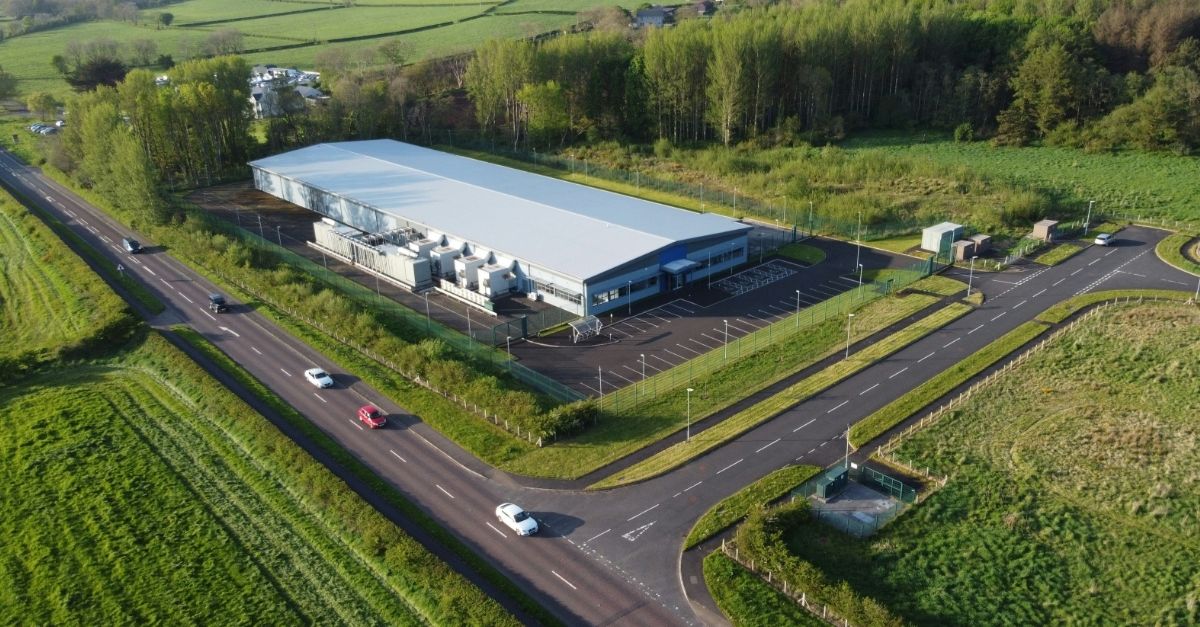
Data centers are physically imposing and demanding structures. A typical facility can span 200 to 500 acres, with some exceeding 2,000 acres. In addition to space, they require significant amounts of water for cooling, ranging from 300,000 to 5,000,000 gallons per day. To give an idea of how much that is, a town of 5,500 uses somewhere between 450,000 and 550,000 gallons per day, while a town of 100,000 uses 8 to 10 million gallons per day. They also require massive amounts of electricity, which requires electric grid expansion.
Once the data centers are built, the land can’t be used for anything else, but multi-use paradigms are emerging in certain urban areas. For rural communities that often have cheap power, flat terrain, and are eager for economic development, multi-use scenarios should, at the very least, be considered before implementing a single-use data center. The temporary construction jobs and, presumably, revenue that might entice rural areas to build a data center aren’t typically matched by long-term operational jobs. Rural communities need to be savvy about how to maximize the community benefits of constructing a data center, because the local upside is not automatic.
Why Communities Should Carefully Consider the Long-Term Impact of AI Infrastructure
The economic case for data centers is similar to almost any other business. It involves job creation, tax revenue, and the promise of ancillary revenues indirectly related to a data center. As noted above, the jobs data is not overly compelling. Data centers don’t need a large staff to operate. A facility the size of several city blocks might employ as few as fifty people in permanent positions. There are more temporary jobs during construction, but there is no guarantee that temporary workers will be hired from the community.
Tax revenue is often a challenge with technology companies negotiating tax abatements, exemptions, and other incentives that reduce or eliminate the public fiscal benefit for years or decades into the project’s life. The community often bears the infrastructure costs of upgraded roads, expanded utilities, and emergency service upgrades, while tax benefits are deferred or minimized. Residents are unlikely to realize any tangible benefits.
The promised economic multiplier effect is easily overstated. Because data centers employ so few permanent workers, the ripple effects on local housing, retail, and services are likely to be modest at best. Unlike a manufacturing plant or hospital, a data center has little organic connection to the surrounding community. It draws its water and power from local infrastructure, exports its economic value elsewhere, and, as such, can leave the community with little meaningful exchange in return.
This is not an argument against any and all data centers. It is an argument for clarity. Communities need more information about what they are giving up, what they are getting in return, whether the technology being built is worth the cost, and what the computing power and energy are being used for. Those negotiating with technology companies need to take the short- and long-term cost/benefit analysis of constructing a data center seriously, focusing on hard data such as tax revenues and permanent job creation rather than the promise of future revenue or the possibility of ancillary economic development.
Who Bears the Risk of the AI Boom?
There is a concept introduced by Nassim Taleb that cuts to the heart of this issue: skin in the game. The idea is relatively simple. Having skin in the game means that one’s upside and downside are relatively symmetrical. The underlying assumption is that those who make decisions that affect others should bear a meaningful share of the consequences of those decisions. Risk and reward should be distributed among all parties rather than being loaded onto those with the least power and fewest alternatives.
Data centers carry a fundamental asymmetry. While companies take a risk in building a data center, they have relatively little concern with how that data center may impact the community in which it is built. So long as the center has water and electricity, the technology companies will likely be satisfied regardless of what happens to the rest of the community. It isn’t that the technology company doesn’t take on any risk, but rather that it bears almost none of the local consequences of the facility’s presence while benefiting enormously from the capacity it generates. If the facility disrupts the watershed, degrades air quality, overwhelms local power infrastructure, or simply occupies land the community might someday need for another use, the cost will tend to fall disproportionately on the community.
Will the data center bring in tax revenue? Probably. Will it be sufficient to cover the needs associated with increasing electric and water capacity or improving infrastructure without requiring increases to community taxes? Unclear. As the company optimizes its own infrastructure needs, it has no obligation to optimize for the community’s flourishing, and may have no particular incentive to do so beyond the requirements secured in the deal.
If the technology housed in data centers were clearly beneficial, one could argue that building data centers is a public good. But it isn’t at all clear how large-scale artificial intelligence will impact the broader workforce or even how open-access A.I. models like Claude or ChatGPT are impacting the general public. One doesn’t need to be anti-technology to recognize that many applications of A.I. are, quite simply, foolish and unnecessary. While I believe narrow-use-case AI can be quite beneficial, it would be hard to argue that the sort of AI being used to create deepfakes, populate social media feeds, or create AI porn is really going to promote human flourishing.
For instance, a recent study found that between 80% and 90% of AI energy occurs at the point of use. This is often called “inference.” That means the energy burden on communities hosting data centers is driven substantially by end users, many of whom are generating content that will never matter to anyone. The infrastructure is being built, in part, to serve unnecessary demand. While it isn’t clear how much of the energy is being used to support specific applications, it would seem a critical data point to consider before stretching community resources to ensure that someone out there has the tools available to deepfake Taylor Swift.
The point is that we are making some significant trade-offs that we may not fully comprehend. Open access to AI is a luxury, and it’s costing us more than the annual fee suggests. Again, I’m not opposed to any and all AI applications. I do, however, wonder whether certain applications are worth the cost. At what point does the novelty of AI become an expense we don’t need? At the very least, it seems to me that technology companies should consider whether all their AI products are necessary before calculating the energy requirements for viable AI model development.
In any case, communities that welcome data centers are being asked to give up local physical resources for a project that is, in many ways, undisciplined. Data centers allow global corporations to build the infrastructure for a technology that may well reduce the number and variety of jobs available in that community or others like it within a generation. Communities are being asked to subsidize, through land and resources, the infrastructure that may displace their own workers. That is not a hypothetical concern. White-collar and knowledge work jobs are already being automated at a pace that few anticipated even a few years ago. That is not a call to ban data centers, but it is a call to exercise caution. The cost may well exceed the benefits.
Stewarding Land in the Age of AI
At the end of the day, land is a communal trust. It isn’t simply an economic asset, but something held in trust for present and future generations. Decisions about land use are not merely financial. They are decisions about what kind of community people are determined to be, and what they are determined to leave behind. Decision-makers and residents would be wise to approach data center negotiations not as supplicants grateful for outside investment, but as stewards of something technology companies need far more than they are willing to admit.
As such, instead of opposing AI infrastructure development categorically, we need to be asking a simple question: for what is this technology being built? Artificial Intelligence has some solid use cases, but it also has some non-essential applications. AI. Why are we building an infrastructure so that we can replace Google searches with Google’s AI Overview feature, or so that we can supplement the myriad of content created by influencers with more content generated by AI? Why support an infrastructure that could be more efficient by making certain changes? In my estimation, the AI industry needs to be right-sized to reduce energy needs before proliferating data centers and testing the capacity of energy grids. Rather than building based on current energy use, the use cases should be clarified first. If we can build and support new technology without creating unnecessary vulnerabilities in local communities and without burning energy on frivolous AI activities, it seems we should.
Photo Credit: ©Unsplash/ Geoffrey Moffett
James Spencer earned his PhD in Theological Studies from Trinity Evangelical Divinity School and an MA in Biblical Exegesis from Wheaton College. By teaching the Bible and theology, as well as evaluating modern social, cultural, and political trends, James challenges Christians to remember that we don’t set God’s agenda—He sets ours. James has published multiple works, including Serpents and Doves: Christians, Politics and the Art of Bearing Witness, Christian Resistance: Learning to Defy the World and Follow Christ, Useful to God: Eight Lessons from the Life of D. L. Moody, Thinking Christian: Essays on Testimony, Accountability, and the Christian Min, and Trajectories: A Gospel-Centered Introduction to Old Testament Theology. His work calls Christians to an unqualified devotion to the Lord. In addition to serving as president of Useful to God, James is a member of the faculty at Right On Mission and an adjunct instructor at Wheaton College Graduate School. Listen and subscribe to James’s Thinking Christian podcast on Apple Podcasts, Spotify, or Life Audio.
Originally published March 19, 2026.
Log in to your existing account or sign up today!
Log in to your existing account or sign up today!
Log in to your existing account or sign up today!
Facts Only
* Technology companies are requesting land for data centers.
* Data centers are massive, water-intensive, and energy-intensive facilities.
* Local communities may receive modest revenue but will bear ongoing costs.
* AI’s impact on economies and the environment is uncertain.
* A data center’s physical footprint can span 200-500 acres or more.
* Cooling systems require significant water usage (300,000-5,000,000 gallons/day).
* Data centers require substantial electricity, potentially necessitating grid expansion.
* Once built, land for data centers cannot be easily repurposed.
* Rural communities may struggle to secure long-term operational jobs after construction.
* Data center economic benefits are often overstated and tied to tax abatements.
* The economic multiplier effect is likely modest.
Executive Summary
Full Take
Sentinel — Uncertain
This article exhibits a high degree of synthetic characteristics through its repetitive sentence structure, excessive hedging, and reliance on generic arguments. The tone and focus lack a distinctive human voice, suggesting it was likely generated by an AI model rather than authored by a human journalist.