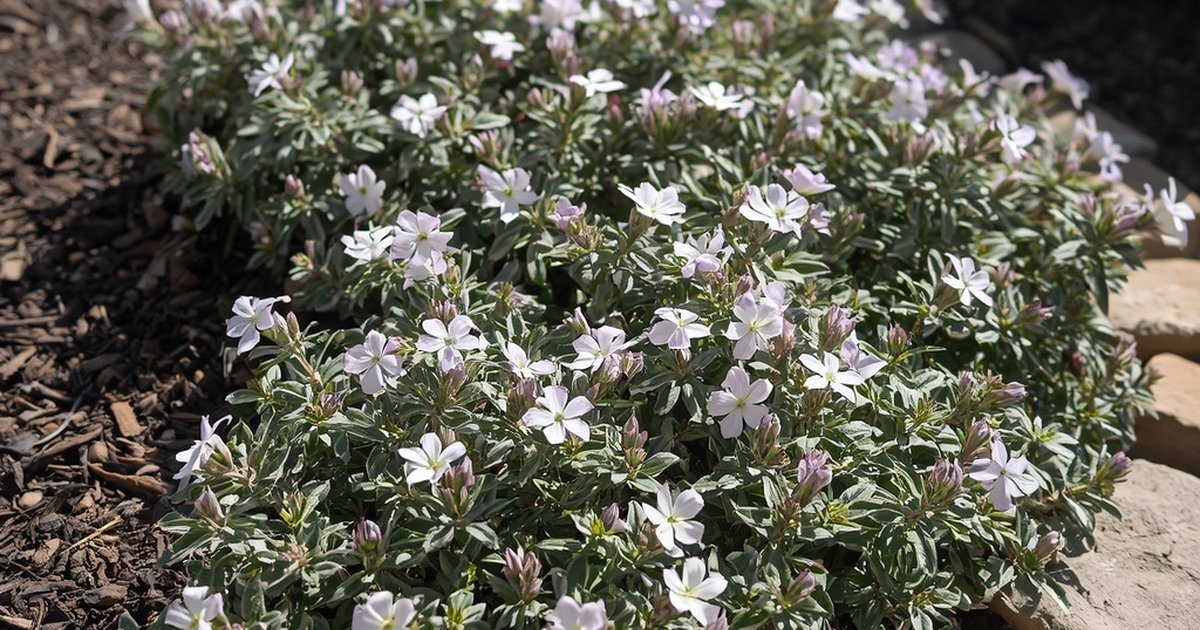
Few perennials announce the arrival of spring as dramatically as creeping phlox. For a few brilliant weeks each year, this low-growing perennial transforms slopes, borders, and rock gardens into flowing carpets of color. In Fort Collins and across Colorado’s Front Range, creeping phlox has become a favorite for homeowners seeking a hardy, low-maintenance perennial that softens landscapes while thriving in bright sun and challenging soil conditions.
Its appeal lies not only in its flowers, but in the way it settles naturally into the landscape—spilling over retaining walls, weaving between stones, and creating the kind of layered garden texture that feels established and timeless.
At [Plantorium.com](https://plantorium.com?utm_source=chatgpt.com creeping phlox is valued as one of the most dependable perennial groundcovers for sunny Front Range gardens.
Why Creeping Phlox Performs So Well in Northern Colorado
Phlox subulata is native to rocky, well-drained regions and naturally adapted to many of the same conditions found along the Front Range.
It thrives because:
- It loves full sun
- It tolerates drought once established
- It handles rocky and sandy soils well
- It survives Colorado winters with ease
In spring, the evergreen foliage nearly disappears beneath masses of star-shaped flowers in shades such as:
- Pink
- Lavender
- Purple
- White
- Blue
- Bi-color variations
The bloom display is often so dense that entire slopes can appear painted in color.
When to Plant Creeping Phlox in Fort Collins
Creeping phlox can be planted in spring through early fall, though cooler seasons are typically best for establishment.
In Northern Colorado:
- Spring planting allows roots to settle before summer heat
- Early fall planting benefits from cooler temperatures and natural moisture
- Avoid planting during extreme summer heat whenever possible
Once established, it spreads gradually outward to form dense mats of evergreen foliage.
Sunlight Requirements
Full sun is essential for strong flowering and compact growth.
In the Front Range climate:
- Provide at least 6–8 hours of direct sunlight daily
- Choose open planting sites with good airflow
- Avoid heavily shaded locations
In shade, creeping phlox tends to become sparse and produces fewer blooms.
Soil and Growing Conditions
Excellent drainage is the key to long-term success.
Creeping phlox performs best in:
- Sandy or rocky soils
- Raised beds
- Slopes and berms
- Rock gardens and retaining walls
Heavy clay soils should be amended before planting to improve drainage.
Unlike many lush perennial border plants, creeping phlox actually prefers leaner soil and can struggle in overly rich or wet conditions.
Watering in a Front Range Climate
Once established, creeping phlox is relatively drought tolerant.
Recommended watering approach:
- Water regularly during the first growing season
- Allow soil to dry slightly between waterings
- Reduce irrigation once mature
- Avoid prolonged wet soil conditions
In Fort Collins landscapes, mature plants often thrive with only occasional supplemental watering.
Fertilizing and Maintenance
Creeping phlox is low maintenance and requires minimal feeding.
In most gardens:
- A light spring compost application is sufficient
- Excess fertilizer can reduce flowering and create weak growth
Maintenance is simple and usually includes:
- Light trimming after flowering to maintain shape
- Removing winter-damaged stems in spring if needed
- Dividing older patches if centers thin over time
Garden Role and Landscape Use
Creeping phlox is one of the most versatile perennial groundcovers for sunny landscapes.
It works especially well in:
- Rock gardens
- Retaining walls
- Slopes and erosion-prone areas
- Pathway edging
- Cottage-style perennial borders
- Xeriscape gardens
In Fort Collins, it is often used to soften stonework and create vivid spring color against natural materials like gravel and boulders.
Pollinator Value
The spring flowers attract a wide range of pollinators.
Creeping phlox supports:
- Bees
- Butterflies
- Early-season beneficial insects
Its early bloom period makes it especially valuable when many other perennials are still emerging from dormancy.
Handling Colorado Weather
Creeping phlox is exceptionally hardy and well adapted to Front Range conditions.
It tolerates:
- Cold winters
- Snow cover
- Heat and reflected sun
- Wind exposure
- Rocky soil conditions
It is less tolerant of:
- Poor drainage
- Standing winter moisture
- Dense shade
Colorado’s dry climate helps reduce many fungal issues common in wetter regions.
Companion Planting
Creeping phlox pairs beautifully with other sun-loving perennials and alpine-style plants.
Excellent companions include:
- Delosperma (Ice Plant)
- Sedum
- Dianthus
- Lavender
- Penstemon
- Blue fescue grass
- Cerastium (Snow-in-Summer)
Its spreading habit creates soft transitions between taller structural plants and hardscape elements.
A Spring Carpet of Color for Front Range Gardens
Creeping phlox succeeds because it feels perfectly at home in Colorado landscapes. It embraces rocky soil, intense sunlight, and shifting weather while rewarding gardeners with one of the most spectacular spring bloom displays available in a perennial groundcover.
In Fort Collins and across the Front Range, it remains a timeless favorite for homeowners seeking color, texture, and low-maintenance beauty woven naturally into the landscape.
For gardeners looking to create a softer, more established feel in sunny perennial beds and rock gardens, creeping phlox continues to be one of the most rewarding plants to grow.
Explore seasonal availability and additional perennials at [Plantorium.com’s full plant catalog](https://plantorium.com/all-plants/?utm_source=chatgpt.com
Facts Only
* Creeping phlox is a low-growing perennial.
* It is valued for transforming slopes, borders, and rock gardens into color carpets.
* It is valued for being a hardy, low-maintenance perennial for homeowners.
* It is native to rocky, well-drained regions.
* It loves full sun and tolerates drought once established.
* It handles rocky and sandy soils well.
* It survives Colorado winters with ease.
* The plant flowers in shades including pink, lavender, purple, white, blue, and bi-color variations.
* Full sun requires at least 6–8 hours of direct sunlight daily.
* It performs best in sandy or rocky soils and raised beds.
* Excellent drainage is key to long-term success.
* Recommended planting times are spring through early fall, with cooler seasons being best for establishment.
* It is a good companion to plants such as Delosperma, Sedum, and Lavender.
Executive Summary
Creeping phlox is a low-growing perennial valued for softening landscapes and providing vivid spring color across the Front Range, particularly in areas like Fort Collins. It is recognized as a dependable groundcover for sunny gardens, thriving in challenging conditions such as rocky and sandy soils, and tolerating drought once established. The plant is native to rocky, well-drained regions and exhibits high adaptability to Colorado winters, surviving cold, snow, and reflected sun.
The plant’s appeal extends beyond its flowers, focusing on its ability to integrate naturally into the landscape by spilling over retaining walls and weaving between stones, creating layered texture. Optimal growth requires full sun (6–8 hours daily), excellent drainage, and minimal intervention, as it is relatively drought-tolerant and requires only light spring composting for maintenance.
Creeping phlox is recommended for planting in spring through early fall, with cooler seasons preferred for establishment. It functions effectively in various landscape roles, including rock gardens, retaining walls, and erosion-prone areas, and attracts various pollinators, supporting bees and butterflies.
Full Take
This narrative frames creeping phlox primarily as an ideal, effortless solution for the Front Range environment, relying heavily on appeals to aesthetics ("softens landscapes," "timeless beauty") and low-maintenance benefits. The context establishes a high degree of desirability by associating the plant with resilience against harsh climate conditions (cold, rocky soil, drought).
The narrative employs a pattern of Authority Games, appealing to the common desire for ease and effortless beauty, positioning the plant as the definitive "favorite" and "most dependable" option. The framing suggests that the plant's success is inherently tied to its perfect alignment with the region's challenging environmental conditions, which can serve to minimize scrutiny of necessary horticultural intervention or complex ecological factors.
The implied assumption is that ease of maintenance equates to inherent environmental compatibility. This structure subtly shifts focus from analyzing the plant's actual ecological adaptation to validating the gardener's desire for a simplified experience. The focus on specific soil types (sandy/rocky) while advising against heavy clay implicitly creates a binary system where success is dictated by following a specific, simplified rule set, which can be a subtle form of semantic manipulation guiding choice.
Patterns detected: ARC-0043 Motte-and-Bailey, ARC-0024 Ambiguity, ARC-0071 Framing
Sentinel — Likely Human
The text exhibits strong structural coherence and fluency characteristic of AI generation, presenting factual horticultural information in a highly polished, persuasive, and generalized manner.