Facts Only
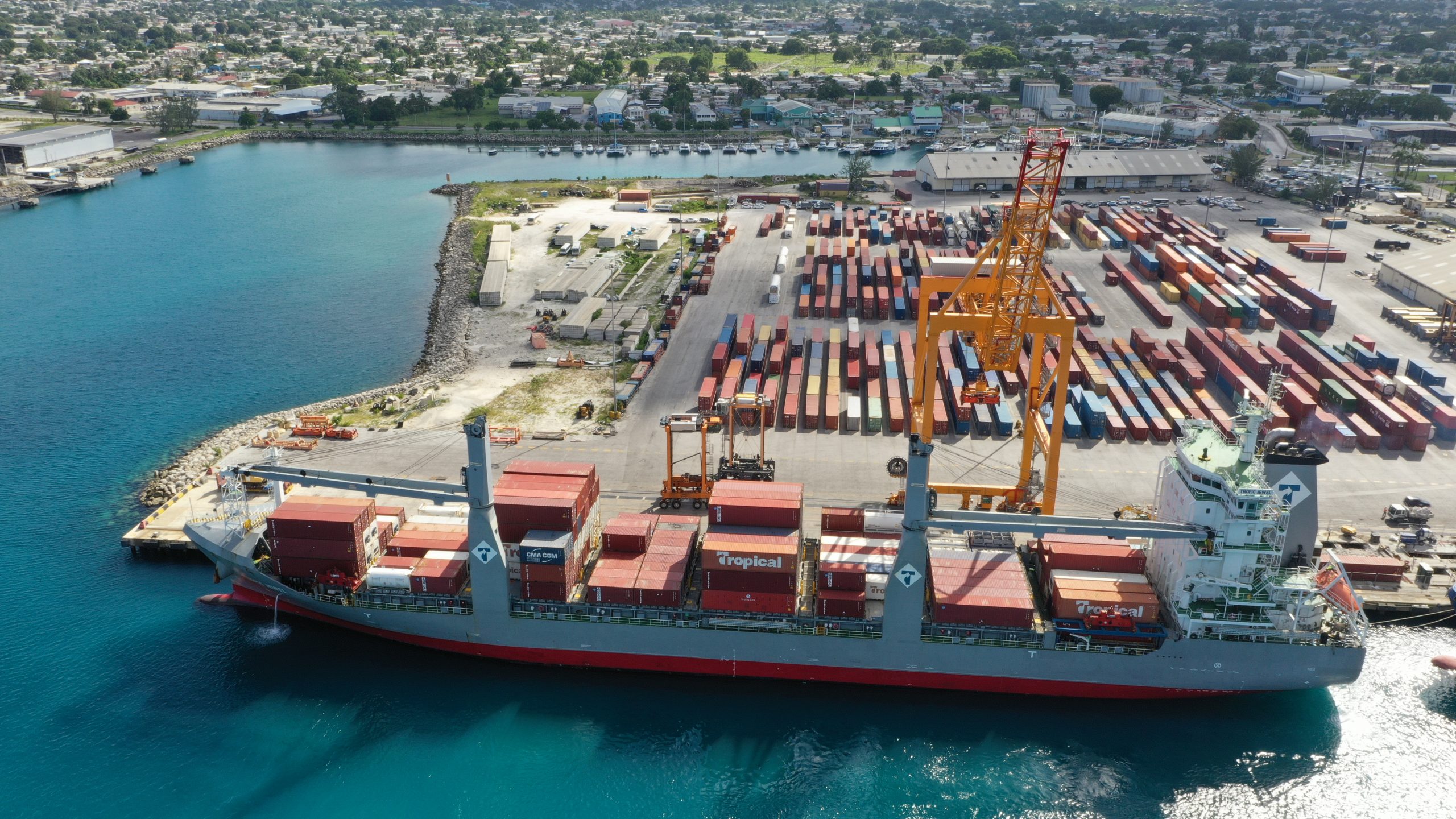
Barbados Port Inc. (BPI) won the CIP Maritime Award of the Americas for Digital Transformation.
The award was administered by the Secretariat of the Inter-American Committee on Ports (CIP) of the Organization of American States (OAS).
BPI was recognized for developing and implementing a Port Community System (PCS).
The PCS was designed in-house by BPI’s Digital Innovation and Development team.
The system became operational at the start of 2025.
The PCS optimizes port operations through improved data exchange and coordination among stakeholders.
It serves as a single access point for cargo tracking, vessel tracking, digital processing of manifests, delivery orders, and electronic payments.
The system includes a national Maritime Single Window for electronic information exchange between ships and ports.
A Trade Information Portal provides trade-related information to support compliance with national and international requirements.
Prior to the PCS, approximately 52 paper documents were required per transaction by customs, immigration, port health, the port, and vessel agents.
Online payments now account for over 80% of all financial transactions at BPI.
The 12th edition of the CIP Maritime Award received 30 entries from 11 countries.
Winners were selected based on verifiable indicators, exceptional performance, and achieved objectives.
Executive Summary
Barbados Port Inc. (BPI) has been awarded the CIP Maritime Award of the Americas for Digital Transformation by the Organization of American States (OAS). The recognition highlights BPI’s development and implementation of a Port Community System (PCS), a digital platform launched in early 2025 that streamlines port operations by enhancing data exchange and coordination among stakeholders. The system consolidates functions like cargo and vessel tracking, digital manifest processing, and electronic payments, significantly reducing paperwork—previously requiring 52 documents per transaction—and increasing online payments to over 80% of transactions. BPI’s CEO, David Jean-Marie, emphasized the system’s role in improving trade facilitation, operational efficiency, and supply chain transparency, positioning Barbados as a more competitive player in the Caribbean maritime sector. The award, part of the OAS’s 12th edition themed "Recognizing Outstanding Port Management," evaluated 30 entries from 11 countries, selecting winners based on verifiable performance and innovation. BPI continues to refine the PCS and other digital tools to further enhance service delivery.
The initiative reflects broader trends in maritime digitalization, where ports are leveraging technology to reduce bureaucratic inefficiencies and align with international trade standards. While the award underscores BPI’s leadership in the region, the long-term impact on trade volumes, cost savings, and environmental sustainability remains to be seen. The system’s success may also serve as a model for other Caribbean ports facing similar logistical challenges.
Full Take
The strongest version of this narrative is one of progress and innovation: Barbados Port Inc. has successfully modernized its operations through digital transformation, reducing inefficiencies and positioning itself as a regional leader in maritime trade facilitation. The Port Community System (PCS) is a tangible example of how technology can streamline bureaucratic processes, cut costs, and improve transparency—key goals for any port aiming to enhance competitiveness. The OAS award lends credibility to BPI’s efforts, signaling to stakeholders and competitors that digitalization is not just a trend but a necessity for sustainable port management. The shift from 52 paper documents to over 80% online transactions is a compelling metric, suggesting real-world impact beyond mere rhetoric.
However, the narrative also invites scrutiny of the broader paradigm driving such digitalization. The assumption that technological solutions alone can resolve systemic inefficiencies in trade and logistics may overlook structural challenges, such as unequal access to digital infrastructure across the Caribbean or the potential for new forms of exclusion (e.g., smaller operators unable to adapt). The focus on "competitiveness" and "efficiency" echoes neoliberal frameworks that prioritize economic metrics over equitable outcomes—who benefits most from these changes? Large shipping companies and multinational traders may gain disproportionately, while local businesses or informal sector workers could face new barriers. Additionally, the long-term sustainability of such systems—including cybersecurity risks and maintenance costs—remains unaddressed in the celebratory framing.
The implications for human agency are mixed. On one hand, the PCS empowers stakeholders with real-time data and reduced red tape, potentially democratizing access to trade information. On the other, it centralizes control within a digital ecosystem managed by BPI, raising questions about data governance and accountability. If this model is replicated regionally, will it reinforce dependencies on specific technological providers or standards? The second-order consequences—such as job displacement due to automation or the environmental impact of increased digital infrastructure—are absent from the discussion.
Bridge questions to consider: How might smaller Caribbean ports, lacking BPI’s resources, adopt similar systems without creating a digital divide? What safeguards are in place to ensure the PCS doesn’t inadvertently marginalize less tech-savvy operators? Would the narrative change if the focus shifted from "award-winning innovation" to the lived experiences of port workers and small traders?
Counterstrike scan: If this were part of a coordinated influence campaign, the playbook might emphasize uncritical praise for digitalization as a panacea, downplaying potential downsides or alternative models (e.g., community-led solutions). The actual content, however, does not exhibit overt manipulation patterns—it presents verifiable achievements without exaggeration or emotional appeals. The framing is institutional, not propagandistic.
Patterns detected: none
Sentinel — Human
The article appears likely to be human-written, with signs of human-like sentence structure and emotional engagement. However, it's important to remember that AI-assisted writing can mimic these characteristics.