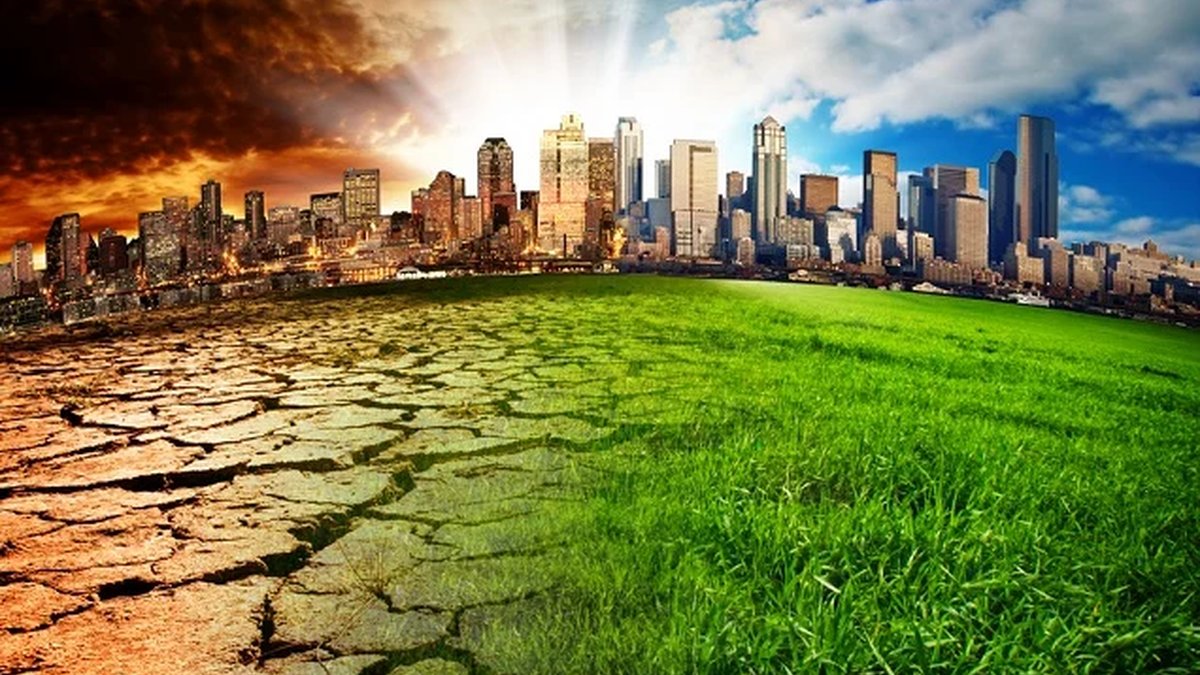
Weather didn’t discriminate this past holiday weekend. Brutal is putting it mildly. Climate change is real and if you don’t believe me, then read Jeff Goodell’s book of several years ago, “The Heat Will Kill You First: Life and Death on a Scorched Planet.”
I am not here to debate climate change issues. All you have to do is look around you, and if you don’t, shame on you. We can leave unreality to 47 and his peeps; he can’t control the weather, at least not yet. And also read Goodell’s book on rising seas. I don’t know which book is scarier.
Learning After Law School
Once you’ve got your law degree, how do you keep your professional skills up to date? Share your perspective in this brief survey, and you may be eligible to win a $250 gift card.
Remember the TV show “The Apprentice” that gave 47 his start? Remember his bombastic sentence? “You’re fired!” 47 must be rubbing his little hands with glee given that the Supreme Court has now validated his right to fire top government officials. In a 6-3 decision, they pooh-poohed the idea that independent agencies are truly independent and thus are subject to termination by whim. (I wonder what the outcry will be when Democrats are free to hire and fire at will. Just asking.) However, the only exception to a president’s free will is that they cannot fire a member of the Federal Reserve. Lisa Cook still has her job as a Fed member while the lawsuit claiming she falsified loan documents wends its way.
And yay for the rare victory that the Supreme Court gave to mail-in ballots. As a California resident of one of the 18 states that allows mail-in ballots, I am delighted. With mail-in ballots, there is absolutely no excuse for not voting. Voting is critical, regardless of who you choose to vote for. Yes, I have my preferences, but the right to vote is something that many other countries do not (and may never) have. Isn’t that what the 250th anniversary was all about? With mail-in ballots, saying that you don’t or didn’t have time to vote is a flimsy excuse, especially in those states that allow time off from work to vote, California being one of them.
Even after 50 years as a practicing lawyer, I am still gobsmacked at how cavalierly counsel can behave in court. Exhibit 1 is the continuing runaround between the DOJ and federal district judge Leonie Brinkema. The court refused to accept the DOJ’s oral representation that it had driven a stake through the heart of the proposed weaponization fund that 47 wanted. The court ordered declarations to that effect be made under penalty of perjury. The DOJ lawyer told the court that “the court’s demands were unnecessary,” aka “pound sand.”
Whoa, if I or just about any other lawyer had so responded, we would have been in the custody of the sheriff forthwith, with time to reconsider how to speak to the court. Judge Brinkema determined that the lawsuit challenging 47’s January slush fund was not moot and scheduled briefing. Any ethical issue here? Discuss.
Schenck Price Competes Smarter With Lexis+ With Protégé
LexisNexis sat down with John Ursin, Managing Partner at Schenck Price, to learn how the firm is using legal AI to strengthen client service and daily legal work.
In a closely watched case here in Los Angeles, 10-2 for acquittal was the result. Remember the devastating Palisades fire of early January 2025? (Not to mention the Eaton fire that devastated communities in the San Gabriel foothills.) One controversial issue in the Palisades fire has been how that fire started. A small fire started on January 1, and LAFD extinguished it. But completely? The young man prosecuted by the DOJ for the Palisades fire doesn’t get to walk away, he’s still in jail, awaiting retrial. With a hung jury that favored acquittal by a large margin, does retrial make sense?
The court did instruct the jury with the Allen charge, sometimes referred to as the “dynamite charge,” which essentially says that no other jury could do a better job of reaching a verdict and ordered them to continue deliberations. But it didn’t work.
The First Assistant US Attorney here in Los Angeles hopes that in the retrial, he will have “better jurors.” Good luck with that. Just because 10 of the jurors didn’t buy the prosecution’s theory of the case does that ipso facto make them bad jurors? I don’t think so. The prosecution still must prove its case beyond a reasonable doubt. Any ethical issue here? Discuss.
So many people lost everything, including lives. It’s ridiculous to say that climate change played no part. Phooey on the claim that next time around the government will have “better jurors.” Given that the DOJ is 47’s lap dog, is that any surprise? Discuss.
Jill Switzer has been an active member of the State Bar of California for over 40 years. She remembers practicing law in a kinder, gentler time. She’s had a diverse legal career, including stints as a deputy district attorney, a solo practice, and several senior in-house gigs. She now mediates full-time, which gives her the opportunity to see dinosaurs, millennials, and those in-between interact — it’s not always civil. You can reach her by email at [email protected].
Facts Only
* The author references Jeff Goodell's book, "The Heat Will Kill You First: Life and Death on a Scorched Planet," regarding climate change.
* The text mentions a 6-3 Supreme Court decision concerning the right to fire top government officials.
* A lawsuit claims Lisa Cook falsified loan documents while she remains a member of the Federal Reserve.
* The author notes that mail-in ballots eliminate excuses for not voting, citing California's ability to allow time off for voting.
* A legal dispute involves the Department of Justice and federal district judge Leonie Brinkema concerning oral representations in a lawsuit.
* A case resulted in a 10-2 acquittal.
* The court instructed a jury with an Allen charge regarding the Palisades fire proceedings.
* Jill Switzer has over 40 years of experience practicing law in California, including roles as a deputy district attorney and in-house counsel.
Executive Summary
Full Take
The narrative juxtaposes existential, large-scale concerns—such as climate change and rising seas—with specific, immediate legal and procedural realities. The pattern involves framing critical public safety issues (like the environment) alongside debates about institutional autonomy, individual rights (voting), and judicial conduct. The shift from macro-level anxiety to micro-level legal maneuvering suggests a method of cognitive sovereignty that emphasizes that systemic fears are often inseparable from localized power dynamics. The discussion regarding the court's handling of testimony related to the weaponization fund reveals an underlying tension between institutional demands and procedural fairness, suggesting that even in high-stakes legal settings, the framework for truth-seeking is contested. Furthermore, the framing of climate change as a matter of objective reality, contrasted with attempts to dismiss it, suggests an underlying resistance to acknowledging systemic influence. The implied implication is that true resilience requires holding attention across scales—from planetary survival to courtroom ethics—rather than focusing solely on one domain.
Patterns detected: ARC-0043 Motte-and-Bailey, ARC-0024 Ambiguity, ARC-0015 Moral Panic
Sentinel — Likely Human
LIKELY_HUMAN (confidence: 0.65)