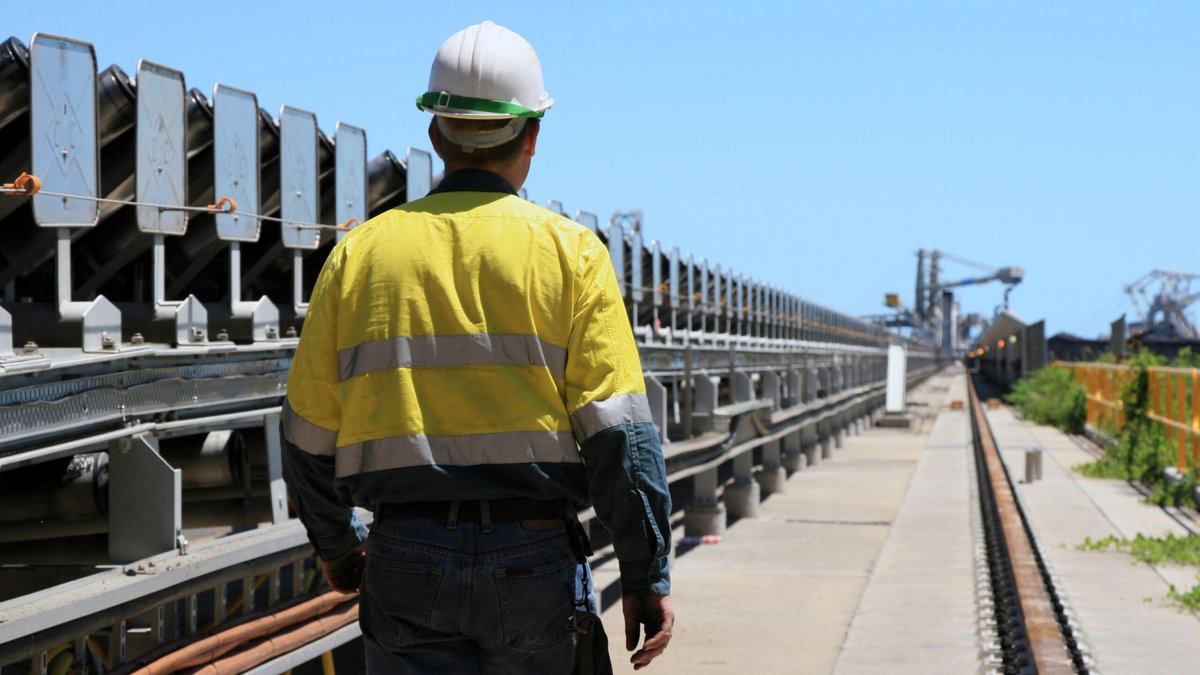
Australia needs to make a choice: build a national critical minerals workforce or rely on foreign talent that is in short supply. The country needs to nurture its own geologists and engineers who can run its mines and processing facilities, ensuring these sites are strategic capabilities instead of stranded assets.
Currently, China not only dominates critical mineral processing but also controls the underlying knowledge base. Its 45 mining engineering programs enrol around 12,000 students a year and graduate 3,000. In comparison, Australia’s mining industry reported a 63 percent skills shortage in 2022, while Adelaide University closed its mining engineering program to new students in 2025.
If Australia is hoping its partners can fill this workforce gap, it will be waiting a long time. Its key ally and driver of critical minerals security, the United States, graduated only 162 mining engineers in 2023. Canada and India face similar constraints.
Even if another country could step in, building a strategic capability without the people to operate it simply transfers the vulnerability. Critical-minerals security requires building a reinforcing system, not just racing to break ground on mines.
To understand this problem, Australia need only look to its experience with AUKUS. Acquiring nuclear-powered submarines without the necessary engineers and operators would deliver a lethal platform that never leaves the port. The same is true of critical minerals – mines and processing facilities without the geologists and engineers to run them are stranded assets, not strategic capabilities.
Fortunately, Australia is positioned to build such a workforce. It can leverage its leading education system, industry training infrastructure and mining sector experience. What is missing, then, is people interested in working in the field.
The problem is perception. Young Australians associate mining with remote work, environmental damage and economic benefits flowing to shareholders rather than communities. Industry-led communications have not shifted this image. Government, industry and academia must work together to demonstrate that working in critical minerals is meaningful, responsible and accessible.
Meaning comes from a sense of purpose. Abstract government strategies and industry statements about integrated supply chains do not change Australian students’ career aspirations. The critical minerals agenda needs to be grounded in practical outcomes that speak to young people’s priorities, such as clean energy. Two thirds of young Australians support the energy transition, but less than half understand that clean energy requires mined resources.
That link should be taught by embedding critical minerals literacy into the curriculum at the high school and university levels, and it should be delivered by trusted academic champions. Clean energy advocates need to include the base components in their narrative, not only the final technology. This approach counters the commercial incentive inherent in industry messaging, making the case credible and reaching students before they make career choices.
The industry must also show young people that it is invested in responsible development. This requires genuine community engagement, not just environmental or social compliance. Australian mining companies operate under some of the world’s most rigorous environmental and social frameworks, but compliance discussed in boardrooms will not change perceptions. It needs to be demonstrated through community participation.
At the project level, mines developed through structured dialogue with communities, in which safeguards are explained and commitments are upheld, proceed faster and are less likely to stall or fail. The same logic applies at the industry level. Mining companies should host university roundtables to present their environmental and social compliance records, answer hard questions from students, and demonstrate that the sector’s commitments extend beyond regulatory filings. This kind of accountability forum does not currently exist at scale in Australia.
As well as improving perception, the industry must increase students’ awareness of career pathways. Currently, nearly half of young Australians do not know what opportunities exist in mining. This could be changed through initiatives such as the Minerals Industry Experience program piloted in 2025 by the Minerals Council of Australia, in which 90 percent of participants expressed intent to pursue a mining career. With more than 500 people applying for only 69 places, the program needs to be expanded.
Shifting perceptions and building programs such as the Minerals Industry Experience will take time to translate into increased enrolments. Until then, the government must provide financial support to university geology departments facing closure. This may be expensive, but there is no point spending A$1.2 billion on a strategic reserve without nurturing the personnel needed to run it. When Macquarie University and the University of Newcastle closed their earth science departments in 2021, they lost institutional capacity that will take investment and decades to rebuild. Adelaide University’s recent closure of its mining engineering program only compounds this.
Australia has some of the world’s largest critical mineral reserves. These, combined with the country’s universities and training infrastructure, make it the natural hub for delivering quality education on domestic and allied critical minerals industries and producing a top workforce. But these pathways must be designed carefully, and it must be built now. If successful, Australia could become the principal supplier of critical minerals talent – capturing revenue, generating research and securing the strategic value of owning the pipeline, not just the resource.
Correction: an earlier version of this article misstated when the Minerals Industry Experience program was piloted. It was in 2025.
Facts Only
* Australia needs to choose between building a national critical minerals workforce or relying on foreign talent.
* China dominates critical mineral processing and controls the underlying knowledge base.
* China's 45 mining engineering programs enroll approximately 12,000 students annually and graduate 3,000.
* The Australian mining industry reported a 63 percent skills shortage in 2022.
* Adelaide University closed its mining engineering program to new students in 2025.
* The United States graduated only 162 mining engineers in 2023.
* Canada and India face similar constraints regarding the workforce.
* Building strategic capabilities requires personnel to operate mines and processing facilities.
* Acquiring nuclear-powered submarines requires necessary engineers and operators.
* Young Australians associate mining with remote work, environmental damage, and shareholder benefits.
* Two-thirds of young Australians support the energy transition but less than half understand the required mined resources.
Executive Summary
Full Take
Sentinel — Human
The text is highly structured, weaving together geopolitical strategy with educational sociology and industry practice to build a persuasive case for domestic workforce development, consistent with expert analysis.