Sign up for the Slatest to get the most insightful analysis, criticism, and advice out there, delivered to your inbox daily.
Democrats’ brief experiment in letting their hair down and nominating a Senate candidate who makes them feel edgy has all but concluded.
After a well-corroborated Politico story in which an ex claimed that Graham Platner sexually assaulted her, the party has seen enough. Democrats ranging from Chuck Schumer to Zohran Mamdani have called on Platner to drop out. Prominent early endorsers like Sens. Elizabeth Warren and Bernie Sanders have withdrawn their support and encouraged him to step aside. The national Democratic Party said it won’t invest in the race so long as he’s the nominee, and the Maine Democratic Party wants him out too. The bottom has fallen out.
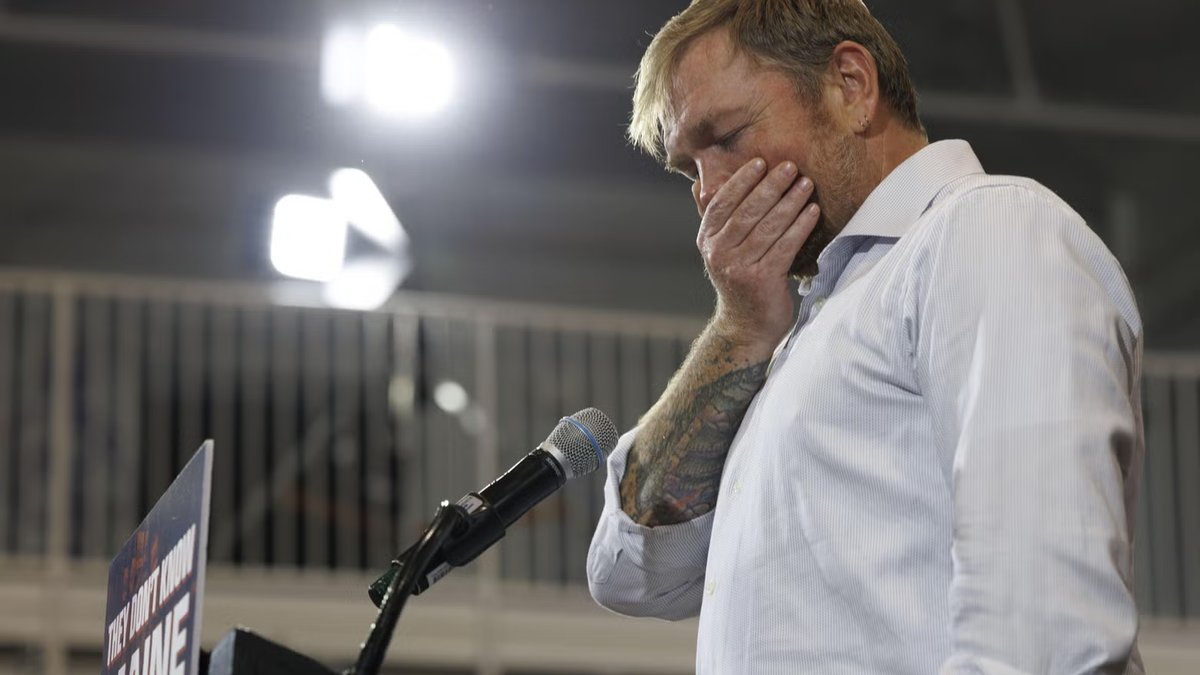
While Platner—whose lead in the race had evaporated after a previous wave of stories about his relationship history—has not yet relented, he has suggested that he’s reassessing his run. The Platner campaign told Politico on Monday that he “vigorously denies” the new allegation. But in a video statement, Platner said the campaign would be “taking the time to reflect on the best path forward.”
If he drops out, where do things go from here? Who will run against Sen. Susan Collins this November?
Maine law would allow Democrats to field a new candidate by July 27 if Platner drops out by Monday, July 13. The mechanics of that replacement process, though, are vague. The law merely allows that “a political committee may make a replacement nomination” without specifying a process it must follow. In other words, any process—or lack thereof—about who takes the Democratic ballot line would be up to the Maine Democratic Party.
No one, including the Maine Democratic Party, knows what kind of selection process the group might settle on if Platner drops out. But everyone remembers that the previous time a dead candidate walking dropped out after winning the primary, endorsed a successor, and saw that successor get immediately ratified without further input from voters, Donald Trump was elected president. In other words, with the 2024 presidential race still stinging, the party may be inclined to pursue something conceptually akin to the lightning-fast “miniprimary” that 2024 Democrats never held after President Joe Biden dropped out.
One idea in that vein was put forward by Nirav Shah, an epidemiologist and former Centers for Disease Control and Prevention official who was a runner-up in Maine’s recent Democratic gubernatorial primary. “Anyone running for this nomination should agree to at least one televised debate and hold multiple public town halls across every corner of the state,” Shah posted Tuesday. “I am committed to doing that, if I run.”
Shah had a full-speed campaign operation just a few weeks ago, so he wouldn’t be starting from scratch. That goes for the many other Democratic gubernatorial contenders too. This would bring a cycle of Maine Democratic politics full circle: A lot of potential Senate candidates chose the governor’s race instead, either because Collins’ 2020 victory had them shook or because they knew that Chuck Schumer would try to clear the field by recruiting Janet Mills. (He did try this, but Platner beat her out.) Now Shah—as well as former state Senate President Troy Jackson or Secretary of State Shenna Bellows—could flock back to the potential Senate availability, having lost the governor’s race.
Or they could, once again, be cleared from the field if Mills opts for the nomination. There are a couple of ways this would go over. Might it look a little too much like Washington Democrats pulling the strings if they get their preferred candidate in the end, even though she had suspended her Senate primary campaign after performing so poorly? Sure. But she also did come in second in the primary, anyway. And allowing the runner-up to pick up the baton after the winner withdrew would be a simple criterion for the party to move forward. But Mills had to be dragged into running the first time, and that reticence showed in her campaigning ability. She may not want to be dragged in again—and Democratic voters may not want that either.
There are also a couple of other interesting names to keep an eye on—and they’re people who have not lost an election since Memorial Day.
Dan Kleban, the founder of the Maine Beer Company, had originally run for Senate but dropped out and endorsed Mills after she entered the race last year.* He appears interested in it.
And then there’s Rep. Jared Golden, the Democratic representative of Maine’s 2nd District, a centrist Blue Dog Democrat who has ground out victories in several brutal campaigns. He’s retiring from his House seat this cycle because he has a young family and genuinely despises political life in Washington. Convincing him to run for Senate, then—especially given that he has worked for Collins and maintained a good relationship with her—would be a tall order, though no doubt many are trying. Golden would be a formidable opponent to Collins. Whether he could earn that nomination against what would be an ocean of criticism from Maine progressives, though, is another story.
The only clue we have of what Platner is thinking is a quote that an anonymous source gave the New York Times on Monday: that “if he was to step down it would only be with a guarantee of being replaced by a candidate who he believes is true to the values and vision and policy agenda of the campaign that Maine voted for.”
On the one hand, we get what he’s saying: He won the nomination, so a candidate in his vein should take up the mantle. On the other hand: Get outta here, man. Platner being able choose his successor would stain that successor with Platner’s problems for the rest of the campaign! Ask Kamala Harris how this sort of thing goes. It also wouldn’t jibe with my understanding, at least, of a democratic replacement process. Besides, some Platner voters may have had a change of heart since the primary and would like their sudden prioritization of boringness to be reflected in their next candidate.
If there is a next candidate. We’ll see.
Correction, July 7, 2026: This article originally misstated that Kleban founded the Maine Brewing Company.
Sentinel — Human
The text functions as political commentary, synthesizing reported events with speculative analysis about future political dynamics, demonstrating a characteristic human approach to complex narrative building.